
A chipped tooth can happen in one quick moment: biting a popcorn kernel, taking a fall, catching an elbow during a game, or discovering that an old filling has weakened the tooth around it. If you are looking up how to fix chipped tooth damage, the best first step is not a home repair. It is protecting the area and having a dentist determine how deep the damage goes.
A small chip is often repairable with a simple, comfortable treatment. A larger break may need more protection to keep the tooth from cracking further, becoming sensitive, or developing an infection. The good news is that modern dentistry offers several natural-looking ways to restore both function and appearance.
What to Do Right After You Chip a Tooth
Start by rinsing your mouth gently with warm water. This clears away debris and can help you see where the chip occurred. If you can find the broken piece of tooth, place it in milk or saliva and bring it to your dental visit. In some cases, it may be useful, although many repairs are completed with tooth-colored materials instead.
If the edge feels sharp, cover it temporarily with dental wax, which is available at many pharmacies. Sugar-free gum can work briefly if dental wax is not available, but do not press it firmly into the damaged area. Avoid chewing on that side of your mouth and choose softer foods until you have been evaluated.
Use a cold compress outside the cheek for swelling or soreness. Over-the-counter pain medicine may help when taken as directed, but do not place aspirin directly against the tooth or gums. It can irritate oral tissue without treating the source of the problem.
Call a dentist promptly, especially if the tooth is painful, loose, bleeding, sensitive to temperature, or broken near the gumline. A chip that looks minor can sometimes expose deeper layers of the tooth. Early treatment is usually simpler and helps preserve more of your natural tooth structure.
How to Fix a Chipped Tooth: Your Treatment Options
The right repair depends on the size and location of the chip, whether the tooth is in the smile zone or a back chewing tooth, and whether the nerve inside the tooth has been affected. Your dentist may take X-rays and test the tooth’s response before recommending treatment.
Dental bonding for small or visible chips
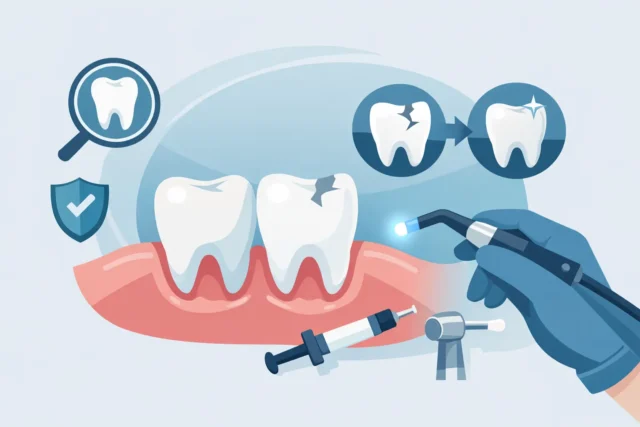
Dental bonding is one of the most common solutions for a minor chip. The dentist applies a tooth-colored composite resin, shapes it to blend with the surrounding enamel, and hardens it with a curing light. It is often completed in one visit and can be an excellent choice for front teeth with small chips or uneven edges.
Bonding is conservative because it typically requires little to no removal of healthy enamel. It is also generally more affordable than a veneer or crown. The trade-off is that composite resin can stain, wear, or chip over time, particularly for people who bite their nails, chew ice, or grind their teeth.
Contouring for a very small enamel chip
When only a tiny amount of enamel has chipped and the tooth remains strong, gentle contouring may be enough. The dentist smooths the rough edge and adjusts the shape so it no longer catches on your tongue or affects your bite.
This option is quick and comfortable, but it is not right for every tooth. Removing even a small amount of enamel should be done thoughtfully, especially if the chip changes the tooth’s shape or if there is a history of wear from grinding.
Veneers for cosmetic front-tooth damage
A porcelain veneer may be recommended when a front tooth has a larger chip, an uneven shape, or other cosmetic concerns such as discoloration or gaps. A veneer is a thin, custom-made shell that covers the front surface of the tooth. It can create a highly natural-looking result and is designed to resist staining better than composite bonding.
Veneers are often a cosmetic investment and usually involve reshaping a small amount of enamel. That makes the decision more permanent than bonding. They can be a strong option when the goal is to improve the overall appearance of a front tooth, not simply patch a small break.
Crowns for larger breaks or weakened teeth
A crown covers the entire visible portion of a damaged tooth. It may be the best choice when a large section has broken away, when the tooth has a large old filling, or when cracking has made the tooth structurally weak. Crowns restore the tooth’s shape and chewing strength while helping protect it from further damage.
For a back tooth, where biting forces are high, a crown can offer more dependable long-term support than bonding alone. Trail Ridge Dental also offers same-day CEREC crowns for many qualifying cases, which can reduce the need for a temporary crown and a second visit.
Root canal treatment when the nerve is affected
If a chip extends into the pulp, the soft tissue containing the tooth’s nerve and blood supply, you may need root canal treatment before the tooth is restored. Signs can include persistent pain, throbbing, significant heat or cold sensitivity, swelling, or a darkening tooth. Sometimes there are no obvious symptoms right away, which is why an exam matters after a substantial break.
Root canal treatment removes infected or damaged tissue from inside the tooth and allows the dentist to seal and restore it. A crown is frequently placed afterward to protect the treated tooth from fracture.
When a Chipped Tooth Is a Dental Emergency
Not every chip requires an after-hours visit, but some situations should be addressed urgently. Seek prompt dental care if you have severe pain, facial swelling, uncontrolled bleeding, a tooth that has shifted or feels loose, or an injury involving the jaw. A broken tooth with a visible pink or red center may indicate pulp exposure and should be evaluated as soon as possible.
Dental trauma after a fall, vehicle accident, or sports injury deserves special attention, even if the tooth seems only slightly chipped. The root, surrounding bone, or nearby teeth may have been affected. Children should also be checked after a significant mouth injury, including injuries to baby teeth.
What Not to Do at Home
It can be tempting to smooth a sharp tooth edge with a file or use an over-the-counter repair kit, but these shortcuts can cause more harm than help. Do not use household glue, nail glue, or craft adhesive on a tooth. These products are not safe for the mouth and can interfere with professional treatment.
Avoid trying to reattach a broken piece yourself. Also skip hard foods, sticky candy, ice, nuts, and crunchy snacks until the tooth has been repaired. If you clench or grind your teeth, tell your dentist. A custom night guard may help protect the repair and your remaining enamel once treatment is complete.
Can a Chipped Tooth Heal on Its Own?
Enamel does not regenerate, so a chipped tooth will not grow back or heal in the way skin or bone can. A tiny chip may not need a major restoration, but it still deserves an assessment if it is sharp, sensitive, changing your bite, or becoming more noticeable.
Some chips are stable for years. Others worsen because normal chewing pressure travels through an already weakened area. The difference is not always visible from the mirror. A dentist can help you weigh the practical options, from monitoring and smoothing to a restoration that protects the tooth for the long term.
A chipped tooth does not have to become a lasting source of discomfort or self-consciousness. Protect the area, avoid do-it-yourself repairs, and schedule an evaluation so you can choose a solution that fits your tooth, your smile goals, and your budget.