
A denture that shifts when you laugh, eats only soft foods, or requires frequent adhesive can affect far more than meals. When patients ask about implant dentures versus regular dentures, they are usually looking for a solution that feels secure, looks natural, and fits their budget and daily routine.
Both options can restore a smile after tooth loss. The better choice depends on your oral health, jawbone, goals, timeline, and comfort with a surgical procedure. A thoughtful evaluation helps make the decision feel less overwhelming.
What Are Regular Dentures?
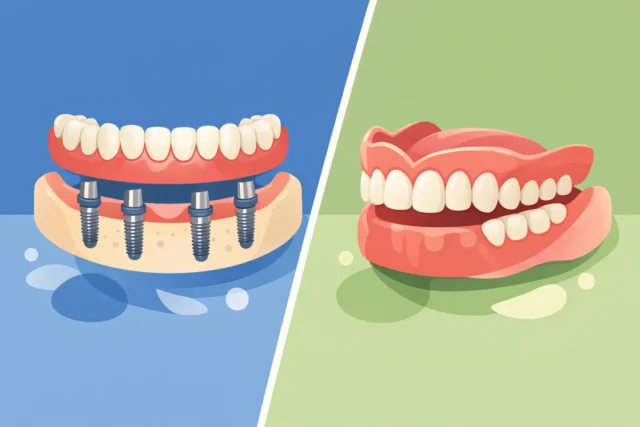
Regular dentures are removable appliances that replace missing teeth and surrounding gum tissue. A full denture replaces all teeth in the upper or lower arch, while a partial denture fills spaces when some healthy natural teeth remain.
They rest directly on the gums. Upper dentures often use suction against the roof of the mouth for stability, while lower dentures sit along the gum ridge and tend to move more because the tongue and jaw muscles are constantly active. Denture adhesive may provide additional hold for some patients.
Today’s dentures can be attractive and carefully customized for the shape of your face, smile, and bite. For someone who wants a non-surgical, relatively fast way to replace teeth, they remain a dependable treatment option.
Benefits of regular dentures
The primary benefit is accessibility. Regular dentures generally cost less upfront than implant-supported options and do not require implant surgery. They can also be a practical choice when medical conditions, limited bone volume, or personal preference make implants less suitable.
The treatment process is usually shorter, although healing time after extractions can affect the schedule. Immediate dentures may be placed on the day teeth are removed, with adjustments and a more refined long-term denture planned after the gums heal.
Limitations to consider
Because regular dentures rest on soft tissue, some movement is normal, especially with lower dentures. Patients may need time to adjust to speaking and eating, and foods such as corn on the cob, chewy bagels, nuts, and sticky candies can be challenging.
The jawbone also changes after teeth are lost. Without tooth roots to stimulate it, the bone can gradually shrink. As the ridge changes shape, dentures may loosen and need adjustment, relining, or replacement over time. This is not a sign that you have done anything wrong. It is a normal part of living with a removable denture.
Implant Dentures Versus Regular Dentures: The Main Difference
Implant dentures are dentures supported by dental implants placed in the jawbone. The implants act as artificial tooth roots, giving the denture a more stable foundation. Depending on the treatment plan, the denture may snap on and off for cleaning or be fixed in place and removed only by a dental professional.
Regular dentures rely on the gums and the shape of the jaw for support. Implant dentures rely on implants for much of their retention and stability. That distinction can change the day-to-day experience significantly.
For example, a removable implant denture may use two or more implants in the lower jaw and several implants in the upper jaw. The exact number depends on the arch, bone quality, bite forces, and whether the restoration will be removable or fixed. A dentist will recommend the approach that offers appropriate support, not simply the option with the most implants.
Comfort and confidence
Implant-supported dentures usually move less during meals and conversations. Many patients appreciate being able to smile, talk, and eat without worrying that their denture will lift or slide. Greater stability can also reduce sore spots caused by friction on the gums.
That does not mean implant dentures feel identical to natural teeth. There is still an adjustment period, and a removable implant denture may have a different feel than a fixed full-arch restoration. But for patients frustrated by loose dentures, the improvement in confidence can be meaningful.
Eating and speech
A stable foundation often makes chewing more efficient. That can expand food choices and make it easier to enjoy a balanced diet with fruits, vegetables, and proteins that may be difficult with a loose denture.
Speech can improve as well, particularly for patients whose dentures shift when forming certain sounds. Still, pronunciation changes are common with any new restoration and typically improve with practice and minor adjustments.
Bone preservation
Dental implants transfer chewing forces into the jawbone, which can help preserve bone in the areas around the implants. They do not stop every natural change in the face and jaw, but they can limit the bone loss associated with wearing a traditional denture alone.
This long-term benefit matters because ongoing bone loss can affect denture fit and facial support. It is also one reason some patients choose implants even when they can manage with a conventional denture now.
Cost, Time, and Maintenance
The cost difference is often the first concern, and it is a valid one. Regular dentures usually have a lower initial cost. Implant dentures require surgical placement, components that connect the denture to the implants, and a customized restoration, so the investment is higher.
However, upfront price is only one part of the decision. Traditional dentures may require periodic relines, adhesives, adjustments, and eventual replacement as the mouth changes. Implant dentures also need maintenance, including periodic exams, replacement of worn attachment components, and professional cleaning. The right choice is the one that fits both your current budget and your long-term goals.
Treatment timelines differ too. A conventional denture may be completed relatively quickly after healing, while implant treatment often takes several months because implants need time to integrate with the bone. In some cases, a temporary denture can be worn during healing so you are not without teeth.
At home, regular dentures should be removed and cleaned daily. Implant-retained dentures that come out should also be removed for cleaning, along with the attachment areas and gums. Fixed implant dentures require careful brushing underneath the restoration and may require specialty floss or water-cleaning tools. Good daily care and regular dental visits protect both your investment and your overall health.
Who May Be a Good Candidate for Implant Dentures?
Many adults with missing teeth can be candidates for implants, including people who have worn dentures for years. A consultation includes an exam, digital imaging, and a review of your health history to determine whether implants are appropriate.
Healthy gums, adequate bone, and a commitment to daily cleaning support long-term success. If bone has shrunk, grafting or another treatment approach may be considered. Certain health conditions, smoking, uncontrolled diabetes, active gum disease, and medications that affect bone healing can influence the plan. These factors do not automatically rule out implants, but they deserve an honest conversation.
Regular dentures may be the better answer for someone who prefers to avoid surgery, needs the fastest replacement option, or is not ready for the financial investment in implants. Choosing a conventional denture is not settling. A well-made denture can restore appearance and function, and it can sometimes be designed so implants may be added later if circumstances change.
Choosing a Solution That Fits Your Life
Rather than asking which treatment is universally best, consider what has been hardest about your missing teeth or current denture. Is it movement? Soreness? Avoiding favorite foods? Concern about treatment cost? The answer points toward the priorities your care team should address.
At Trail Ridge Dental, the goal is to help patients understand their choices without pressure. A personalized exam can clarify whether a traditional denture, an implant-retained denture, or another restorative option will give you the most comfortable and realistic path forward.
A replacement smile should support the way you want to live. Bring your questions, your concerns, and your goals to the conversation – a clear plan is often the first step toward feeling at home in your smile again.