
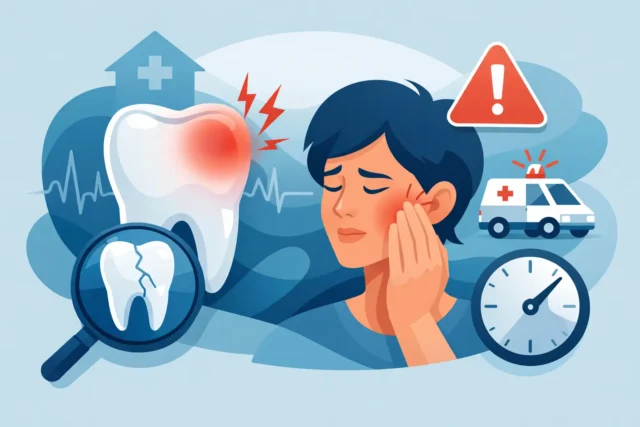
A toothache can make an ordinary afternoon feel impossible. But when is tooth pain an emergency, rather than something that can wait for a regular appointment? The answer depends less on how long the pain has lasted and more on what comes with it: swelling, injury, fever, trouble swallowing, or pain severe enough to disrupt sleep can all signal a problem that needs prompt care.
Dental pain is your body’s way of telling you something deserves attention. Sometimes the cause is manageable, such as food caught between teeth or temporary sensitivity. Other times, it can be an infection, a cracked tooth, or an injury that worsens quickly without treatment. Knowing the difference can help you protect your smile and avoid a more complicated procedure later.
When Is Tooth Pain an Emergency?
Tooth pain needs emergency dental attention when it is severe, sudden, paired with swelling, or caused by trauma. You should also seek urgent help if a tooth has been knocked out, broken badly, or is loose after an injury.
A dental emergency does not always mean you need a hospital emergency room. In many cases, an emergency dentist is the right first call because they can diagnose and treat the source of the problem. However, certain symptoms can point to a potentially serious infection or injury that requires immediate medical care.
Severe, persistent pain
A sharp or throbbing toothache that does not improve with appropriate over-the-counter pain medicine should be evaluated promptly. Pain that wakes you at night, makes it difficult to eat, or seems to pulse can occur when the inner pulp of a tooth is inflamed or infected.
A deep cavity, failing filling, cracked tooth, or gum infection may be involved. The pain may come and go at first, but that does not mean the issue has resolved. In fact, a tooth infection can occasionally stop hurting when the nerve inside the tooth dies, while the infection continues to spread beneath the surface.
Facial swelling, gum swelling, or a fever
Swelling around a tooth or along the gums deserves same-day attention, especially when it is tender or accompanied by a bad taste in your mouth. A pimple-like bump on the gums may be an abscess, which is a pocket of infection.
Call a dentist urgently if you have facial swelling, fever, swollen lymph nodes, or increasing pain. Go to an emergency room immediately if swelling is spreading into your jaw, neck, or around your eye, or if you have trouble breathing, swallowing, or opening your mouth. Those symptoms can indicate an infection that is no longer confined to the tooth and needs urgent medical treatment.
A knocked-out, loose, or badly broken tooth
Fast action matters after a dental injury. A knocked-out permanent tooth has the best chance of being saved when it is replanted as soon as possible, ideally within an hour. Pick it up by the crown, the part normally visible above the gums, not the root. If it is dirty, gently rinse it with milk or clean water without scrubbing it.
If you can safely place the tooth back in its socket, do so gently and bite on clean gauze to hold it in place. If not, keep it moist in milk or in your mouth next to your cheek if there is no risk of swallowing it. Then contact an emergency dentist right away.
A tooth that is chipped may not require immediate care if there is no pain and no sharp edge, but a large fracture, a visible pink or red center, a loose tooth, or a broken tooth with significant pain should not wait. Save any pieces you can find and bring them to your appointment.
Bleeding that will not stop
Some bleeding after a lost baby tooth, brushing too aggressively, or a recent dental procedure can be normal. Bleeding that is heavy or does not slow after you apply firm, steady pressure with clean gauze is not something to ignore.
If bleeding follows a facial injury, comes with a deep cut, or is paired with dizziness or weakness, seek immediate medical care. Patients taking blood thinners should be especially careful to follow their physician’s and dentist’s guidance after oral surgery or an injury.
When to Call a Dentist Soon, Even If It Can Wait a Day
Not every toothache is an emergency, but almost every ongoing toothache deserves a call. Early treatment is usually simpler, more comfortable, and more affordable than waiting until pain becomes severe.
Call for a prompt appointment if you have pain when biting, sensitivity to hot or cold that lingers, a lost filling or crown, a cracked tooth, or soreness around a wisdom tooth. These concerns may not require after-hours treatment, yet they can develop into an emergency if left untreated.
A lost crown is a good example. If the tooth beneath it is comfortable and protected, a dentist may be able to see you within a few days. If the tooth is painful, sharp, or the crown came off because the tooth broke underneath, it is more urgent. Do not use household glue to put a crown back on. Keep the crown clean and bring it with you.
What You Can Do Before Your Appointment
While you arrange care, gentle measures can reduce discomfort without making the situation worse. Rinse your mouth with warm salt water and carefully floss around the painful tooth to remove trapped food. A cold compress against the outside of the cheek can help limit swelling and ease pain after an injury.
You may use over-the-counter pain medicine as directed on the label, provided it is safe for you based on your health history and other medications. Avoid placing aspirin directly on the tooth or gums. It will not treat the problem and can burn soft tissue.
Do not try to pop a gum abscess, file a broken tooth yourself, or wait out worsening swelling. Antibiotics, when they are needed, do not replace dental treatment. The source of an infection often needs to be cleaned, drained, repaired, or removed by a dental professional.
Tooth Pain Emergencies in Children
Children can have dental emergencies too, and their symptoms deserve the same careful attention. A child with facial swelling, fever, difficulty swallowing, uncontrolled bleeding, or a serious mouth injury needs urgent evaluation.
If a baby tooth is knocked out, do not try to place it back in the socket. Reimplanting a baby tooth can damage the developing permanent tooth beneath it. Call a dentist for guidance and bring your child in for an exam. For a knocked-out permanent tooth, follow the same steps used for adults and seek care immediately.
Even when a child seems calm, watch for changes in eating, sleeping, mood, or willingness to brush. Young children may not be able to explain where pain is coming from, and a small cavity can become painful quickly.
Do Not Let Fear or Cost Delay Care
Many people put off treatment because they are anxious about dental visits or worried about the cost. That hesitation is understandable, especially when pain begins unexpectedly. Still, waiting can turn a treatable cavity into an infection or transform a repairable tooth into one that needs extraction.
When you call, describe your symptoms clearly: where the pain is, when it began, whether there is swelling or fever, and whether an injury occurred. This helps the dental team determine how quickly you need to be seen and what to do in the meantime. If you do not have dental insurance, ask about payment options or membership plans rather than assuming care is out of reach.
For families across Northern Colorado, Trail Ridge Dental is here to provide a calm, compassionate path forward when dental pain interrupts your day. A timely call can bring relief, protect your health, and help you get back to eating, sleeping, and smiling with confidence.