
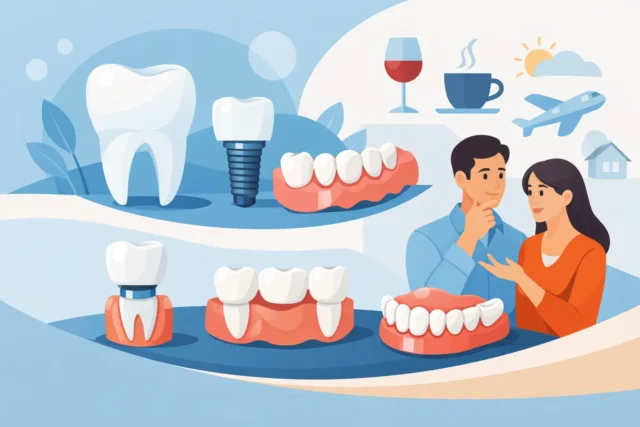
A missing tooth can change more than a photograph. It can make it harder to chew comfortably, affect how clearly you speak, or leave you avoiding foods you once enjoyed. The best options for missing teeth depend on where the gap is, how many teeth are missing, the health of your gums and jawbone, and what feels manageable for your budget and schedule.
You do not need to decide on a replacement on your own. A thoughtful dental exam can reveal whether neighboring teeth are strong, whether the bite has shifted, and which solution will give you reliable function for years to come. For many patients, replacing a missing tooth is not only about appearance. It is a way to protect the rest of the smile.
Why replacing a missing tooth matters
When a tooth is lost, the teeth beside it may slowly drift toward the open space. Teeth in the opposing arch can also move because they no longer have a tooth to bite against. Over time, those changes may affect your bite, make cleaning more difficult, and place uneven pressure on other teeth.
The jawbone in the area of a missing tooth can gradually shrink as well. This is especially relevant when several teeth are missing, since bone loss can affect facial support and may limit future treatment choices. Replacing a tooth promptly is not always an emergency, but waiting deserves a conversation with your dentist rather than a guess.
Best options for missing teeth: a practical comparison
There is no single right answer for every patient. Dental implants, bridges, and dentures can all be excellent solutions when they are selected for the right situation.
Dental implants
A dental implant replaces a tooth root with a small post placed in the jawbone. After healing, it supports a custom crown for one missing tooth, or it can support a bridge or denture when multiple teeth are missing. Because an implant stands on its own, it does not require altering the teeth next to the gap.
For many people, implants offer the closest experience to a natural tooth. They are fixed in place, support normal chewing, and help stimulate the jawbone. With consistent brushing, flossing, and regular dental visits, implants can be a long-term solution.
The trade-off is time and upfront cost. Implant treatment generally involves a surgical procedure and a healing period before the final restoration is placed. Some patients need bone grafting first if bone has already been lost. Medical history, gum health, tobacco use, and certain medications can also influence candidacy. An exam and imaging are essential before deciding whether an implant is right for you.
Dental bridges
A traditional dental bridge fills a gap by joining a replacement tooth to crowns on the teeth beside it. It is a fixed option, meaning it stays in place and is not removed at night. Bridges can be a strong choice when the adjacent teeth already have large fillings, wear, or crowns that need attention.
Compared with an implant, a bridge often has a shorter overall treatment timeline and does not require implant surgery. It can restore the look of the smile and make chewing more comfortable relatively quickly. Same-day crown technology may also be available for certain cases, depending on the location and complexity of the restoration.
A bridge does require shaping the neighboring teeth to hold the crowns, even if those teeth are otherwise healthy. It also needs careful cleaning under the replacement tooth. Your dental team can show you how to use floss threaders or other cleaning tools so plaque does not collect around the bridge margins.
Partial dentures
A removable partial denture replaces one or more missing teeth using a custom appliance that rests against the gums and attaches around remaining teeth. Modern partials can look natural and provide a practical way to fill several gaps, particularly when implants or a fixed bridge are not the best fit.
Partials are typically less expensive initially than multiple implants and can be made without preparing every neighboring tooth for a crown. They may be a useful interim solution while a patient plans for future implant treatment or completes healing after an extraction.
Because a partial is removable, it may take time to get used to speaking and eating with it. It must be taken out for cleaning and should not be worn overnight unless your dentist gives different instructions. A well-made partial should feel secure, but it may need adjustments as the mouth changes.
Complete dentures and implant-supported dentures
Complete dentures replace all teeth in the upper arch, lower arch, or both. They remain an important option for patients who have lost most or all of their teeth, particularly when affordability and treatment time are major priorities. A custom denture can restore a fuller smile, improve speech, and make many foods easier to manage.
Traditional dentures rest on the gums, so they can move slightly during eating or talking. Adhesives may help some patients, but they do not change the underlying fit of the appliance. As the jawbone changes over time, dentures may need relining or replacement to stay comfortable.
Implant-supported dentures offer more stability by attaching a denture to strategically placed implants. Depending on the treatment plan, the denture may snap into place for removal or be fixed in place by the dental team. This option can reduce slipping, improve chewing confidence, and help preserve bone. It also involves surgery and a greater investment than a conventional denture.
How to choose the right replacement
The best treatment is the one that works for your health, goals, and daily routine, not simply the option that sounds most advanced. Start with the location of the missing tooth. A front tooth may raise appearance and speech concerns, while a missing back tooth can have a greater impact on chewing and bite balance.
Next, consider the condition of the teeth around the space. A bridge may make sense if neighboring teeth need crowns anyway. An implant may be especially appealing when those teeth are healthy and you want to leave them untouched. For several missing teeth, a partial denture, implant bridge, or implant-supported denture may each be worth discussing.
Budget matters, too. The lowest initial cost is not always the lowest cost over time, particularly if a removable appliance needs frequent repairs or replacements. At the same time, it is reasonable to choose a treatment that fits your current financial situation. Ask for a clear plan that explains expected fees, timing, and whether a phased approach is possible. Patients without insurance may also want to ask about an in-house membership option.
Comfort with treatment is another real consideration. If dental anxiety has kept you from moving forward, tell your care team. Understanding each step, knowing how discomfort will be managed, and having time to ask questions can make a major difference.
What happens after treatment
Every replacement option needs ongoing care. Implants and bridges need thorough brushing around the gumline and daily cleaning between teeth. Dentures and partials need daily cleaning outside the mouth, along with regular exams to check fit and oral tissues.
Regular preventive visits remain important even when a missing tooth has been replaced. Your dentist can monitor the supporting teeth, gums, bite, and restoration before a small concern turns into a bigger repair. At Trail Ridge Dental, treatment planning can bring preventive, restorative, and family care together, so your replacement tooth is considered as part of your whole smile.
If your tooth was lost because of pain, injury, or an infection, do not wait for the perfect moment to ask for help. A timely exam can protect your comfort and preserve more options. The right replacement should help you return to meals, conversations, and smiles without having to think twice about the gap.