
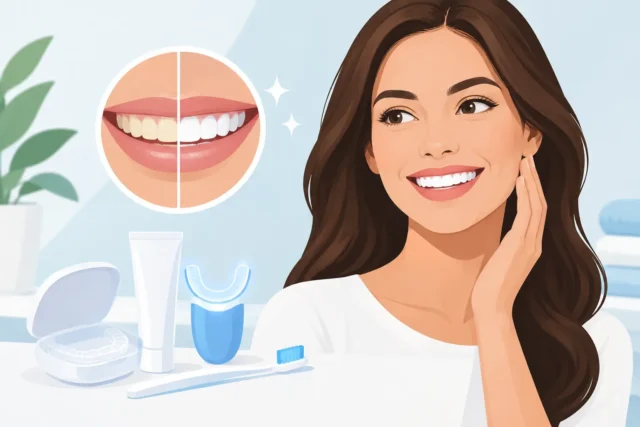
A brighter smile can make you feel more comfortable in photos, at work, and in everyday conversations. But the best ways to whiten teeth are not always the fastest or most heavily advertised options. The right choice depends on what is causing the discoloration, the health of your teeth and gums, and whether you have dental work such as crowns, fillings, or veneers.
Whitening works best when it is part of a healthy dental routine, not a replacement for one. A little planning can help you get a noticeably brighter smile while avoiding unnecessary sensitivity or uneven results.
Start With a Professional Dental Cleaning
Surface stains from coffee, tea, red wine, tobacco, and deeply colored foods can build up gradually. In many cases, a professional cleaning removes enough plaque, tartar, and surface stain to make teeth look cleaner and brighter before any whitening treatment is needed.
A cleaning also gives your dental team a chance to check for cavities, gum inflammation, worn enamel, and cracked teeth. Whitening products can irritate sensitive teeth or exposed roots, so it is wise to address those concerns first. If your gums bleed when you brush or floss, schedule an exam before starting a whitening routine.
For families in Northern Colorado, regular preventive visits are one of the simplest ways to keep natural teeth looking their best over time. Cleanings do not change the natural shade of teeth, but they create a healthier starting point for whitening.
Professional Whitening Delivers the Most Predictable Results
For many patients, professional whitening is the most effective option because it uses clinically tested materials and is guided by a dental professional who knows your smile. Treatment may be completed in the office, with custom take-home trays, or through a combination of both.
In-office whitening is often a good fit for someone preparing for a wedding, reunion, interview, or other special occasion. It can brighten teeth quickly under professional supervision. Take-home trays move at a more gradual pace, but custom trays help the whitening gel stay close to the teeth and away from the gums. That can improve comfort and provide more even coverage than one-size-fits-all trays.
The best choice depends on your timeline, budget, starting shade, and history of sensitivity. A dentist can also help you set realistic expectations. Natural teeth do not all whiten to the same shade, and the goal is typically a brighter, healthy-looking result that suits your face and smile.
Whitening Will Not Change Crowns or Fillings
This is one of the most important details to understand before treatment. Whitening gel affects natural tooth enamel, but it will not lighten crowns, veneers, bonding, fillings, or dentures. If a front crown is already close to the color of your teeth, whitening the surrounding teeth could make the crown appear darker by comparison.
Your dentist can help plan the order of treatment when cosmetic dental work is involved. Often, teeth are whitened first, then a new crown, veneer, or filling is matched to the updated shade. Planning ahead avoids a patchwork appearance and helps protect your investment in your smile.
At-Home Whitening Can Work, With Realistic Expectations
Whitening strips, trays, pens, and gels available over the counter can lighten mild to moderate staining. They are convenient and usually less expensive than professional treatment, but the results are generally less predictable. Products vary significantly in strength, fit, and ease of use.
Whitening strips can be helpful for people with mostly straight front teeth and mild yellowing. However, strips may not reach between crowded teeth or cover the full surface near the gumline. Generic trays can allow gel to touch the gums, which may cause temporary irritation.
If you choose an over-the-counter product, follow the instructions closely. Using it longer or more often than directed does not guarantee whiter teeth. It is more likely to increase sensitivity or leave your smile looking uneven. Stop treatment and call your dental office if you experience sharp pain, persistent gum irritation, or sensitivity that does not settle after a day or two.
Whitening Toothpaste Helps Maintain, Not Transform
Whitening toothpaste can be useful for lifting fresh surface stains and maintaining results after a whitening treatment. It will not usually make a dramatic change to the internal color of the tooth, because most whitening toothpastes do not contain enough active bleaching ingredient to do so.
Some formulas rely on mild abrasives to polish away stains. That is not automatically harmful, but aggressive use of highly abrasive products may be a poor choice for people with enamel wear, gum recession, or sensitivity. Ask your dental team which toothpaste makes sense for your needs, especially if cold drinks already cause discomfort.
A soft-bristled toothbrush and gentle technique matter just as much as the toothpaste you choose. Brushing harder will not make teeth whiter, and it can wear away enamel and irritate gum tissue.
Protect Your Results With Everyday Habits
Whitening is not permanent because teeth are exposed to staining foods and drinks every day. Small habits can help your result last longer without making your routine difficult.
After coffee, tea, soda, or red wine, rinse with water when you can. Drinking staining beverages through a straw may reduce contact with front teeth, particularly for iced drinks. Avoid brushing immediately after acidic drinks or foods, since enamel can be temporarily softened. Instead, rinse, wait about 30 minutes, then brush gently.
Tobacco use is another major source of stubborn staining and can affect gum health, healing, and breath. Reducing or stopping tobacco use benefits far more than the color of your teeth. It is a meaningful step toward a healthier mouth overall.
Consistent brushing twice daily, cleaning between teeth once a day, and keeping up with professional cleanings will do more for long-term brightness than repeatedly chasing quick fixes.
Be Careful With DIY Whitening Trends
Social media makes home remedies look simple, but many are not safe or effective. Lemon juice, vinegar, charcoal powders, and abrasive baking soda mixtures can damage enamel or irritate gums. Enamel does not grow back. Once it is worn away, teeth can look more yellow because the naturally darker dentin beneath becomes more visible.
Hydrogen peroxide is a common ingredient in whitening products, but that does not mean household peroxide should be used freely in the mouth. The concentration, delivery method, and contact time all matter. Dental whitening products are designed for a specific purpose, while DIY mixtures make it easy to overdo it.
If a whitening method sounds harsh, painful, or too good to be true, it is worth pausing before you try it. A brighter smile should not come at the expense of healthy enamel.
Managing Tooth Sensitivity During Whitening
Temporary sensitivity is common, particularly if you already have exposed root surfaces, enamel wear, or a history of sensitive teeth. It often feels like a brief zing with cold air or cold foods.
You may be able to reduce discomfort by spacing out whitening sessions, using a sensitivity toothpaste, or choosing a slower treatment approach. Some patients benefit from a shorter wear time for take-home whitening trays. Do not push through significant pain. Sensitivity can be a sign that your teeth need an exam or that a different whitening plan would be more comfortable.
Trail Ridge Dental can help patients choose a whitening approach that accounts for existing dental work, sensitivity, and the health of their gums. That guidance can make the experience more comfortable and the result more natural-looking.
When Discoloration Needs More Than Whitening
Not every dark tooth will respond to whitening. A single tooth that turns gray, brown, or darker than the teeth around it may have experienced trauma, decay, or a problem with the tooth nerve. This deserves a dental evaluation rather than another whitening strip.
Some stains are also internal and connected to medications, childhood development, or enamel changes. In those cases, whitening may improve the overall color but not fully remove the discoloration. Cosmetic solutions such as bonding, veneers, or crowns may be considered after your dentist explains the benefits and trade-offs.
The most satisfying whitening plans begin with healthy teeth and clear expectations. Choose an option that fits your smile, protect the enamel you already have, and give yourself enough time to enjoy results that look naturally bright rather than artificially white.