
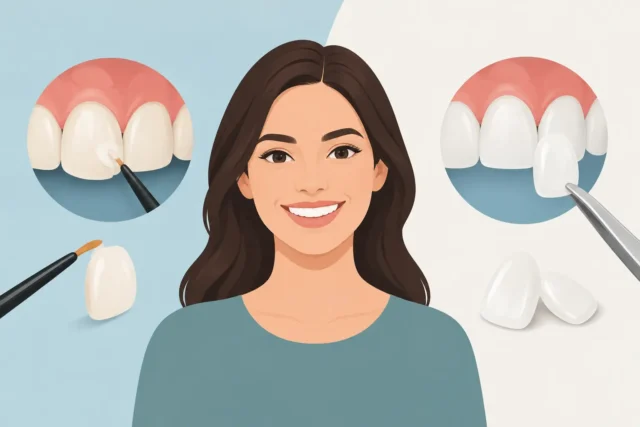
A small chip on a front tooth can change how freely you smile in photos, speak at work, or laugh with family. When patients ask about bonding versus porcelain veneers, they are usually looking for more than a cosmetic fix. They want an option that looks natural, feels comfortable, fits their budget, and makes sense for the long term.
Both treatments can improve the appearance of teeth affected by chips, gaps, discoloration, uneven edges, or minor shape concerns. The better choice depends on the condition of your teeth, how many teeth you want to enhance, your bite, your habits, and the result you have in mind.
Bonding versus porcelain veneers: the key difference
Dental bonding uses a tooth-colored composite resin that is placed directly onto the tooth, shaped by the dentist, and hardened with a curing light. It is often completed in one visit and can be an excellent conservative option for small, focused improvements.
Porcelain veneers are thin, custom-made shells that cover the front surface of a tooth. They are created in a dental lab after your dentist plans the shape, color, and fit of your new smile. Veneers typically require more planning and more than one appointment, but they offer a highly polished, durable cosmetic result.
Neither treatment is automatically better. Bonding can be the right answer for one chipped tooth, while veneers may be a better investment for several front teeth with longstanding color and shape concerns.
When dental bonding may be the right choice
Bonding is often a practical choice when the concern is small and localized. For example, a patient may have a chipped front tooth after an accident, a slightly worn edge, or a narrow gap between two teeth. Because the resin is added directly to the enamel, bonding usually requires little to no removal of natural tooth structure.
That conservative approach is a major benefit. Bonding can also be repaired relatively easily if it chips or wears down. For patients who are not ready to commit to veneers, it may provide a meaningful improvement with less upfront cost.
Composite resin does have limitations. It is more likely than porcelain to pick up stains from coffee, tea, red wine, or tobacco. It can also wear, chip, or lose its shine over time, particularly for patients who bite their nails, chew ice, or clench and grind their teeth. A bonded tooth may need periodic polishing, touch-ups, or replacement.
Bonding can look very natural when it is carefully color-matched and shaped. Still, porcelain generally reflects light more like natural enamel and retains its color better over the years. If you are seeking a broad, uniform smile transformation, bonding may not deliver the same long-term consistency as veneers.
When porcelain veneers may make more sense
Porcelain veneers are often chosen when several visible teeth need cosmetic improvement. They can address stubborn discoloration that does not respond well to whitening, uneven tooth shapes, small gaps, worn edges, and minor alignment concerns. A dentist can design veneers to create a balanced smile while preserving a natural appearance.
One of porcelain’s strongest advantages is its stain resistance. While you should still maintain regular brushing, flossing, and professional cleanings, porcelain does not absorb pigments the way composite resin can. It also holds a smooth, glossy surface well and is highly resistant to everyday wear when properly cared for.
Veneers are a more permanent decision. In many cases, a small amount of enamel must be adjusted so the veneer sits naturally and does not look bulky. Because enamel does not grow back, a tooth prepared for a traditional veneer will generally need some form of veneer or restoration in the future.
The process also requires more time and a larger financial commitment than bonding. This can be worthwhile for patients who want a durable, comprehensive cosmetic change, but it should be a thoughtful decision rather than an impulse treatment.
Appearance, durability, and maintenance
The most noticeable difference between bonding and porcelain veneers often appears over time. Fresh bonding and well-made porcelain can both look beautiful on day one. After several years, porcelain typically maintains its luster and color more predictably, while composite may gradually dull, stain, or develop small areas of wear.
Durability depends on more than the material. Your bite matters. So do daily habits and the health of the supporting teeth and gums. Someone with a heavy bite or nighttime grinding may need a custom nightguard to protect either treatment. A nightguard is especially valuable after cosmetic dentistry because it helps reduce pressure that can chip bonding or damage porcelain.
Both options require the same foundation of good home care: brush twice daily with a nonabrasive toothpaste, clean between teeth every day, and keep regular dental visits. Veneers do not prevent cavities from forming around the edges of the restoration, and bonded teeth still need attentive hygiene. Cosmetic work looks its best when the underlying smile is healthy.
Cost is part of the decision, but not the whole decision
Bonding generally has a lower initial cost because it often takes less time and does not involve a custom porcelain restoration. This makes it appealing for a small repair or for patients who want to improve one or two teeth without a larger cosmetic investment.
Porcelain veneers usually cost more upfront, reflecting the planning, custom fabrication, materials, and clinical time involved. However, patients should also consider expected maintenance. If bonding needs repeated repairs or replacement, its long-term cost can change. On the other hand, a veneer may not be the most sensible choice for a tiny chip that could be conservatively repaired with resin.
Dental insurance often treats purely cosmetic services differently from medically necessary treatment, so coverage can vary. During a consultation, ask for a clear treatment estimate and discuss payment options before making a decision. Feeling informed about cost is part of feeling comfortable with your care.
Your bite and oral health come first
Cosmetic treatment works best when the teeth and gums are stable. Active gum disease, untreated decay, significant enamel loss, or an unhealthy bite should be addressed before bonding or veneers. Covering a problem does not solve it, and it can shorten the life of your cosmetic work.
Alignment also matters. For some patients, clear aligner treatment or braces may be a better first step than trying to mask crowded or rotated teeth with veneers. In other cases, whitening before bonding or veneers can help create a more consistent color plan for the surrounding teeth.
A comprehensive exam allows your dentist to evaluate the details that are easy to miss in a mirror: gum health, bite forces, old fillings, enamel thickness, and the way your lips frame your smile. At Trail Ridge Dental, the goal is to recommend care that supports your long-term oral health, not simply the fastest cosmetic change.
How to choose with confidence
Think about the scope of the change you want. If you are correcting one small chip, a slight gap, or a minor shape issue, bonding may be an excellent fit. If you want to improve the color, proportion, and appearance of multiple front teeth with a more durable material, porcelain veneers may better match your goals.
It also helps to consider how you feel about ongoing maintenance. Some patients appreciate that bonding is conservative and repairable. Others prefer the color stability and refined finish that porcelain can offer. There is room for both approaches in thoughtful cosmetic dentistry.
Bring photos or examples of smiles you like to your consultation, but expect the final recommendation to be personal. Your natural tooth color, facial features, bite, budget, and oral health all shape what will look and function best. The right treatment should help you smile more comfortably while still protecting the healthy teeth you already have.