
If you have been putting off orthodontic treatment because you are stuck on clear aligners vs braces, you are not alone. For many teens and adults, the hardest part is not deciding to improve their smile. It is figuring out which option makes sense for real life – work, school, photos, budgets, and comfort all at once.
Both treatments can straighten teeth, improve bite alignment, and support long-term oral health. But they do not fit every patient the same way. The better choice depends on how complex the tooth movement is, how consistent you can be with treatment, and what matters most to you day to day.
Clear aligners vs braces: the biggest difference
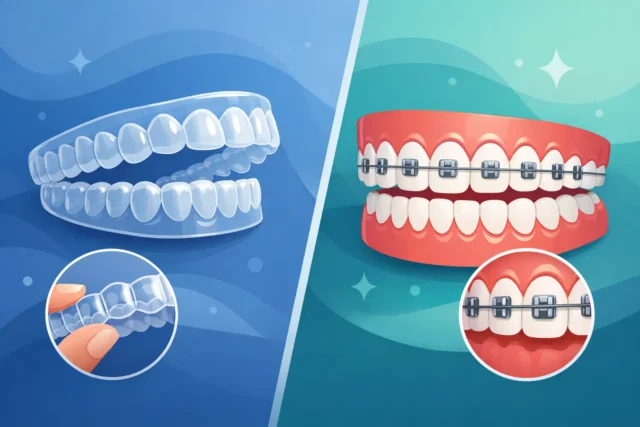
The simplest way to think about it is this: braces stay on your teeth full time, while clear aligners can be removed. That one difference affects almost everything else, from appearance to eating habits to how much self-discipline treatment requires.
Braces use brackets and wires to move teeth gradually with steady pressure. Because they are fixed in place, they are always working. Clear aligners use a series of custom trays that fit over your teeth and are switched out over time. They can be very effective, but only if they are worn as directed, usually 20 to 22 hours a day.
For some patients, removable trays feel more flexible and less noticeable. For others, braces are the better fit because there is less room for user error. If you know you are likely to forget trays at lunch, leave them out during sports, or skip wear time on busy days, that matters.
When clear aligners may be the better choice
Clear aligners are often a strong option for adults and responsible teens who want a more discreet way to straighten their teeth. They are especially appealing if appearance is a top concern or if you spend a lot of time in meetings, on video calls, or in social settings where you would rather keep treatment low profile.
They are also easier when it comes to meals. Because you remove the trays to eat and drink anything other than water, there are no food restrictions during treatment. You can brush and floss much like you normally would, which many patients find simpler than cleaning around brackets and wires.
Comfort is another reason people lean toward aligners. While every orthodontic option creates some pressure as teeth move, clear trays do not involve metal brackets that can rub the lips or cheeks. That said, aligners are not discomfort-free. New trays can feel tight for a few days, and some patients notice temporary speech changes at first.
Clear aligners can work very well for mild to moderate crowding, spacing, and some bite concerns. They can also be a good fit for patients who want an orthodontic option that feels a little more flexible in everyday life.
When braces may be the better choice
Braces are still one of the most reliable tools in orthodontics, especially for more complex cases. If teeth need significant rotation, larger movement, or more advanced bite correction, braces may give your dentist more control over the process.
They can also be the better choice for younger patients or anyone who may struggle to wear aligners consistently. Since braces stay in place, treatment does not depend on remembering to put them back in after meals or snacks. For busy families, that built-in consistency can be a real advantage.
Braces have improved over the years, but they are still more noticeable than clear aligners. Some patients do not mind that at all. In fact, many teens like choosing band colors and seeing visible progress over time. Adults, though, sometimes prefer an option that draws less attention.
There are trade-offs. Braces require more care when it comes to cleaning, and certain foods need to be avoided to prevent broken brackets or bent wires. Popcorn, sticky candy, and hard crunchy foods can become a problem fast.
Cost, time, and what patients often overlook
When patients compare clear aligners vs braces, cost usually comes up early, and understandably so. The truth is that pricing can overlap more than people expect. The total cost depends on treatment complexity, how long care takes, and the type of system being used.
Clear aligners are not automatically more expensive, and braces are not always the cheaper route. A straightforward case with aligners may be very manageable, while a more involved case can raise the fee. The same goes for braces. That is why an exam matters more than general internet estimates.
Treatment time also varies. Some patients finish aligner treatment relatively quickly, while others need a longer plan. Braces can sometimes move teeth more efficiently in complex cases, but not always. What matters is choosing the option that is most likely to work well for your specific needs the first time.
One overlooked issue is compliance. If aligners are not worn enough, treatment can stall or take longer. In that scenario, a removable system can end up feeling less convenient than expected. Braces ask more of you in terms of cleaning and food choices, but less in terms of remembering to wear them.
Clear aligners vs braces for daily life
This is where the decision becomes personal. Orthodontic treatment is not just about the final smile. It is also about how manageable the process feels over several months or longer.
If you play instruments, contact sports, or are active in school and community events, you may appreciate the flexibility of aligners. If you travel often for work, aligners can be convenient, but only if you are organized enough to keep up with trays, storage cases, and wear schedules.
If you snack frequently throughout the day, aligners can become a little annoying because they need to come out each time you eat or drink most beverages. Some patients quickly adjust. Others find themselves wearing them less than planned because life gets busy.
Braces can simplify that part since they stay on no matter what, but they require more patience with hygiene. Brushing after meals and cleaning around wires takes effort. For some families, routine wins over flexibility. For others, the opposite is true.
What about appearance and confidence?
For many patients, especially adults, the cosmetic side of treatment matters. That is not vanity. It is a normal part of feeling comfortable at work, in photos, or during major life events.
Clear aligners are popular because they are subtle. Most people will not notice them right away, which can make treatment feel less disruptive. If you have a wedding coming up, client-facing work, or simply prefer a less visible option, that can be a deciding factor.
Braces are more visible, but they are also familiar. Plenty of adults choose them and do very well. What matters most is whether you feel confident moving forward with the option that will give you the best outcome.
How to know which option is right for you
The best way to choose is to stop thinking in generalities and start thinking in specifics. Are your orthodontic concerns mild or more complex? Are you looking for the least noticeable option, or the one that requires the least personal management? Do you want maximum flexibility, or do you know you would rather have a treatment that stays on track without daily decisions?
A good exam should look at more than crooked teeth alone. Bite alignment, jaw position, spacing, crowding, age, habits, and overall oral health all matter. In some cases, patients come in convinced they want aligners and learn braces would likely be more predictable. In other cases, they assume braces are the only answer and find out clear aligners could work beautifully.
At Trail Ridge Dental, those conversations are meant to feel straightforward and supportive, not overwhelming. The goal is to help you understand what will work for your smile, your timeline, and your budget so you can move forward with confidence.
There is no prize for choosing the trendier option or the more traditional one. The right choice is the one you can stick with, feel good about, and trust to get you where you want to go. A healthier, more confident smile starts with a plan that fits your life as well as your teeth.