
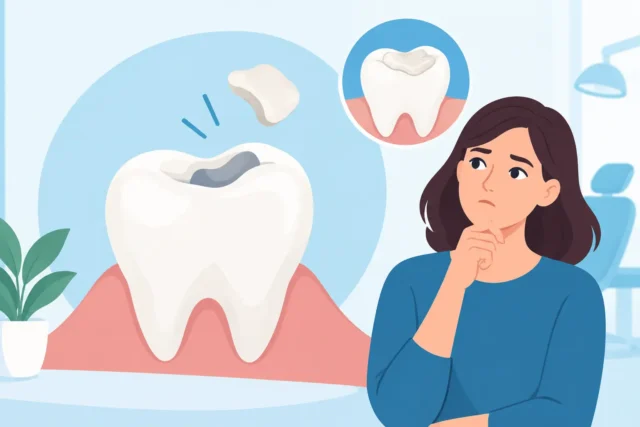
A filling that suddenly feels rough, catches food, or disappears altogether can be alarming, especially if the tooth becomes sensitive right away. So, can dental fillings fall out? Yes. Fillings are durable restorations, but they are not designed to last forever. A lost filling is usually not dangerous in the moment, but it does leave the tooth vulnerable and deserves prompt attention.
The good news is that treatment is often straightforward. Your dentist can assess why the filling came out, remove any decay or weakened tooth structure, and recommend the restoration that best protects your smile.
Why can dental fillings fall out?
Fillings can loosen or fall out for several reasons. Sometimes the filling itself has reached the end of its useful life. Other times, the tooth around it has changed.
Every time you chew, a filling absorbs pressure. Over years of use, the edges can wear down or separate slightly from the tooth. This is more common with older fillings, large fillings, and teeth that do much of the heavy chewing, such as molars.
Decay can also develop around the edge of an existing filling. Bacteria may enter a small gap between the restoration and the tooth, weakening the tooth structure that holds the filling in place. In this situation, replacing the filling without addressing the decay would not solve the underlying problem.
Clenching or grinding can be another factor. People often grind their teeth during sleep without realizing it. The repeated force can crack a filling, loosen its bond, or fracture part of the tooth. Biting down on hard candy, ice, popcorn kernels, or nonfood items can have a similar effect.
A filling may also come out when a tooth has a crack or when the remaining tooth walls are too thin to support it. If a large portion of the tooth has already been restored, a dental crown may provide more reliable long-term protection than another large filling.
What a lost filling may feel like
Not every failed filling falls out in one piece. You may notice a sharp edge with your tongue, pain when biting, food repeatedly getting stuck in one spot, or sudden sensitivity to cold, heat, sweets, or air. Some people see a dark opening in the tooth. Others find a small piece of filling material while eating.
Sensitivity can happen because the lost filling exposes dentin, the softer layer beneath enamel. Dentin contains tiny channels that communicate with the nerve inside the tooth. Cold drinks or pressure may trigger a quick, sharp sensation.
Severe throbbing pain, swelling, fever, a bad taste, or pain that keeps you awake can point to a deeper infection or nerve inflammation. Those symptoms call for urgent dental care, particularly if facial swelling is present.
What to do if a filling falls out
First, stay calm. A missing filling is a dental problem, but it is usually manageable when addressed quickly. If you can find the filling, place it in a clean container and bring it to your appointment. Your dentist may not be able to reuse it, but seeing it can sometimes be helpful.
Rinse gently with warm water to clear food from the area. Then keep the tooth as clean as possible by brushing carefully with a soft toothbrush and flossing around it gently. Avoid aggressively poking into the opening, which could irritate the tooth or gums.
Until you can be seen, chew on the other side of your mouth when possible. Choose softer foods and avoid sticky candy, nuts, ice, hard crusts, and very hot or cold foods if they cause discomfort. Over-the-counter pain medicine may help when used as directed on the label, unless a medical professional has told you not to take it.
Do not try to glue the filling back in place. Household adhesives are not safe for the mouth and can make treatment more difficult. Temporary dental repair material from a pharmacy may offer short-term coverage for some patients, but it is not a substitute for an exam. If you use one, follow the package instructions and still schedule a visit promptly.
How soon should you see a dentist?
Call your dental office as soon as you notice the problem. Ideally, a lost filling should be evaluated within a few days, even if it does not hurt. The exposed area can trap food and bacteria, and decay can progress faster once the seal is gone.
Same-day care is a good idea if you have significant pain, a sharp broken edge that is cutting your tongue or cheek, swelling, or trouble eating. If the tooth is cracked, your dentist may want to protect it quickly to reduce the chance of a more serious fracture.
For families in Johnstown, Longmont, and nearby Northern Colorado communities, having one dental home for routine visits and unexpected concerns can make these moments less stressful. At Trail Ridge Dental, the goal is to help patients understand what is happening and move forward with care that is comfortable, practical, and suited to the tooth.
Will you need a new filling or a crown?
It depends on the amount of healthy tooth remaining and why the original filling failed. If the tooth is sound and the decay is limited, a new filling may be all that is needed. Your dentist will remove any weakened material, clean the area, and place a restoration that restores the tooth’s shape and function.
If the filling was very large, the tooth has cracked, or a cusp has broken, a crown may be the better choice. Crowns cover and support the entire visible portion of a tooth, helping distribute biting forces more evenly. They require more treatment than a filling, but they can prevent a compromised tooth from breaking further.
When decay or damage reaches the pulp, the soft tissue inside the tooth, root canal treatment may be recommended before a crown. That can sound intimidating, but the purpose is to remove infection and preserve your natural tooth when possible. An exam and X-rays help determine which option is appropriate.
Can you prevent fillings from coming loose?
You cannot prevent every filling problem, since restorations naturally wear over time. Still, consistent care can greatly reduce the risk of decay and damage around a filling.
Brush twice daily with fluoride toothpaste, clean between your teeth once a day, and attend regular checkups and cleanings. During exams, your dentist can look for worn edges, small cracks, and early decay before a filling fails unexpectedly.
If you grind or clench your teeth, ask whether a custom night guard could help protect your teeth and restorations. It is also wise to avoid chewing ice and using your teeth to open packages. Small habits can place surprising stress on fillings.
A note for children with fillings
Children’s fillings can fall out too, especially when a baby tooth is nearing the time it should naturally come out. However, do not assume a missing filling is normal. A dentist should still check the tooth to make sure there is no decay, pain, or infection and to determine whether the restoration needs replacement.
A lost filling is a signal worth checking
A filling that falls out does not mean you have failed at dental care, and it does not automatically mean the tooth is in serious trouble. It simply means the seal protecting that area is no longer doing its job. A timely visit can relieve discomfort, protect the tooth from further damage, and give you a clear plan for what comes next.
If you notice a rough spot, sensitivity, or an empty space where a filling used to be, treat it as a reason to call rather than something to wait out. Your comfort and your tooth are both worth protecting.