
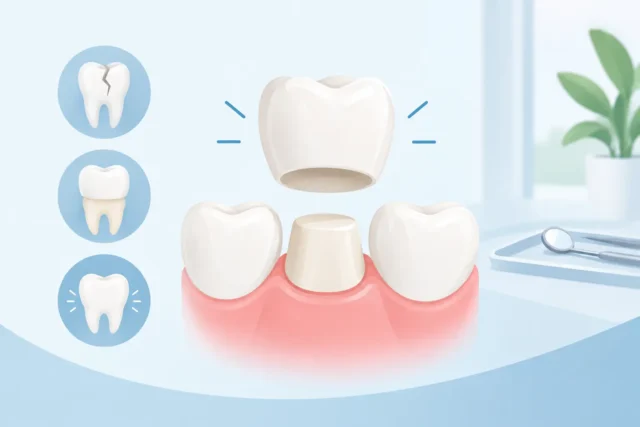
A tooth does not have to be missing to need serious attention. A deep crack, a large old filling, or decay that has weakened the tooth can make everyday things like chewing, drinking something cold, or smiling feel uncertain. Dental crowns are designed to protect a vulnerable tooth while restoring its shape, strength, and appearance.
At Trail Ridge Dental, we help patients understand their options without pressure or confusing terminology. A crown is a common restorative treatment, but the right timing, material, and treatment plan depend on what is happening beneath the surface of your tooth.
What Is a Dental Crown?
A dental crown is a custom-made cover that fits over the visible portion of a damaged or weakened tooth. Think of it as a protective shell built to look and function like a natural tooth. Once bonded in place, it helps the tooth handle normal biting and chewing forces again.
Crowns can be made from several materials, including porcelain, ceramic, zirconia, metal alloys, or a combination of materials. The best choice is not always the same for every patient. A front tooth may call for a highly natural-looking ceramic option, while a back tooth may benefit from a material chosen for exceptional strength. Your dentist will consider the tooth’s location, your bite, the amount of healthy tooth structure remaining, and your cosmetic goals.
When a Crown May Be Recommended
A crown is often recommended when a filling is no longer enough to support the tooth. Large fillings can leave the remaining tooth walls thin and more likely to fracture. In that situation, waiting until the tooth breaks may turn a straightforward restoration into a more complex treatment.
Your dentist may recommend a crown after a root canal, since a tooth that has had root canal treatment can become more brittle over time. Crowns can also repair a cracked tooth, restore a severely worn tooth, cover a dental implant, support a dental bridge, or improve the shape and color of a tooth that cannot be addressed with more conservative cosmetic treatment.
Not every damaged tooth needs a crown. Small areas of decay, minor chips, or limited wear may be treated with a filling or bonding instead. A thoughtful exam and X-rays help determine whether a crown is the most protective option or whether a more conservative approach makes sense.
What Happens During Crown Treatment?
The process begins with an exam and a conversation about your symptoms, health history, and goals. If there is decay, an old filling that has failed, or damaged tooth structure, your dentist removes the compromised material and carefully shapes the tooth so the crown can fit securely.
With a traditional crown, an impression or digital scan is used to create a precise restoration. You may wear a temporary crown while a dental lab makes the final one. At a return visit, the dentist checks the fit, bite, and color before permanently bonding the crown in place.
For many eligible cases, same-day CEREC crowns offer another option. Digital technology allows the crown to be designed and created in the office, often during a single visit. This can be especially helpful for busy families and adults who would rather avoid a temporary crown and a second appointment. Same-day treatment is not appropriate for every tooth or every type of restoration, but it is worth asking about when convenience matters.
Local anesthetic is typically used during tooth preparation, so you should be comfortable throughout the procedure. If dental anxiety has kept you from getting care, let the team know. Small adjustments to the pace of the visit, clear explanations, and a supportive approach can make a real difference.
How Long Do Dental Crowns Last?
With good home care and regular dental visits, crowns often last many years. Many patients get 10 to 15 years or more from a well-made crown, although there is no fixed expiration date. Longevity depends on the material, the condition of the tooth underneath, your bite, and your daily habits.
Grinding or clenching can place heavy pressure on crowns and natural teeth alike. If you wake with jaw soreness, experience frequent headaches, or notice worn teeth, a custom nightguard may help protect your investment. Chewing ice, using teeth to open packages, and biting hard objects can also crack a crown or loosen it over time.
A crown itself cannot get a cavity, but the natural tooth at its edges still can. That is why brushing twice a day, cleaning between teeth daily, and keeping routine checkups matter. During preventive visits, your dentist can monitor the crown’s margins, bite, and surrounding gum health before a small concern becomes painful or costly.
Signs a Crown May Need Attention
Call your dental office if a crown feels loose, cracks, chips, or comes off. Save the crown if you can, but do not try to glue it back with household adhesive. The tooth underneath may be sensitive and vulnerable to damage, and the crown may still be usable if it is intact.
Pain when biting, lingering sensitivity to hot or cold, swelling near the tooth, or a new bad taste can also signal a problem. Sometimes the issue is a simple bite adjustment or cement that has weakened. Other times, decay, a fracture, or infection beneath the crown requires prompt care. Early evaluation gives your dentist more options to protect the tooth.
If a crown comes off outside normal office hours, avoid chewing on that side and keep the area clean. A temporary dental cement from a pharmacy may be an option in some situations, but it is not a substitute for professional care. Contact your dental team for guidance, particularly if you have pain, swelling, or a sharp edge irritating your tongue or cheek.
Caring for a New Crown
Once your permanent crown is in place, it should feel like part of your natural smile. It is normal to notice it briefly as you adjust, but persistent pressure, a bite that feels uneven, or discomfort when chewing should be checked. A crown should not make you change the way you bite.
Care is refreshingly familiar: brush along the gumline, floss gently around the crown every day, and attend regular cleanings and exams. If you use an electric toothbrush, water flosser, or interdental brushes, those tools can be helpful when used properly. Your hygienist can show you techniques that fit your mouth and any existing dental work.
Choosing a crown is not only about repairing what is broken. It is often about preserving the tooth you still have, maintaining comfortable chewing, and avoiding the bigger challenges that can follow a fracture or untreated infection. If a tooth has been bothering you, or if a dentist has mentioned that an old filling is failing, scheduling an exam is a practical next step toward feeling comfortable and confident when you smile.