
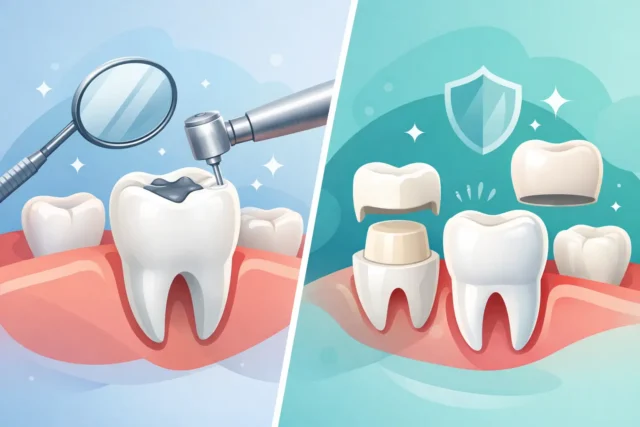
A tooth can look perfectly fine from the outside and still have decay or a crack that needs attention. When your dentist recommends treatment, the choice often comes down to a dental filling versus crown. Both restore a damaged tooth, but they serve very different purposes. The right option depends less on what sounds simpler and more on how much healthy tooth structure remains.
For many patients, a filling is a quick, conservative solution. A crown is a larger restoration that provides more complete protection when a tooth is weakened. Understanding the difference can make your treatment plan feel much more straightforward – and help you ask confident questions at your appointment.
Dental Filling Versus Crown: The Main Difference
A dental filling repairs a smaller area of damage. Your dentist removes decay, cleans the tooth, and fills the space with a restorative material, most often a tooth-colored composite resin. The goal is to seal the tooth and restore its normal shape while preserving as much natural enamel as possible.
A crown, sometimes called a cap, covers the entire visible portion of a tooth above the gumline. It is designed to reinforce a tooth that no longer has enough healthy structure to reliably hold up under chewing pressure. Crowns can be made from materials such as ceramic, porcelain, or zirconia, selected for strength and a natural appearance.
Think of a filling as repairing a pothole in a road. A crown is more like rebuilding and protecting a damaged section of that road so it can handle regular traffic again.
When a Filling Is Usually the Better Choice
A filling is often appropriate when decay, wear, or a small fracture affects only a limited portion of the tooth. If the surrounding enamel is healthy and the tooth remains structurally sound, a filling can restore function without removing more tooth material than necessary.
Small to moderate cavities are the most common reason for a filling. Fillings may also repair minor chips, replace an old leaking filling, or smooth an area of worn enamel. For children and adults alike, this is typically one of the most conservative restorative treatments available.
The advantages are practical. Fillings usually require one visit, often need less anesthesia than a crown preparation, and are generally less expensive upfront. Composite fillings are color-matched to blend with natural teeth, especially in visible areas of the smile.
Still, a filling has limits. A very large filling can leave the remaining tooth walls thin and more likely to crack. Replacing a large, worn-out filling with another large filling is not always the strongest long-term choice, particularly on a back tooth that handles heavy chewing forces.
Signs a Tooth May Be a Good Candidate for a Filling
Your dentist may recommend a filling when the cavity is relatively small, the tooth has no major crack, and enough strong enamel remains around the damaged area. You may have no symptoms at all, which is one reason routine exams and X-rays matter. Early decay can often be treated before it becomes painful or requires more extensive work.
A filling may also be a good option if the tooth has not had a root canal and there is no significant loss of structure from an older restoration. Every tooth is different, though. The location of the cavity, your bite, and habits such as clenching or grinding can affect the recommendation.
When a Crown Provides Better Protection
A crown is commonly recommended when a tooth is too damaged or weakened for a filling to do its job safely. This may happen after a large cavity, a deep fracture, repeated replacement of older fillings, or a root canal.
Back teeth are frequent crown candidates because they absorb substantial force when you chew. If a large portion of a molar has broken away, placing another filling may restore the shape temporarily but may not prevent the tooth from splitting later. A crown surrounds the tooth and helps distribute chewing pressure more evenly.
Crowns are also often used to support a tooth after root canal treatment. Removing infection and damaged internal tissue can be necessary to save a tooth, but the tooth may become more brittle afterward. A crown can provide the reinforcement needed to keep it functioning comfortably.
At Trail Ridge Dental, same-day CEREC crown options may make treatment more convenient for eligible patients. Rather than wearing a temporary crown and returning weeks later, many patients can receive a custom ceramic crown in a single appointment. Your dentist will let you know whether that approach is appropriate for your tooth and treatment needs.
A Crown Does Not Mean the Tooth Cannot Be Saved
Hearing that you need a crown can sound intimidating, especially if the tooth is not hurting every day. In many cases, a crown is recommended specifically because it helps save your natural tooth before damage becomes severe enough to require extraction.
Waiting can allow a crack to spread, decay to reach the nerve, or a weakened cusp to break further. That can turn a planned restorative visit into an urgent need for a root canal, extraction, or replacement tooth. Addressing the problem earlier often gives your dentist more options.
How Dentists Decide Between a Filling and a Crown
Your dentist will not make this decision based on the size of a cavity alone. They examine the tooth, review X-rays when needed, check for cracks, and evaluate how your teeth meet when you bite. The amount and quality of healthy tooth structure are central to the decision.
A tooth with a small cavity but a deep crack may need more than a filling. On the other hand, a tooth with a moderately sized cavity may still be well suited to a filling if the remaining enamel is strong and the tooth is not under unusual stress.
Your dental history also matters. If a tooth has needed several large fillings over the years, a crown may offer a more predictable result than continuing to patch an increasingly fragile tooth. If you grind your teeth at night, your dentist may discuss a nightguard to protect either restoration and reduce the risk of future damage.
There is no benefit to placing a crown when a filling can restore the tooth reliably. Likewise, choosing the lower-cost option today can be more expensive if an under-supported tooth breaks and needs more complex care later. A thoughtful recommendation balances conservation, durability, appearance, comfort, and your budget.
Cost, Longevity, and Insurance Considerations
Fillings generally cost less than crowns because they use less material and take less time to place. Crowns involve more detailed preparation, custom design, and laboratory or in-office milling processes, so their initial cost is higher.
But cost should be viewed in context. A well-maintained filling can last for years, and a quality crown can often last a decade or longer. Neither comes with a fixed expiration date. Their lifespan depends on the restoration material, the size and location of the repair, your bite, oral hygiene, diet, and whether you attend regular dental visits.
Dental insurance may contribute differently to fillings and crowns, depending on your plan and the reason for treatment. A crown may be covered when it is considered medically necessary to restore a damaged tooth, while cosmetic changes may not receive the same benefit. Before treatment begins, asking for a clear estimate can help you understand your expected costs. For patients without insurance, an in-house membership plan may also make ongoing preventive and restorative care easier to plan for.
How to Protect Either Restoration
Whether you receive a filling or crown, the tooth underneath still needs daily care. Brush twice a day with fluoride toothpaste, clean between teeth daily, and keep regular professional cleanings and exams. Decay can develop around the edges of a filling or crown, particularly where plaque tends to collect near the gumline.
Avoid chewing ice, using teeth to open packages, or biting hard objects. If you notice sensitivity that lingers, pain when biting, a rough edge, or a piece of restoration that feels loose, schedule a visit promptly. Small concerns are often easier to treat before they become a bigger problem.
The best restoration is the one that gives your tooth the support it truly needs while preserving healthy structure whenever possible. If you are unsure whether a filling or crown has been recommended for your situation, a caring dental team can walk you through the X-rays, explain the trade-offs, and help you move forward with confidence.