
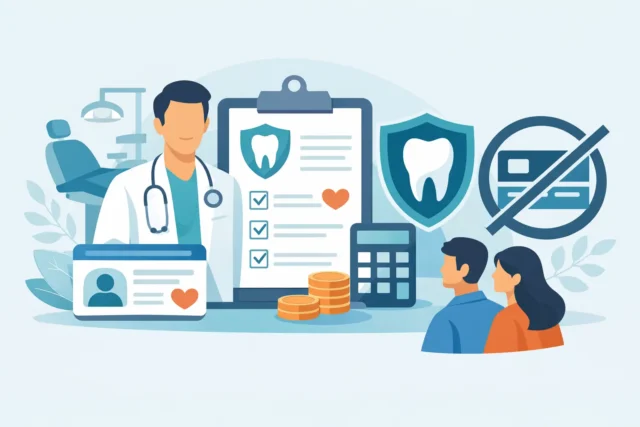
When you do not have dental insurance, even routine care can start to feel easy to postpone. A dentist membership plan no insurance patients can use is meant to change that. Instead of waiting until a small concern turns into a painful, expensive problem, you pay a straightforward fee to help make preventive care and common treatments more affordable.
For many families in Northern Colorado, that kind of predictability matters as much as the discount itself. Parents want to keep up with cleanings for their kids. Adults want to fix a tooth before it gets worse. And plenty of people simply want to know what care will cost without dealing with confusing coverage rules, deductibles, or claim denials.
What is a dentist membership plan with no insurance?
A dental membership plan is an in-house savings program offered directly by a dental practice. It is not dental insurance. There is no outside insurance company managing benefits, setting annual maximums, or deciding whether a treatment qualifies.
Instead, you join the practice’s plan and pay either a monthly or annual fee. In return, you typically receive preventive services such as exams, cleanings, and X-rays, along with reduced fees on many additional treatments. The exact details depend on the office, which is why it is worth reading the plan carefully rather than assuming all membership programs work the same way.
This model is especially helpful for patients who are self-employed, retired before Medicare dental options begin, between jobs, or working for employers that do not offer dental coverage. It can also be a practical choice for families who have looked at traditional insurance and decided the premiums, waiting periods, and coverage limits do not add up.
Why a dentist membership plan no insurance patients choose can be a smart fit
The biggest benefit is simplicity. You know what you are paying to join, and you usually know what preventive care is included. That makes it easier to schedule visits on time instead of delaying care because of cost uncertainty.
There is also the value of consistency. When preventive visits are built into your plan, it becomes easier to stay on track with the basics that protect your oral health over time. Regular exams help catch cavities early. Professional cleanings reduce buildup that can lead to gum disease. X-rays help your dentist spot problems that are not visible during a routine exam.
For patients who need more than preventive care, membership plans can also lower the cost of restorative treatment. If you need a filling, crown, root canal, extraction, or periodontal care, a discount can make the next step feel more manageable. That does not mean every treatment suddenly becomes inexpensive, but it can reduce the financial pressure enough to help patients move forward before things worsen.
There is a comfort factor too. Many people prefer working directly with a trusted dental office rather than navigating the fine print of an insurance policy. That direct relationship often feels more personal and more transparent, which matters when you are choosing care for yourself or your family.
What is usually included in a dental membership plan?
Most in-house dental membership plans focus first on preventive care. That often includes routine exams, professional cleanings, and necessary X-rays. Some plans may also include fluoride treatments for children, emergency exams, or periodontal maintenance for patients with gum disease.
Beyond those core services, many plans offer a percentage discount on additional treatment. That can apply to fillings, crowns, bridges, dentures, implants, root canals, extractions, whitening, or other services available at the practice. A family dental office with a broad service menu can make a membership plan especially useful because patients may be able to receive both routine and more advanced treatment in one place.
Still, this is where details matter. Not every service is always included in the discount. Cosmetic treatments may be handled differently. Orthodontic options may have separate terms. And some plans are designed for adults while others offer child memberships or periodontal memberships with different benefits.
The right question is not just, “Do they have a plan?” It is, “What care do I actually need, and how does this plan apply to it?”
How membership plans compare to dental insurance
A membership plan and dental insurance can both lower out-of-pocket costs, but they work very differently.
Insurance usually involves monthly premiums, deductibles, annual maximums, waiting periods, and a list of covered services. You may also need to stay within a provider network to receive the best benefit. In some cases, the plan sounds good on paper but becomes frustrating when a needed treatment is only partially covered or delayed by restrictions.
A membership plan is simpler because it is offered directly through the dental practice. There are typically no claims to file and no outside approvals to wait for. What you pay and what you receive are generally easier to understand.
That said, insurance may still be the better fit for some people, especially if an employer pays a meaningful portion of the premium or if you already have access to strong coverage. A membership plan tends to make the most sense when you do not have insurance, when your current insurance offers limited value, or when you want a more straightforward way to budget for care.
Who benefits most from a dentist membership plan no insurance option?
Patients without employer-sponsored benefits are often the clearest fit. Small business owners, freelancers, and gig workers commonly fall into this group. So do adults who have recently changed jobs or families trying to manage healthcare costs across multiple needs.
Parents often appreciate membership plans because children need regular preventive care, and predictable pricing helps with planning. Adults who know they have postponed treatment can benefit too, especially if they want to catch up on care with reduced fees on restorative services.
Membership plans can also be helpful for patients who feel anxious about the dentist. When cost feels less uncertain, it removes one more barrier to scheduling an appointment. That can make it easier to build the routine and trust that support better long-term oral health.
Questions to ask before joining
Not every plan is equally valuable for every patient. Before signing up, ask what preventive services are included, whether there is a waiting period, and how long the membership lasts. You should also ask how discounts apply to major procedures, whether the plan can be used immediately, and if there are separate options for children or periodontal patients.
It also helps to ask whether the membership is good only at one location or across the practice’s offices. For busy families, convenience matters. If your dental home has multiple locations and comprehensive services under one roof, that can make the plan even more practical over time.
Finally, think about your own habits. A membership plan offers the most value when you actually use it. If you tend to delay cleanings or skip follow-up treatment, the savings may not fully materialize. But if you are ready to stay consistent, the plan can support both your budget and your health.
Looking beyond the price tag
Affordable care matters, but value is about more than the lowest number. It also includes whether you feel comfortable at the office, whether your dentist can care for your whole family, and whether the practice can handle more complex needs if they come up.
That is why many patients look for a membership plan within a practice they can stay with for years. If your office offers preventive, restorative, cosmetic, and emergency care, you are less likely to have to start over somewhere else when your needs change. A relationship-driven approach can make a real difference, especially for children, anxious patients, and adults who have not been to the dentist in a while.
At Trail Ridge Dental, that focus on accessible, high-quality care is part of the reason an in-house membership club can be so helpful for uninsured patients. It supports the kind of long-term relationship that makes dental care feel less stressful and more manageable.
A good dental membership plan does not replace every financial consideration, and it is not one-size-fits-all. But for many uninsured patients, it creates a clearer, more comfortable path to the care they need. If cost has been the reason you have been putting off a visit, this may be the option that helps you come in, get answers, and move forward with confidence.