
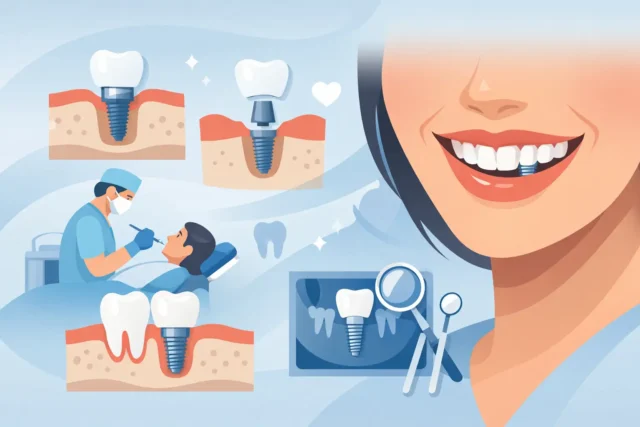
A missing tooth can change more than a photograph. You may start chewing on one side, avoiding favorite foods, or feeling self-conscious when you laugh. This dental implant process guide explains what happens from the first exam through caring for your finished restoration, so you can make decisions with clarity instead of guesswork.
Dental implants are designed to replace the root and visible portion of a missing tooth. The implant itself is a small post placed in the jawbone, while a custom crown, bridge, or denture completes the smile above the gumline. The result can look, feel, and function much like a natural tooth, but treatment is a process that depends on your oral health, healing response, and treatment goals.
Dental Implant Process Guide: The First Consultation
Your implant journey begins with a thorough evaluation. Your dentist will discuss what you would like to change, review your health history and medications, and examine your teeth, gums, bite, and the area where the tooth is missing or will be removed.
Digital X-rays and, when needed, 3D imaging help your dental team assess the amount and shape of available bone. This planning step matters because implant placement needs to account for nearby teeth, nerves, sinuses, and the way your upper and lower teeth meet. A well-planned implant should support both a healthy result and comfortable chewing.
This appointment is also the right time to talk candidly about timing and cost. Some patients can have an implant placed soon after an extraction, while others benefit from a period of healing first. The treatment plan may include bone grafting, gum treatment, an extraction, or a temporary tooth replacement before the final implant crown is made.
There is no one-size-fits-all timeline. A front tooth in a highly visible area may require more careful cosmetic planning, while a back tooth may present different bite forces and access considerations. Your dentist should explain why a particular sequence is recommended for you.
Preparing Your Mouth for an Implant
Healthy gums and adequate jawbone give an implant its best foundation. If active gum disease is present, it should be treated before implant surgery. Untreated periodontal disease can affect the tissues and bone surrounding an implant just as it can affect natural teeth.
When a tooth has been missing for a while, the jawbone in that area can gradually shrink. A bone graft may be recommended to rebuild or preserve the site. Grafting material supports your body’s natural bone growth, but it can add several months to the total treatment time because the area needs to mature before or alongside implant placement.
If a damaged tooth needs to be removed, your dentist may discuss socket preservation. This is a type of graft placed at the time of extraction to help maintain the shape of the bone. In certain cases, an implant can be placed immediately after removal of a tooth. That option is not always appropriate, especially if there is infection, insufficient bone, or a need to protect the appearance of the gumline.
For patients who feel nervous, comfort planning is part of preparation, too. Ask what to expect during treatment, what numbing or sedation options may be available, and how you will manage recovery at home. Clear answers can make a surgical appointment feel far more manageable.
Implant Placement and Early Recovery
During implant placement, the area is numbed, and the dentist or surgical provider carefully places the implant post into the jawbone. Many patients are surprised that the procedure is more comfortable than expected. You may feel pressure and vibration during treatment, but you should not feel sharp pain.
Afterward, mild swelling, tenderness, and minor bleeding are common for a few days. Your care instructions may include using an ice pack, eating softer foods, taking recommended medications, and keeping the surgical area clean without disturbing it. Avoid smoking or vaping during healing, as tobacco use can interfere with blood flow and increase the risk of implant complications.
Most people return to regular daily activities quickly, although strenuous exercise may need to wait briefly. Follow-up visits allow your dental team to check that the site is healing as expected. Contact the office if pain worsens after the first few days, swelling becomes severe, you develop a fever, or you have concerns about bleeding.
Healing Is Where the Implant Becomes Stable
The key healing phase is called osseointegration. Over time, the jawbone grows around and bonds with the implant surface, creating the stable base needed for a crown or other restoration. This typically takes several months, though the timing varies based on bone quality, the implant location, whether grafting was needed, and your overall health.
You may wear a temporary restoration during this time, particularly if the missing tooth is visible when you smile. Temporary teeth are useful for appearance and function, but they may need special care. Your dentist may ask you to avoid biting hard foods directly on the temporary so the implant site can heal without excess pressure.
Patience matters here. Rushing to place a final crown before the implant is ready can compromise the long-term result. A thoughtful timeline protects the investment you are making in your smile.
The Final Crown, Bridge, or Denture
Once the implant has integrated with the bone, your dentist takes impressions or digital scans to create the final restoration. A small connector called an abutment joins the implant to the visible tooth replacement. The final crown is designed to match the shade, shape, and bite of your surrounding teeth as closely as possible.
For one missing tooth, the final restoration is often an implant-supported crown. Multiple missing teeth may be restored with an implant-supported bridge, which can replace several teeth without relying on adjacent natural teeth for support. For patients missing most or all teeth, implant-supported dentures can offer more stability than traditional removable dentures.
At the final delivery visit, your dentist checks the fit, bite, appearance, and comfort. Small adjustments are normal. The goal is not simply to fill a space, but to create a restoration that feels balanced when you speak and chew.
Caring for Your Implant for the Long Term
An implant cannot get a cavity, but the gum tissue and bone around it still require daily care. Plaque can contribute to inflammation around an implant, sometimes called peri-implant mucositis. If inflammation progresses and bone is affected, it may lead to peri-implantitis, a more serious condition that needs professional treatment.
Brush twice daily with a soft toothbrush and clean between your teeth every day. Depending on your restoration, your dentist may recommend floss, an interdental brush, a water flosser, or another tool that can clean around the implant and under a bridge. Regular professional cleanings and exams are essential because implant problems are often easier to address early.
Nighttime grinding can place heavy force on implants and natural teeth. If you clench or grind, a custom night guard may help protect your restoration. It is also wise to avoid using your teeth to open packages or bite very hard objects, even after your implant is fully healed.
Questions to Ask Before You Begin
A good implant conversation should leave you informed, not pressured. Ask whether you need grafting or gum treatment, who will place the implant, how long your expected treatment timeline is, and what type of final restoration is planned. You can also ask how temporary teeth will be handled, what follow-up visits are included, and what options exist if you do not have dental insurance.
Dental implants are a significant investment, and the lowest initial price is not always the clearest picture of value. A complete plan should account for diagnostics, surgery, materials, restoration, and long-term maintenance. Choosing a team that can coordinate your general dental care and restorative treatment can make the experience simpler and more consistent.
At Trail Ridge Dental, patients can discuss implant treatment in the context of their full smile, overall health, comfort, and budget. The right next step may be an implant, but it may also be another restorative option. A personal evaluation is the best way to understand what will serve you well for years to come.
If a missing tooth has been making everyday moments harder, you do not have to decide everything at once. Start with an exam, bring your questions, and give yourself the space to choose a treatment plan that feels right for your health and your life.