
Understanding the Risks at Our Dentist’s Office Near You
Replacing missing teeth is one of the most important steps you can take to preserve your oral health and restore your confident smile. At Trail Ridge Dental, Dr. Sean Visger, DDS, and our welcoming staff are deeply committed to ensuring that your restorative journey is a complete success. We know that it can be hard to get yourself and your family to go to the dentist, which is why we provide a stress-free, compassionate environment at our two state-of-the-art locations in Longmont, CO, and Johnstown, CO.
When patients explore permanent tooth replacement options, dental implants are universally recognized as the gold standard. However, one of the most frequent concerns we hear from patients involves tobacco use. Many individuals wonder, “can you smoke after dental implants?” or ask about the specific risks associated with smoking and dental implants. To help you achieve the best possible clinical outcome, it is crucial to understand exactly how tobacco impacts your body’s ability to heal and why our dental team takes this habit so seriously.
If you’re ready to discuss your candidacy for oral surgery and protect your smile, call our dentist in Johnstown at 970-593-1010 or Longmont dentists near you at 303-772-6960 today.
Can Smokers Get Dental Implants?
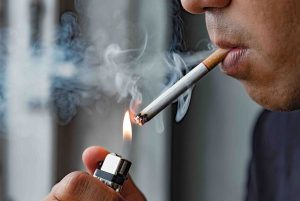 The short answer is yes, smokers can absolutely receive this life-changing restorative treatment. However, being a smoker does put you in a higher risk category for surgical complications. When our team places a titanium post into your jaw, your body must complete a critical healing process known as osseointegration.
During osseointegration, your natural bone tissue actively grows around and fuses to the titanium post, creating an immovable artificial root. For this biological process to occur successfully, your gums and bone tissue require a robust, uninterrupted supply of oxygen and essential nutrients delivered through your bloodstream.
How Tobacco Restricts Healing and Recovery
The primary issue with smoking with dental implants is that tobacco smoke contains nicotine, a powerful vasoconstrictor. Nicotine forces your blood vessels to narrow, drastically reducing the amount of nutrient-rich blood that can reach your oral tissues. When your surgical site is deprived of healthy blood flow, the osseointegration process slows down significantly, leaving the implant vulnerable to shifting.
Furthermore, inhaling tobacco smoke introduces carbon monoxide into your bloodstream, which displaces oxygen. Without adequate oxygen, your body simply cannot produce the new cells required to heal the surgical incisions. This delayed healing drastically increases your risk of developing a severe infection at the implant site, which can ultimately compromise the entire restorative procedure.
The Dangers of a Failed Dental Implant Due to Bone Loss
 When the healing process is compromised by tobacco use, the risk of implant failure rises exponentially. One of the most severe complications is a failed dental implant due to bone loss. Smoking impairs the immune system and alters the bacterial environment in your mouth, making you highly susceptible to peri-implantitis.
Peri-implantitis is an aggressive form of gum disease that attacks the tissues and bone immediately surrounding the titanium post. Because smoking masks the early warning signs of gum disease, such as bleeding, this infection often progresses unnoticed until significant bone has already deteriorated. Once the supporting jawbone is lost, the implant will become loose and may require complete removal.
If you’re ready to treat an infected implant and restore your oral health, call our Colorado dentist near you in Johnstown at 970-593-1010 or Longmont at 303-772-6960 today.
How Long After Dental Implants Can I Smoke?
Patients frequently ask how long they must abstain from tobacco after their surgery. Our clinical recommendation is to stop smoking completely for at least two weeks prior to your surgery and to avoid all tobacco products for a minimum of two to three months afterward.
This critical window is when the majority of the vital bone fusing takes place. Resuming smoking too early drastically increases your chances of complications. If you are struggling with cessation, our team can provide resources and guidance to help you through this crucial healing period.
- Commit to Cessation: Attempt to quit entirely, or use nicotine patches as a safer alternative to smoking during healing.
- Maintain Impeccable Hygiene: Brush and floss meticulously to reduce the bacterial load in your mouth.
- Attend All Follow-Ups: Keep all of your scheduled maintenance appointments at our Longmont or Johnstown clinics so we can monitor your healing.
Addressing Light Smoking After Dental Implant Surgery
 Some patients believe that cutting back is enough and wonder if light smoking after dental implant placement is safe. Unfortunately, there is no safe threshold for inhaling combustible tobacco smoke when recovering from oral surgery.
Even a few cigarettes a day introduce enough toxins and nicotine to constrict your blood vessels and significantly delay your cellular regeneration. Additionally, the physical act of inhaling creates negative pressure inside your mouth, which can dislodge the delicate blood clots protecting your surgical incisions, leading to a painful condition known as dry socket.
If you’re ready to learn more about protecting your surgical sites and avoiding complications, call our Colorado dentist near you in Johnstown at 970-593-1010 or Longmont at 303-772-6960 today.
Navigating Bone Grafting and Sinus Lifts
For patients who have been missing teeth for an extended period, the jawbone may have already shrunk too much to support a prosthetic. In these cases, we must rebuild the foundation first. A sinus lift for dental implants or standard bone grafting longmont services are required to add volume to your upper or lower jaw.
Smoking after bone graft procedures is incredibly detrimental. Because bone grafts rely entirely on the formation of new, delicate blood vessels to integrate with your existing jaw, the vasoconstrictive effects of nicotine will often cause the grafted material to fail and die. Our dentists near you will thoroughly evaluate your bone density and discuss your tobacco habits to ensure these preparatory surgeries are successful.
If you’re ready to rebuild your jawbone and secure a permanent smile, call our Colorado dentist near you in Johnstown at 970-593-1010 or Longmont at 303-772-6960 today.
Schedule Your Dental Implant Consultation
Choosing to permanently replace your missing teeth is a remarkable investment in your long-term health, nutrition, and self-confidence, and Dr. Sean Visger is dedicated to providing the education and advanced clinical expertise necessary to ensure your journey is successful. Trail Ridge Dental is proud to offer top-tier oral rehabilitation without the need for traditional insurance by utilizing the Trail Ridge Membership Club, making exceptional care accessible for our entire Colorado community. If you’re ready to achieve a complete, healthy smile and explore your restorative options, call our Johnstown dentist near you at 970-593-1010 or Longmont at 303-772-6960 today.