
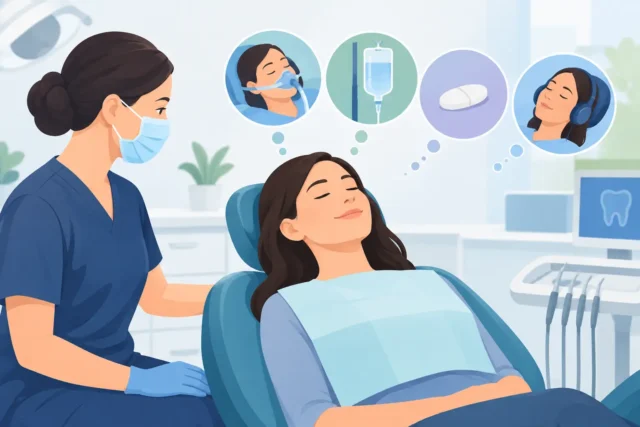
A dental appointment should not feel like something you have to endure. If worry, a sensitive gag reflex, past experiences, or the thought of a longer procedure keeps you from getting care, dental sedation options may help you feel more comfortable and able to move forward. The right choice is personal. It depends on your health history, the treatment you need, your level of anxiety, and how much support will help you feel at ease.
At Trail Ridge Dental, comfort starts with being heard. Before recommending sedation, your dental team should take time to understand what concerns you, explain what to expect, and help you make a decision without pressure.
What are dental sedation options?
Dental sedation uses medication or inhaled gas to reduce anxiety, help you relax, or make a procedure easier to tolerate. It is not always the same as being fully asleep. In fact, many patients receiving sedation remain awake enough to respond to simple directions while feeling much calmer and less focused on the sounds, sensations, and length of the appointment.
The level of sedation can range from mild relaxation to deeper sedation. Some choices wear off quickly, while others require more planning and a responsible adult to drive you home. Your dentist will recommend an approach based on your treatment and safety needs rather than using a one-size-fits-all solution.
Nitrous oxide for mild, short-term relaxation
Nitrous oxide, sometimes called laughing gas, is breathed through a small mask placed over the nose. It can create a light, floaty, relaxed feeling within minutes. You remain awake and aware, but many patients find that their nerves feel quieter and the appointment feels more manageable.
One advantage is that nitrous oxide is adjusted during the visit and wears off relatively quickly after the mask is removed. Your dental team will provide specific instructions about whether you can drive yourself afterward. It may be a good fit for routine care, children who need a little help settling in, or adults with mild to moderate dental anxiety.
Nitrous oxide is not the best answer for every patient. Nasal congestion, certain medical considerations, or a higher level of anxiety may make another approach more appropriate. The conversation with your dentist matters more than choosing a method by name.
Oral sedation for a deeper sense of calm
Oral sedation involves taking a prescribed medication before your visit, following your dentist’s exact directions. It is generally used for patients who need more than mild relaxation, have difficulty sitting through treatment, or feel significant fear before they even arrive at the office.
With oral sedation, you may feel drowsy, deeply relaxed, and less aware of time. You can usually still respond to your dental team, but you may remember little about the details of the appointment afterward. Because the effects can last for several hours, you will need a trusted adult to bring you to the office and take you home. Plan to rest for the remainder of the day rather than returning to work, school, or caregiving responsibilities.
The trade-off is preparation. Your dentist may ask you to avoid food or drink for a set period, adjust certain medications, and confirm that you have a ride. Those instructions are part of your care, not just paperwork. Following them helps make sedation safer and more predictable.
IV sedation and deeper care needs
For extensive treatment, severe anxiety, strong gag reflexes, or certain complex procedures, some patients may benefit from IV sedation or a deeper level of sedation provided by appropriately trained professionals. Medication is delivered through a vein, allowing the level of sedation to be carefully monitored and adjusted.
This option can be helpful when treatment is expected to take longer or when a patient has avoided needed care because of intense fear. It also requires more involved screening, monitoring, and recovery planning. Depending on the treatment, your dentist may provide this care or coordinate with a qualified sedation provider or specialist.
General anesthesia is different from routine dental sedation. Under general anesthesia, a patient is fully unconscious and cannot respond. It is usually reserved for specific medical, behavioral, or surgical situations and may be completed in a hospital or specialized setting. Your dentist can explain whether that level of care is relevant for you or your child.
Who may benefit from sedation dentistry?
Needing extra support does not mean you are a difficult patient. Dental anxiety is common, and it can affect people who have had painful experiences, who feel embarrassed about delaying care, or who simply dislike the loss of control that comes with sitting in a dental chair.
Sedation may also be considered for patients with a very sensitive gag reflex, difficulty getting numb with local anesthetic alone, limited ability to sit comfortably for an extended time, or a need for multiple procedures in one visit. For children, the focus is often on creating a positive, safe experience while taking their age, development, health, and ability to cooperate into account.
Sedation does not replace local anesthetic. If a procedure could cause discomfort, numbing medication is still used to control pain. Sedation helps with relaxation and anxiety; local anesthetic blocks pain in the treatment area. Using both appropriately can make care much more comfortable.
How your dentist chooses the safest option
A safe sedation plan begins well before your procedure. Your dental team will review your medical history, current medications, allergies, prior experiences with anesthesia or sedation, and any conditions that could affect breathing or recovery. Be open about alcohol, cannabis, nicotine, supplements, and prescription medications, even if they do not seem related to dentistry. This information helps your team avoid unwanted interactions and choose the right level of care.
Your procedure matters, too. A short filling may call for a different approach than a root canal, extraction, or implant treatment. The goal is not necessarily the strongest form of sedation. It is the least intensive option that can help you receive care comfortably and safely.
Ask practical questions before you decide. What will I feel during the appointment? Will I be awake? What should I eat or avoid beforehand? Do I need someone to stay with me afterward? How long will recovery take? Is sedation included in my treatment estimate, or billed separately? Clear answers can remove much of the uncertainty that fuels anxiety.
Preparing for a sedated dental visit
Once your sedation plan is confirmed, follow the instructions your dentist gives you exactly. They may include eating a light meal, fasting for a certain number of hours, taking or pausing medications as directed by your physician and dentist, and wearing comfortable clothing. Do not take a sedative medication early or alter the dose because you are feeling nervous. Timing is carefully planned for your safety.
If you are receiving oral or IV sedation, arrange a responsible adult to escort you home and stay available afterward. Do not drive, operate equipment, sign important documents, drink alcohol, or make major decisions until the medication has fully worn off. Even if you feel alert, judgment and coordination can still be affected.
Parents should tell the dental team about any changes in a child’s health before the visit, including fever, cough, congestion, or new medications. In some cases, rescheduling is safer than proceeding when a child is sick.
Comfort is part of good dental care
The best dental sedation options are the ones that allow you or your child to receive needed care with appropriate safety, clear expectations, and a greater sense of control. Whether you need a calming hand during a routine appointment or more structured support for a larger procedure, there is no shame in asking what can make the experience easier.
A conversation is a good place to start. Share what has made dental visits hard in the past, what you are worried about now, and what would help you feel more at home. A caring dental team can help you build a plan that makes returning to the chair feel possible.