
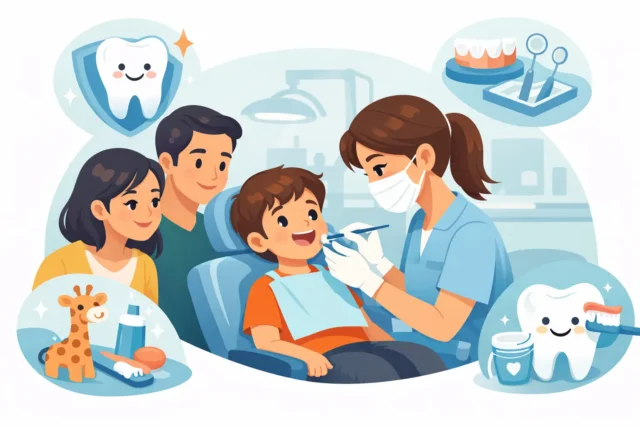
A first dental appointment is often much shorter and gentler than parents expect. For a baby with a new tooth or a toddler who is still getting used to sitting still, the goal is not a perfect exam. This children’s first dental visit guide explains how to make that first introduction feel familiar, positive, and useful for your family.
When should your child first see a dentist?
A good rule of thumb is to schedule your child’s first dental visit by their first birthday or within six months of their first tooth coming in, whichever happens first. That timing can feel early, especially when there are only one or two tiny teeth to inspect. But early visits help a dentist check that teeth and gums are developing as expected, talk through home care, and identify concerns before they become painful or complicated.
You do not need to wait for a full mouth of teeth, a school dental form, or a problem. In fact, seeing the dentist before there is a toothache helps your child connect dental care with routine health, not discomfort.
Schedule sooner if you notice tooth discoloration, a chipped tooth, swelling, ongoing mouth pain, trouble eating, or a fall that affects the mouth or teeth. A dentist can tell you whether the issue needs treatment or simply monitoring.
What happens at a child’s first dental visit?
The first visit is designed around your child’s age, comfort level, and ability to participate. Some babies are happiest in a parent’s lap. Many toddlers need time to look around, ask questions, or hold a favorite toy before they are ready to open wide. That is completely normal.
The dental team will typically review your child’s health history, feeding habits, brushing routine, and any concerns you have noticed. The dentist will look at the teeth, gums, bite, jaw development, and soft tissues of the mouth. They may also discuss thumb or pacifier habits, fluoride, cavity prevention, and what to expect as more teeth erupt.
A cleaning may be part of the visit, but it depends on the child. Some children are ready for a gentle polish right away. Others benefit more from a brief exam and a positive experience that builds trust for next time. Dental X-rays are not automatic at every first visit. They are recommended only when the dentist needs information that cannot be gathered during the visual exam, such as checking for decay between teeth or evaluating a concern.
This flexible approach is not a shortcut. It is how family dentistry supports a child without turning a new experience into an overwhelming one.
Your questions are part of the appointment
Parents often leave the first visit with practical answers that make daily care easier. Ask about toothpaste amounts, brushing techniques, snacks and drinks, teething, pacifier use, mouth breathing, and anything else on your mind. There is no need to wait until a problem feels serious.
If your child has special health, sensory, behavioral, or developmental needs, mention them when you schedule. Sharing what helps your child feel safe allows the team to plan a more comfortable visit from the start.
How to prepare for the first dental appointment
The best preparation is simple and calm. Talk about the dentist in a matter-of-fact, encouraging way: “The dentist will count your teeth and help us keep your smile healthy.” Avoid describing the appointment as something scary that your child must be brave enough to endure. Even well-meant phrases such as “It won’t hurt” can introduce a worry your child did not have.
Choose an appointment time when your child is generally rested and fed. For young children, that often means avoiding naptime or the end of a long day. Bring a comfort item if it helps, along with any health insurance information, a list of medications, and details about your child’s medical history.
Before the visit, practice at home by taking turns being the dentist. Let your child count your teeth with a clean finger or a toothbrush, then let them practice opening wide in a mirror. Keep it playful and brief. The point is familiarity, not rehearsal.
On the day of the appointment, arrive with enough time that you are not rushing. Children often pick up on a parent’s stress more quickly than the words being said. A relaxed tone, a small snack beforehand if appropriate, and realistic expectations go a long way.
What parents can do during the visit
Your role is to be a steady, reassuring presence. Follow the dental team’s guidance about where to sit or stand. With very young children, a knee-to-knee position with a parent may make the exam easier. With older children, the dentist may encourage them to sit in the chair independently while you stay nearby.
Try to let the team lead the conversation. Dental professionals use child-friendly language and a show-and-tell approach to explain new sights and sounds. If your child hesitates, that does not mean the appointment has failed. A child may need a few minutes to warm up, and a positive, shorter visit can be more valuable than pushing through every step.
Praise specific efforts rather than promising a large reward. “You opened your mouth when the dentist asked” or “You sat so still while they counted your teeth” helps children understand what went well. A small, non-food treat or a fun stop at the park afterward can be nice, but it does not need to become a negotiation.
Everyday habits that protect little teeth
The first appointment is a starting point for routines at home. Once teeth appear, brush twice a day using a soft, child-sized toothbrush and a small amount of fluoride toothpaste. For children under age 3, use a rice-grain-sized smear. From age 3 through 6, use a pea-sized amount and help them spit rather than swallow when they are able.
Young children need hands-on brushing help for longer than many parents realize. They may want to take the lead, and that independence is worth encouraging, but an adult should follow up until brushing skills are reliable. For most children, that means helping well into the elementary years.
Frequent exposure to sugary drinks and snacks can be tougher on teeth than an occasional treat eaten with a meal. Water between meals is usually the most tooth-friendly choice. Juice, sports drinks, sweetened milk, and frequent sipping from bottles or cups can raise cavity risk, especially near bedtime.
Bedtime deserves extra attention. After the final brushing, offer water only unless your dentist has given you different guidance for a medical reason. This small routine can make a meaningful difference because saliva flow naturally decreases during sleep.
A calm first visit can shape future care
Children do not need to love every unfamiliar moment to build confidence at the dentist. They simply need repeated experiences where they are treated with patience, respect, and clear communication. Starting early gives your family a chance to build that comfort before dental care feels urgent.
For families in Johnstown, Longmont, and nearby Northern Colorado communities, Trail Ridge Dental welcomes children as part of the practice family and can help make their first visit feel like the beginning of a long-term dental home. A simple appointment now can give your child a healthier, more confident relationship with their smile for years to come.