
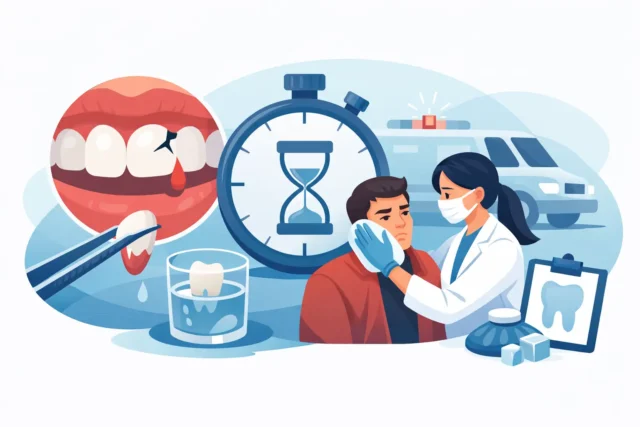
A fall from a bike, a stray baseball, or an unexpected slip on the ice can change a smile in seconds. Dental trauma can look alarming, especially when there is bleeding, swelling, or a tooth has moved or broken. The good news is that calm, prompt action can make a meaningful difference in comfort, healing, and the chance of saving a natural tooth.
Not every dental injury requires the same response. A small chip may be uncomfortable but stable, while a knocked-out permanent tooth needs immediate attention. Knowing what to do in the first hour helps parents, athletes, and adults protect their smiles until they can be seen by a dentist.
What Counts as Dental Trauma?
Dental trauma includes injuries to the teeth, gums, lips, tongue, jaw, and supporting bone. It may happen during sports, a car accident, a playground fall, or an everyday household mishap. Some damage is obvious. Other injuries, such as a cracked root or a tooth that has been pushed slightly out of position, may not be visible right away.
Common signs include a chipped, cracked, loose, displaced, or missing tooth; tooth pain or sensitivity; bleeding from the gums; facial swelling; a cut lip or tongue; and pain when biting. A tooth can also darken days or weeks after an impact. That color change may signal damage inside the tooth and should be checked, even if the discomfort has faded.
The force of an injury matters, but symptoms matter too. A minor-looking chip after a hard hit can sometimes accompany a deeper crack or injury to the tooth nerve. It is wise to call a dental office the same day for guidance after any significant blow to the mouth.
First Steps After Dental Trauma
Start by checking the person for signs of a more serious medical emergency. Call 911 or seek emergency medical care right away for loss of consciousness, confusion, vomiting, trouble breathing or swallowing, uncontrolled bleeding, suspected jaw fracture, severe facial injury, or a possible neck injury. Dental care should follow medical stabilization when those concerns are present.
If there is no urgent medical emergency, gently rinse the mouth with clean water. Apply light pressure with clean gauze to control bleeding, and use a cold compress on the outside of the face to help reduce swelling. Avoid pressing directly on an injured tooth or trying to force a loose tooth back into place.
Save any broken pieces of tooth you can find. Place them in a clean container with milk or saliva if possible, then bring them to the appointment. Even when a piece cannot be reattached, it can help the dentist evaluate the injury and plan a natural-looking repair.
For pain, use medication only as directed on the label or by a medical professional. Do not place aspirin, pain relievers, or numbing gels directly on the gums or tooth. They can irritate soft tissue and do not treat the underlying injury.
If a Permanent Tooth Is Knocked Out
A knocked-out adult or permanent tooth is one of the most time-sensitive dental emergencies. Find the tooth by picking it up only by the crown, which is the white chewing surface. Do not touch or scrub the root.
If the tooth is dirty, rinse it briefly and gently with milk, saline, or clean running water. Do not use soap, alcohol, or a brush. If the person is alert and it is safe to do so, gently place the tooth back in its socket and have them bite softly on gauze to hold it in place. Do not force it if it will not seat easily.
If reinsertion is not possible, keep the tooth moist. Milk is often a good option. A tooth-preservation solution is also appropriate if available. Saliva can work in some situations by placing the tooth in the person’s cheek, but this is not suitable for young children or anyone who might swallow it. Get urgent dental care immediately. Faster treatment generally gives a permanent tooth its best chance of being saved.
If a Baby Tooth Is Knocked Out
Do not put a knocked-out baby tooth back into the socket. Reinserting it could damage the developing permanent tooth beneath it. Contact a dentist promptly for advice, particularly if there is significant bleeding, pain, or concern that the child may have swallowed or inhaled the tooth.
A missing baby tooth still deserves an examination. The dentist can evaluate the gums, supporting bone, and nearby teeth, then discuss whether space should be monitored as the child grows.
Chipped, Cracked, Loose, or Shifted Teeth
A chipped tooth may have a sharp edge that cuts the tongue or cheek. Covering the edge temporarily with orthodontic wax can improve comfort until treatment. Depending on the size and location of the chip, a dentist may smooth the area, repair it with tooth-colored bonding, or recommend a crown for more substantial damage.
Cracks are more unpredictable. A shallow crack may cause only brief sensitivity to cold or pressure, while a deeper crack can expose the inner nerve or extend below the gumline. Avoid chewing on that side of the mouth and arrange an evaluation as soon as possible. Waiting can allow a crack to widen, especially when biting forces continue.
A tooth that feels loose, looks longer or shorter than nearby teeth, or has shifted position needs prompt attention. Do not test it repeatedly with a finger. The tooth may need to be carefully repositioned and stabilized, and the surrounding tissues may need monitoring over time. Follow-up visits are often part of successful care because complications can appear later.
Why Prompt Care Protects More Than Appearance
The visible injury is only part of the picture. A dental exam may include X-rays to assess the tooth roots, bone, and developing teeth in children. Early care can relieve pain, prevent infection, protect the tooth nerve when possible, and preserve the alignment of a growing smile.
Treatment depends on the injury. Options can range from simple bonding for a small chip to a protective crown, splinting for a mobile tooth, root canal treatment for a damaged nerve, or replacement planning when a tooth cannot be saved. A careful recommendation should account for age, bite, the health of surrounding teeth, and the long-term result, not just the immediate cosmetic concern.
This is especially true for children and teens. Their teeth and jaws are still developing, so the best short-term treatment may be different from the best final restoration later. Regular follow-up gives the dental team a chance to watch healing and adjust the plan when needed.
Preventing Future Mouth Injuries
No one can prevent every accident, but a few habits lower the risk. Athletes in contact sports, skateboarding, cycling, skiing, and similar activities should wear a properly fitted mouthguard. A custom dental mouthguard often offers the best fit and protection, though a well-fitting store-bought option is better than none.
At home, avoid using teeth to open packages, hold objects, or crack hard foods and ice. Children should use age-appropriate car seats and helmets for biking and recreational activities. If someone has frequent falls, nighttime grinding, or a bite that leaves front teeth especially exposed, mention it at a dental visit so the risk can be discussed.
When to Call for an Emergency Dental Visit
Call promptly for a knocked-out permanent tooth, a loose or displaced tooth, severe tooth pain after an injury, a crack with pain on biting, swelling, persistent bleeding, or a broken tooth with visible pink or red tissue inside. Same-day attention is also appropriate when a restoration, crown, or veneer breaks after trauma and leaves the tooth painful or sharp.
Even if the mouth looks normal, schedule an evaluation after a strong impact if there is lingering sensitivity, a changed bite, numbness, or jaw pain. These symptoms may point to injuries that are not apparent in a mirror.
When an accident happens, you do not need to have every answer before you call. Describe what occurred, when it happened, which teeth are involved, and whether there is bleeding, pain, swelling, or a tooth that has moved. A compassionate dental team can help you decide the next step and prepare for your arrival.
For families across Northern Colorado, Trail Ridge Dental is here to provide calm, attentive care when a dental emergency interrupts the day. Acting quickly, preserving what you can, and getting the right evaluation gives your smile the strongest possible path forward.