
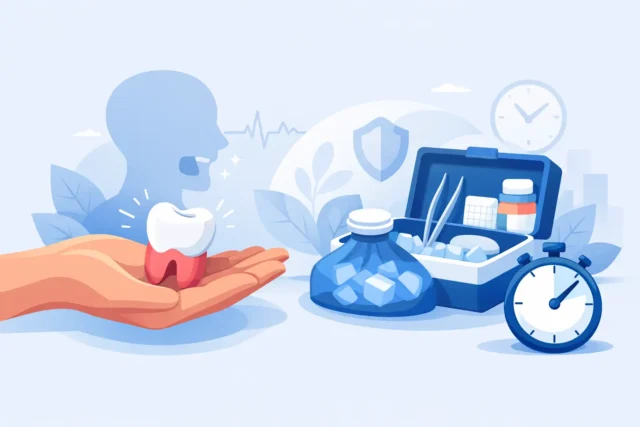
A tooth can get knocked out in one bad moment – a fall at the playground, a sports hit, a bike crash, or even an unexpected slip at home. Knowing how to handle a knocked out tooth right away can make the difference between saving the tooth and needing a more involved restoration later.
This is one of the few true dental emergencies where minutes matter. The good news is that calm, quick first aid gives the tooth its best chance. If this happens to you or your child, focus on protecting the tooth, keeping it moist, and getting to a dentist as soon as possible.
How to handle a knocked out tooth in the first few minutes
The first step is simple: find the tooth and pick it up by the crown, which is the chewing surface you normally see in the mouth. Try not to touch the root. The root has delicate cells attached to it, and those cells help the tooth reattach successfully.
If the tooth is dirty, gently rinse it with milk or a light stream of clean water for a few seconds. Do not scrub it, dry it off, wrap it in tissue, or use soap or chemicals. Those well-meaning moves can damage the root surface.
If the person is alert and old enough to follow directions, try placing the tooth back into the socket right away. Hold it by the crown, line it up carefully, and gently push it into place. Once it is seated, have the person bite softly on clean gauze or a cloth to keep it steady.
If you cannot put the tooth back in, the next best option is to keep it moist. Place it in cold milk if available. If milk is not available, use a tooth preservation kit if you have one. As another option, the tooth can sometimes be tucked inside the cheek of an older child or adult who can avoid swallowing it. For young children, this is not safe because of the choking risk. Plain water is better than letting the tooth dry out, but it is not ideal for long-term storage.
Then call a dentist immediately. An avulsed permanent tooth should be treated as fast as possible, ideally within 30 minutes, though there can still be hope beyond that window.
What not to do
When people panic, they often do the exact things that make reimplantation harder. Avoid handling the root, scrubbing the tooth clean, or letting it sit dry on a counter or in a pocket. Do not delay care to “wait and see” if the tooth can go back in later.
It also matters to know what kind of tooth was lost. If a baby tooth is knocked out, do not try to put it back into the socket. Reimplanting a baby tooth can damage the developing adult tooth underneath. A child still needs prompt dental evaluation, but the immediate approach is different.
Baby tooth or permanent tooth?
This is where many parents understandably hesitate. A knocked out permanent tooth is an emergency where replacing the tooth quickly can help save it. A knocked out baby tooth is still urgent, but it is usually managed by checking the area, controlling bleeding, and making sure no other injury occurred.
If you are not sure whether the tooth is baby or permanent, call your dentist and describe the child’s age and which tooth came out. In general, front permanent teeth begin coming in around age 6 to 8, so school-age children may have a mix of both.
What to do for bleeding and pain
There is often some bleeding after a tooth is knocked out. Fold clean gauze or a clean cloth and apply gentle pressure to the socket. If there is swelling, place a cold compress on the outside of the face near the injury. Over-the-counter pain relief may help, as long as it is taken as directed and appropriate for the person’s age and health history.
Watch for signs that the injury is more than dental. If there was a hard fall, head injury, dizziness, vomiting, confusion, trouble breathing, or heavy uncontrolled bleeding, seek emergency medical attention right away.
Why speed matters so much
When people ask how to handle a knocked out tooth, they are usually hoping for a simple trick. The truth is that the tooth’s survival depends heavily on time and storage conditions. The cells on the root begin to deteriorate once they dry out. The longer the tooth stays out of the mouth and dry, the lower the chance that it will successfully reattach.
That said, every situation is a little different. A tooth that was immediately placed back in the socket has a better outlook than one left dry for an hour. A younger patient may heal differently than an older adult. Sometimes the tooth can be saved but may still need follow-up treatment such as splinting, root canal therapy, or long-term monitoring.
What your dentist will do
At the dental office, the team will first make sure there are no additional urgent injuries. The dentist will examine the socket, the knocked out tooth if you brought it, and the surrounding teeth and gums. Dental X-rays are often needed to check for fractures, confirm positioning, and look for pieces of tooth or bone.
If the tooth can be replanted, the dentist will gently place it into position and stabilize it with a small splint attached to neighboring teeth. This splint is temporary and helps protect the tooth while the area heals. You may also receive instructions for a soft-food diet, gentle oral hygiene, and follow-up visits.
In some cases, the tooth cannot be saved. That can happen if the root is badly damaged, the tooth stayed dry too long, or there is severe injury to the surrounding bone and tissue. If that is the case, your dentist will walk you through replacement options. Depending on age, oral health, and timing, that may include a bridge, a removable appliance, or eventually a dental implant.
How to handle a knocked out tooth during sports or school
Many knocked out teeth happen away from home, which adds stress. Coaches, teachers, school nurses, and parents often need to act quickly without ideal supplies. If the tooth is permanent, the priorities stay the same: hold it by the crown, rinse gently if dirty, place it back in the socket if possible, or store it in milk and get urgent dental care.
If your child plays contact sports, a properly fitted mouthguard is one of the best ways to reduce the risk of dental trauma. It may not prevent every injury, but it can make a major difference.
What recovery looks like
Even when everything is done correctly, a knocked out tooth needs monitoring. The tooth may heal well and remain stable for years, or it may develop changes later. The nerve inside the tooth may not recover. The root may begin to resorb, or the tooth may fuse to the bone in a way that affects long-term health and appearance.
That sounds unsettling, but it is exactly why ongoing dental follow-up matters. Early treatment gives your dentist the most options. Careful monitoring helps catch complications before they become larger problems.
For children, follow-up is especially important because the mouth and jaw are still developing. A treatment choice that works well today may need to be adjusted as they grow.
When to call for emergency dental care
Call right away if a permanent tooth has been knocked out, pushed out of place, cracked deeply, or if there is significant pain, swelling, or bleeding after an injury. A same-day emergency visit is the right move. If you are in Northern Colorado and need urgent guidance, a family practice like Trail Ridge Dental can help assess the injury quickly and explain the next step without adding more stress to the moment.
No one plans for this kind of accident, but a little preparation goes a long way. If you remember nothing else, remember this: find the tooth, touch only the crown, keep it moist, and get to a dentist fast. In a situation that feels chaotic, those few steps can protect a smile that matters every day.