
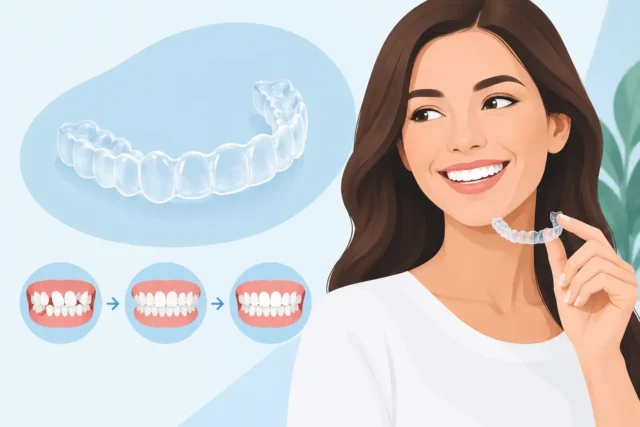
A straighter smile does not always require brackets and wires. For many teens and adults, clear aligners offer a more discreet way to address crowding, gaps, or mild bite concerns while keeping daily routines relatively familiar. Understanding how SureSmile clear aligners work can help you decide whether they fit your goals, schedule, and lifestyle.
SureSmile treatment is never one-size-fits-all. Your dentist begins by looking at your teeth, bite, gum health, and the changes you would like to make. From there, your care plan is built around the movement your smile needs, not a generic series of trays.
What Are SureSmile Clear Aligners?
SureSmile clear aligners are custom-made, removable orthodontic trays designed to gradually guide teeth into healthier, more balanced positions. They are made from clear plastic that fits closely over your teeth, making them much less noticeable than traditional braces for most people.
Rather than tightening a wire, treatment progresses through a sequence of aligners. Each aligner applies gentle, planned pressure to specific teeth. When it has done its job, you move to the next aligner in the series, which continues the movement a little further.
This gradual approach is why aligners can be effective for concerns such as mild to moderate crowding, spacing, certain crooked teeth, and some bite issues. The right choice depends on the complexity of your case. More significant jaw or bite concerns may respond better to braces or another orthodontic approach.
How SureSmile Clear Aligners Work Step by Step
1. Your dentist plans the treatment
Your first visit starts with a conversation. You can discuss what bothers you about your smile, whether that is a front tooth that overlaps, spaces that show in photos, or teeth that shifted after past orthodontic treatment. Your dentist will also examine your teeth and gums to make sure your mouth is ready for orthodontic movement.
Digital scans or impressions are used to create a detailed model of your teeth. This information supports a personalized treatment plan that maps the intended tooth movements and helps estimate how many aligners you may need. You may also be able to preview the planned direction of your smile before treatment begins.
If you have untreated cavities, active gum disease, or a broken restoration, those concerns generally need attention first. Moving teeth is safest when the foundation of your oral health is stable.
2. Custom aligners are made for your smile
Once the plan is approved, SureSmile creates a series of aligners shaped for each stage of treatment. They are not interchangeable or meant to be worn out of order. Each tray is designed to fit where your teeth are at that point in the process, then encourage the next small movement.
Some patients need small tooth-colored attachments. These are tiny, temporary shapes bonded to selected teeth that give the aligner a better grip for certain movements. They are subtle, but they can make a meaningful difference in how predictably teeth track with the plan.
In some cases, your dentist may gently smooth a small amount of enamel between teeth to create room for movement. This is called interproximal reduction. It is not needed for every patient, and your dentist should explain why it is recommended before treatment begins.
3. You wear each set consistently
Clear aligners only work when they are in your mouth. Most patients are instructed to wear them about 20 to 22 hours each day, removing them for meals, snacks other than water, and brushing and flossing. Your dentist will tell you how long to wear each set before switching to the next one, often around one to two weeks.
That wear schedule is the trade-off for removability. You can take aligners out for a family dinner, a work presentation, or a special occasion, but leaving them out too long can slow progress. If an aligner does not fit fully or feels dramatically different from the prior tray, contact your dental team rather than forcing the issue or moving ahead on your own.
4. Your progress is checked along the way
Follow-up visits let your dentist make sure your teeth are responding as expected and that your aligners still fit well. These appointments are also a good time to ask about comfort, cleaning, attachments, or upcoming treatment steps.
Treatment time varies. A minor cosmetic adjustment may take only several months, while a more involved case can take a year or longer. Consistent wear, the type of movements needed, and your individual biology all affect the timeline.
What Wearing SureSmile Aligners Feels Like
New aligners can create a feeling of pressure or tightness for the first day or two. That sensation usually means the tray is engaging your teeth as planned. It should not feel like severe or persistent pain. If discomfort is sharp, worsening, or paired with swelling, call your dental office.
You may also notice a slight change in speech when you first start wearing aligners. Most people adjust quickly as their tongue gets used to the trays. Because aligners are smooth and removable, many patients find them easier to manage than brackets and wires, though every orthodontic option has its own adjustment period.
Cleaning is straightforward but worth taking seriously. Brush your teeth before putting aligners back in, rinse the trays whenever you remove them, and clean them as directed by your dentist. Hot water can warp plastic aligners, so use cool or lukewarm water instead. Keeping trays clean helps prevent odors, staining, and buildup.
Who May Be a Good Candidate?
SureSmile clear aligners can be a strong option for adults and responsible teens who want a less visible orthodontic treatment. They are especially appealing to patients who can commit to wearing the trays as directed and who want the flexibility to remove them for eating and oral hygiene.
They may not be the best fit for everyone. Young children may struggle with consistent wear, and some complex rotations, bite problems, or jaw discrepancies may require traditional braces, specialized orthodontic care, or a combination of treatments. Clear aligners also require careful handling. Losing trays repeatedly or wearing them only part-time can lead to delays and additional expense.
A comprehensive consultation offers clearer answers than photos or online smile simulations alone. Your dentist can assess whether aligners will address the issue you want to correct while protecting your long-term oral health.
Life During Clear Aligner Treatment
One practical benefit of aligners is that you can remove them to eat. There are no food restrictions like the ones often associated with braces. Still, aligners should be stored in their protective case whenever they are out of your mouth. Wrapping them in a napkin is an easy way to accidentally throw them away.
Oral hygiene can also be simpler because you can brush and floss normally. That does not mean routine dental care pauses during treatment. Regular cleanings and exams remain part of protecting your teeth and gums while your smile changes.
At Trail Ridge Dental, we believe orthodontic care should feel clear and manageable, not intimidating. We can talk through your smile goals, treatment expectations, and the practical details that matter to your household, including how treatment may fit your budget and schedule.
What Happens After Your Last Aligner?
Finishing the final aligner is a milestone, but retaining your results is the next step. Teeth can naturally shift over time, especially after orthodontic treatment. Most patients receive a retainer plan to help hold teeth in their new positions.
Your dentist will explain when and how often to wear your retainer. Some people wear it full-time at first and then transition to nighttime wear. Following those instructions protects the time, effort, and investment you put into your new smile.
A straighter smile can be about more than appearance. When your teeth are easier to clean and your bite feels more comfortable, caring for your oral health may feel easier too. The best next step is a thoughtful conversation with a dental team that will evaluate your whole smile and help you choose treatment with confidence.