
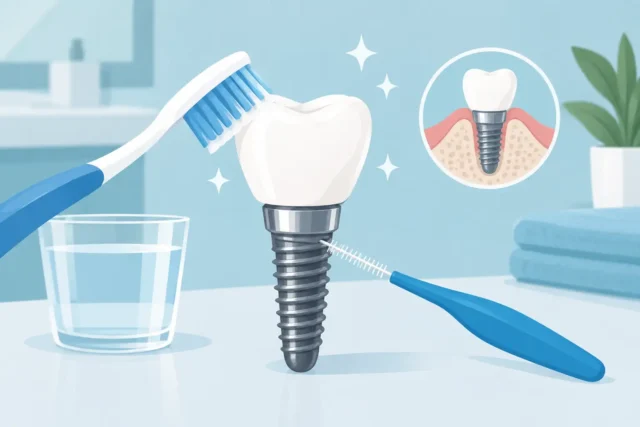
A dental implant is designed to feel like part of your smile, which makes it easy to forget that it needs specialized daily care. Knowing how to clean dental implants helps protect the gum tissue and bone that support them, whether you have a single implant crown, an implant bridge, or a full-arch restoration.
The implant itself cannot get a cavity, but plaque bacteria can still gather around the crown and beneath the gumline. Left in place, those bacteria may irritate the gums and contribute to peri-implant disease, an infection that can threaten the long-term stability of an implant. The encouraging part is that a consistent home routine and regular professional cleanings can go a long way.
How to Clean Dental Implants Every Day
Treat an implant like a natural tooth, with a little extra attention where the crown meets your gums. Brush twice each day for two full minutes using a soft-bristled manual toothbrush or an electric toothbrush with a soft brush head. Angle the bristles gently toward the gumline and clean the front, back, and chewing surfaces of the implant crown.
Use gentle pressure. Scrubbing hard does not remove plaque more effectively, and it can irritate your gums or wear down the surface of a restoration over time. A non-abrasive toothpaste is usually a sensible choice. If you are unsure whether a whitening or tartar-control formula is appropriate for your specific crown, bridge, or denture, ask your dental team.
Cleaning between teeth is just as essential as brushing. Standard floss can work well around a single implant crown if there is enough space to pass it through without forcing it. Slide the floss carefully along the sides of the crown and just below the gumline, then use a fresh section as you move to the next area.
For many patients, an implant-safe interdental brush is easier to use than floss. These small brushes can reach the spaces beside an implant and around the underside of a bridge. Choose the size recommended by your dentist or hygienist. A brush that is too small may not clean effectively, while one that is too large can traumatize delicate gum tissue.
A water flosser can also be a helpful addition, particularly for implant bridges and full-arch restorations. It can flush food particles from hard-to-reach areas and may make daily care feel more manageable. It should support brushing and interdental cleaning, not replace them entirely.
Choose Tools That Are Gentle on Implants
The right tools make implant care more comfortable and effective. In most cases, you do not need a cabinet full of specialty products. A soft toothbrush, appropriate floss or interdental brushes, and a water flosser if recommended can cover the basics.
Avoid using sharp metal picks, toothpicks that splinter, or improvised tools to remove debris around your implant. They can injure your gums or scratch restorative materials. Your hygienist may use instruments designed specifically for implants during professional visits, but those tools are different from at-home devices.
If you wear a removable implant-supported denture, take it out and clean it every day according to your dentist’s instructions. Brush the appliance with products made for dentures, clean the gum tissue beneath it, and rinse thoroughly before placing it back in your mouth. Never use hot water, which can warp some denture materials.
Cleaning Around Different Types of Implant Restorations
Your home routine depends partly on the restoration attached to your implant. A single implant crown is generally cleaned much like a natural tooth, with careful attention to the gumline and spaces between adjacent teeth.
An implant-supported bridge requires extra care under the replacement teeth. Food and plaque can collect beneath the bridge, where a regular toothbrush cannot reach. A floss threader, specialized implant floss, or a water flosser may help clean these areas. Your dental team can show you the path that works best for your bridge instead of leaving you to guess.
Full-arch implant restorations can have even more hidden spaces. Cleaning under the prosthesis and around each implant site is essential. Some patients benefit from a combination of a soft electric toothbrush, water flosser, and interdental brushes. Because designs vary, personalized instructions are especially valuable with this type of restoration.
Do Not Skip Professional Implant Maintenance
Excellent brushing at home matters, but professional care is still part of keeping implants healthy. Dental hygienists can remove hardened deposits that cannot be brushed away and check for early changes in the gums, bite, and restoration.
Your recommended visit schedule may differ from someone else’s. Patients with a history of gum disease, diabetes, smoking or vaping habits, multiple implants, or limited dexterity may need more frequent maintenance visits. If you grind or clench your teeth, your dentist may also monitor the implant crown and your bite more closely to help prevent excess force on the restoration.
At Trail Ridge Dental, professional implant maintenance is approached as part of long-term relationship-based care. The goal is not simply to polish the crown. It is to monitor the health of the gums and supporting structures so small concerns can be addressed early.
Signs You Should Call Your Dentist
Dental implants should not cause ongoing pain, bleeding, swelling, or a bad taste. Contact your dentist if you notice bleeding when you brush around an implant, gums that look red or puffy, tenderness, pus, persistent bad breath, or a crown that feels loose or different when you bite.
A loose crown does not always mean the implant itself has failed. Sometimes a screw, cement, or restoration needs attention. Still, it is not something to ignore or try to fix at home. Prompt care can prevent a minor issue from becoming a more complex repair.
If a piece of food is stuck around your implant, resist the urge to dig at it with a sharp object. Try gentle brushing, floss designed for the area, or a water flosser. If it will not come out, call the dental office for guidance.
Common Implant-Care Mistakes to Avoid
The most common mistake is assuming that implants are maintenance-free because they cannot decay. Gum inflammation around implants can progress quietly, especially in the early stages, so daily plaque removal still matters.
Another mistake is brushing only the visible crown. The most important area is often the narrow space where the restoration meets the gumline. Cleaning there gently and consistently is more valuable than brushing harder.
Finally, do not wait for discomfort before scheduling a visit. Implant complications can be easier to manage when found early, before there is significant inflammation or bone loss.
A healthy implant routine does not need to be complicated. Give your gums the same daily attention you give your smile, use the tools that fit your restoration, and let your dental team help refine your technique. A few careful minutes each day can help your implant continue feeling like a comfortable, dependable part of your life.