
A missing tooth can change more than the way a smile looks. It can make chewing less comfortable, affect speech, shift pressure onto neighboring teeth, and leave many people wondering how soon they need treatment. This tooth replacement guide explains the most common options in clear terms, so you can have a more confident conversation with your dentist and choose care that fits your health, goals, and budget.
Whether you lost a tooth unexpectedly, have lived with a gap for years, or are considering replacing several teeth, there is rarely one right answer for everyone. The best solution depends on the location of the missing tooth, the condition of your gums and jawbone, your timeline, and what feels manageable for your family.
Why replacing a missing tooth can matter
A back tooth may not show when you smile, but it still carries a major share of chewing force. When it is missing, nearby teeth can slowly tip or drift toward the open space. The tooth above it may also move downward over time because it no longer meets an opposing tooth. These changes can make future treatment more complicated.
A missing front tooth brings a different set of concerns. Appearance, speech, and confidence often become immediate priorities. In either situation, replacing the tooth can help support a balanced bite and make everyday activities like eating and speaking feel more natural.
That said, timing is personal. Some patients need an extraction first and need time to heal before a permanent restoration is placed. Others may need gum treatment, a bone graft, or a temporary tooth while a longer-term plan is underway. Your dentist can help you understand what should happen now and what can safely wait.
Tooth replacement guide: the main options
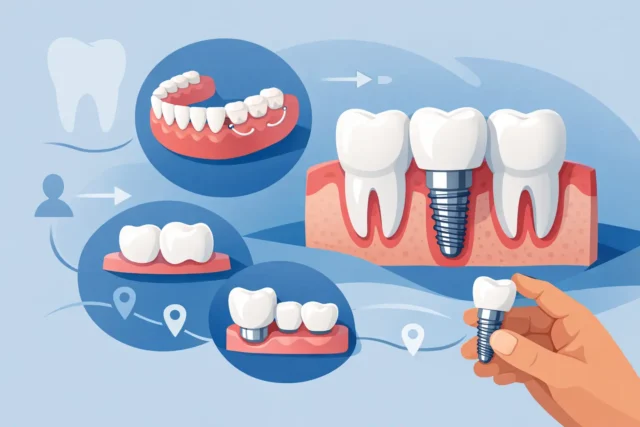
Dental implants, bridges, and dentures can all replace missing teeth effectively. The differences come down to how each option is supported, how long treatment takes, and the trade-offs involved.
Dental implants
A dental implant replaces the root of a missing tooth with a small post placed in the jawbone. Once the area heals and the implant is stable, a custom crown is attached to restore the visible tooth. Implants can also support bridges or dentures when several teeth are missing.
For many patients, implants are appealing because they are fixed in place and do not rely on adjacent teeth for support. They can feel very similar to a natural tooth when eating and speaking, and they help stimulate the jawbone in the area of the missing tooth. With consistent home care and professional checkups, an implant restoration can be a durable long-term option.
The trade-off is that implant treatment usually takes more time than a bridge or removable denture. Healthy gums and adequate bone are needed, although a bone graft may make treatment possible for some patients who have experienced bone loss. Overall health, tobacco use, clenching habits, and healing capacity can also influence whether an implant is the best choice.
Dental bridges
A traditional dental bridge fills a gap by connecting a replacement tooth to crowns on the teeth beside it. It is fixed in place, so you do not remove it for cleaning. A bridge is often a practical option when the neighboring teeth already need crowns because of large fillings, fractures, or wear.
Bridges can typically be completed more quickly than implants, which may be helpful if you want a dependable restoration without a surgical procedure. They can restore appearance and chewing ability very well, especially for one or a few missing teeth in a row.
The main consideration is that a traditional bridge requires preparation of the supporting teeth. If those teeth are healthy and untouched, an implant may preserve more natural tooth structure. Cleaning under a bridge also takes a little extra attention. Your dental team can show you how to use floss threaders or other tools to keep the area healthy.
Partial and full dentures
A removable partial denture replaces one or more missing teeth while fitting around the teeth you still have. A full denture replaces an entire upper or lower arch. Modern dentures can be natural-looking and are designed around your facial features, bite, and comfort needs.
Dentures are often the most accessible way to replace multiple teeth, and they do not require surgery in every case. They can be especially useful when several teeth are missing, remaining teeth are not healthy enough to support a bridge, or a patient needs a treatment plan with a lower upfront cost.
Because dentures rest on the gums, they can take time to adjust to. Small changes in jawbone shape may eventually affect fit, making relines or replacement necessary. Some people also find that a lower denture moves while eating. Implant-supported dentures can offer more stability by securing a denture to implants, giving patients a middle ground between a traditional denture and individual implant crowns.
Temporary tooth replacement
A temporary option may be part of the plan after an extraction or while waiting for an implant to heal. A removable flipper, temporary bridge, or immediate denture can help fill a visible space during this period. These solutions are not usually intended to carry the same force or last as long as a final restoration, but they can protect confidence while your mouth heals.
How to choose the right option
Start with the condition of the teeth next to the gap. If they are strong and healthy, an implant may be worth considering because it can stand independently. If those teeth already need crowns, a bridge may be a sensible and efficient choice.
Next, consider how many teeth are missing. One missing tooth calls for a different conversation than a full arch of failing teeth. Individual implants can be excellent for a single gap, while an implant-supported bridge or denture may be more realistic and cost-effective when replacing several teeth.
Your daily routine matters, too. Some patients prefer the convenience of a fixed solution, while others are comfortable removing and cleaning a denture each night. Good oral hygiene is essential with every option. Implants can still develop gum inflammation, bridges need careful cleaning underneath, and dentures need daily cleaning and regular fit checks.
Finally, talk openly about timing and cost. A lower upfront price does not always mean the lowest long-term cost, particularly if a restoration requires replacement or if untreated changes create additional needs later. At the same time, the most expensive option is not automatically the best one for your health or priorities. A thoughtful plan should respect both your clinical needs and your financial comfort.
Questions worth asking at your consultation
A good consultation should feel like a conversation, not a sales pitch. Ask which options fit your mouth and why. It is also reasonable to ask whether you need a bone graft, what treatment will feel like, how long healing may take, and what maintenance each restoration requires.
You may also want to ask about temporary solutions, expected insurance coverage, and financing or membership options if you do not have dental insurance. For families across Northern Colorado, having preventive care, restorative treatment, and follow-up visits in one practice can make the process less stressful and easier to coordinate.
Care after tooth replacement
The right restoration still needs long-term attention. Brush twice daily, clean between teeth or around your restoration as recommended, and keep regular dental visits. If you wear a nightguard because you clench or grind, wearing it consistently can help protect crowns, bridges, implants, and natural teeth alike.
Call your dental office if you notice a loose restoration, sore gums, persistent pressure, changes in how your bite feels, or difficulty chewing. Early adjustments are usually simpler than waiting until discomfort becomes significant.
At Trail Ridge Dental, the goal is to help you feel informed and comfortable at every stage of care. A missing tooth does not have to dictate how you eat, speak, or smile. The next helpful step is a personalized exam, where you can discuss your options, ask honest questions, and move forward at a pace that feels right for you.