
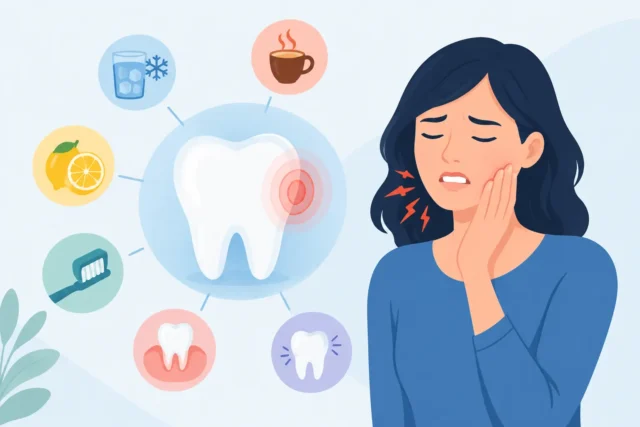
That quick jolt when you sip cold water or bite into something sweet can make an otherwise ordinary meal feel stressful. Tooth sensitivity is common, but it is not something you simply have to live with. Tooth sensitivity causes range from everyday enamel wear to cavities, gum disease, or a cracked tooth, and the right treatment depends on identifying what is happening beneath the surface.
Sensitivity often feels like a short, sharp pain triggered by cold, heat, sweetness, air, or brushing. Sometimes it affects several teeth at once. Other times, one tooth suddenly becomes the clear problem. Paying attention to the pattern can help your dentist find the source and help you get comfortable again.
What Causes Sensitive Teeth?
Teeth are protected by a hard outer layer called enamel. Below the gumline, a softer material called cementum covers the tooth roots. When enamel wears down or gums pull back, tiny channels in the underlying dentin become exposed. Temperature changes and certain foods can then travel through those channels and irritate the tooth’s nerve.
That is the basic process behind many tooth sensitivity causes, but the reason dentin becomes exposed can vary widely. A dental exam is valuable because two people can have similar symptoms for very different reasons.
Worn enamel from brushing or acidic foods
Brushing too hard, using a hard-bristled toothbrush, or scrubbing side to side can gradually wear enamel near the gumline. A softer touch is usually more effective and kinder to your teeth and gums. Whitening toothpaste or abrasive products may also be too harsh for some people, particularly when used every day.
Acidic foods and drinks can soften enamel as well. Soda, sports drinks, citrus, wine, and frequent snacking on acidic foods are common contributors. This does not mean you must avoid every acidic food forever. Frequency matters: sipping a sugary or acidic drink throughout the day gives your teeth repeated acid exposure. Drinking water afterward and waiting about 30 minutes before brushing can help protect softened enamel.
Gum recession and periodontal disease
Healthy gums cover and protect tooth roots. When gums recede, root surfaces can become exposed and highly sensitive because they do not have the same thick enamel protection as the visible part of a tooth.
Recession may be related to brushing habits, naturally thin gum tissue, tobacco use, teeth grinding, or periodontal disease. Gum disease can also cause bleeding, swelling, persistent bad breath, loose teeth, or changes in the way your teeth fit together. Sensitivity with bleeding gums deserves an appointment, even if the pain is mild.
Cavities, leaking fillings, and damaged teeth
A cavity can create sensitivity when decay reaches deeper layers of the tooth. A worn or cracked filling may allow bacteria and temperature changes to reach sensitive areas too. These problems are not always visible in a bathroom mirror, especially when they occur between teeth or beneath an older restoration.
A crack is another common culprit. It may cause pain when chewing, especially when you release your bite, and symptoms can come and go. Hard foods, clenching, grinding, and large old fillings can raise the risk of cracks. Prompt care may make it possible to protect the tooth with a restoration, such as a crown, before more extensive treatment is needed.
Grinding and clenching
Many people clench or grind their teeth without realizing it, often during sleep or periods of stress. The pressure can wear enamel, strain the jaw muscles, damage restorations, and create tiny cracks. You may notice morning headaches, jaw soreness, flattened teeth, or sensitivity that seems worse after waking up.
Treatment is not one-size-fits-all. A custom night guard may help protect teeth from nighttime grinding, while bite changes, stress habits, and jaw concerns may need attention as well. Your dentist can look for the wear patterns that point to clenching or grinding.
Recent dental treatment or whitening
Temporary sensitivity after a professional cleaning, filling, crown, or whitening treatment can happen. During whitening, the bleaching material can irritate the tooth temporarily, particularly if you already have exposed dentin. This usually improves within a few days, and your dental team can suggest ways to make treatment more comfortable.
New or worsening pain after dental work should not be ignored, however. Call the office if sensitivity lingers, becomes severe, wakes you at night, or makes it difficult to eat or drink.
When Sensitivity May Signal a Bigger Problem
The occasional mild twinge with ice cream may improve with a sensitivity toothpaste and better brushing technique. Pain that is spontaneous, intense, or focused on one tooth requires more attention. A tooth’s nerve may be inflamed or infected when pain lingers after hot or cold foods are gone, throbs without a trigger, or comes with swelling.
Contact a dentist promptly if you have facial swelling, fever, a pimple-like bump on the gums, a broken tooth, or trouble swallowing or breathing. These can be signs of infection or injury that should be evaluated quickly. For severe swelling or difficulty breathing, seek emergency medical care.
Children can experience sensitivity too. A child who avoids one side while chewing, complains about cold foods, or has visible dark spots on a tooth should be checked. Early visits can often prevent a small concern from becoming a more complicated one.
How Your Dentist Finds the Cause
A conversation about your symptoms gives useful clues. Your dentist may ask whether cold, heat, sweets, brushing, or biting causes pain; whether discomfort is brief or lingering; and whether it began after an injury or recent treatment. A visual exam, gentle testing, gum measurements, and X-rays may be used to check for decay, cracks, gum recession, infection, and concerns beneath existing fillings or crowns.
This evaluation matters because treatment should match the source. Treating a cavity with toothpaste alone will not solve the issue, while a tooth with generalized sensitivity from exposed root surfaces may not need a major procedure.
Relief and Treatment for Sensitive Teeth
For mild, generalized sensitivity, your dentist may recommend a desensitizing toothpaste. These products can reduce the nerve response over time, but they usually need consistent use for several weeks. Use a soft-bristled toothbrush, brush gently with fluoride toothpaste, and avoid aggressive scrubbing at the gumline.
In-office options may include fluoride treatments, protective varnishes, bonding to cover exposed root areas, or treatment for gum disease. If decay, a failing filling, or a crack is involved, a filling, crown, or other restoration may be the most reliable way to protect the tooth. When the tooth’s nerve is severely inflamed or infected, root canal treatment can relieve pain while preserving the natural tooth.
There are trade-offs in every plan. Whitening may need to be paused while sensitivity is addressed. A crown may be recommended for a cracked tooth because it provides more complete protection than a filling, but the best choice depends on the crack’s location and the amount of healthy tooth remaining. Your dentist should explain what they see, why they recommend a treatment, and what can happen if the problem is left untreated.
Everyday Habits That Help Prevent Sensitivity
Small changes can reduce future irritation. Choose a soft toothbrush, use light pressure, and replace the brush when the bristles begin to flare. Limit frequent acidic drinks, drink water after meals, and avoid brushing immediately after soda, citrus, or other acidic foods. If you grind your teeth, follow through with the protective plan your dentist recommends.
Regular checkups also make a meaningful difference. Cavities, gum recession, and worn restorations are often easier to manage before they become painful. For families in Northern Colorado, Trail Ridge Dental can help identify the source of sensitivity and create a care plan that feels clear, comfortable, and practical for your needs.
You deserve to enjoy cold water, warm coffee, and your favorite meals without bracing for pain. If sensitivity keeps returning or changes suddenly, scheduling an exam is a simple next step toward protecting your comfort and your smile.