
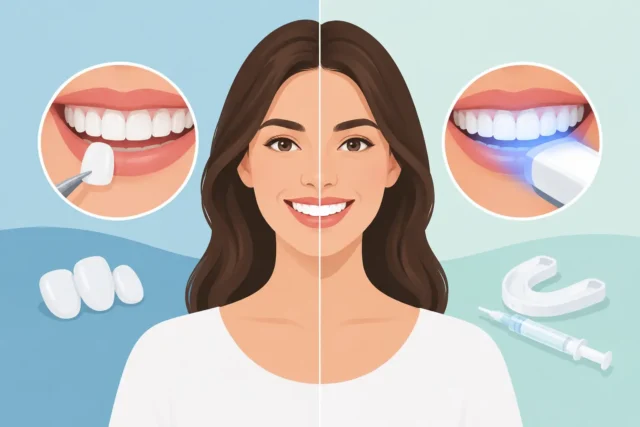
A brighter smile can change how you feel in family photos, at work, or when meeting someone new. But when patients ask about veneers vs whitening, they are usually comparing two very different ways to improve the appearance of their teeth. One treatment lightens your natural enamel. The other changes the visible surface of selected teeth.
The best choice is not always the fastest or brightest-looking option. It depends on why your smile looks the way it does, the condition of your teeth, your long-term goals, and how much change you want to see.
Veneers vs Whitening: The Key Difference
Professional whitening uses peroxide-based whitening gel to break up stain molecules within tooth enamel. It can make natural teeth look several shades lighter without changing their shape, size, or position. Whitening is often a good fit for coffee, tea, red wine, tobacco, and normal aging-related discoloration.
Veneers are thin, custom-made shells, commonly crafted from porcelain, that are bonded to the front surfaces of teeth. They can improve color, but they also address concerns whitening cannot fix on its own, including uneven shapes, chips, small gaps, worn edges, and certain stains deep within the tooth.
Think of whitening as refreshing the color you already have. Veneers are a more comprehensive cosmetic change to the teeth that show when you smile.
When Whitening May Be the Better First Step
If your teeth are healthy, mostly straight, and you like their general shape, professional whitening may be all you need. It is a conservative treatment because it does not require removing tooth structure. It can also be a practical choice for patients who want a noticeable improvement before a wedding, reunion, graduation, or professional milestone.
Whitening tends to work best on yellow or brown surface stains. It may be less predictable for gray-toned discoloration, stains caused by certain medications, or color changes related to trauma or a root canal. A dentist can help identify the source of discoloration before you invest in a treatment that may not deliver the change you expect.
Professional options are typically more reliable than over-the-counter products because treatment can be tailored to your smile and monitored for comfort. Some patients experience temporary sensitivity, particularly if they already have sensitive teeth or exposed root surfaces. That does not automatically rule out whitening, but it may affect the product, concentration, and schedule your dental team recommends.
Whitening results are not permanent. Foods and drinks can gradually stain teeth again, and touch-up treatment may be needed over time. Good brushing habits, regular cleanings, and rinsing with water after dark beverages can help preserve your results.
When Veneers Make More Sense
Veneers can be an appealing option when color is only one part of the concern. For example, someone may have teeth that are discolored, slightly short from wear, uneven along the edges, or separated by small spaces. Whitening can brighten those teeth, but it will not change their contours.
Porcelain veneers are designed to reflect light in a way that can look very natural. Your dentist works with you to choose a shade and shape that complement your facial features, neighboring teeth, and overall smile. The goal should be a healthy-looking smile that still feels like yours, not a one-size-fits-all result.
Veneers are also useful when a tooth has staining that does not respond well to whitening. This can include some internal discoloration, old visible bonding that no longer matches, or enamel defects. In some cases, a crown or bonding may be more appropriate than a veneer, especially if the tooth has extensive decay, a large filling, or structural weakness. A thorough exam matters because cosmetic dentistry should protect the health and function of your teeth, not simply cover a problem.
Veneers Require a Long-Term Commitment
Unlike whitening, veneers are generally irreversible. Preparing a tooth for a veneer often involves removing a small amount of enamel so the restoration can sit naturally and avoid looking bulky. While conservative preparation is possible in some cases, veneers should be viewed as a lasting dental treatment rather than a temporary beauty service.
Porcelain veneers can last many years with attentive home care and regular dental visits. They are durable, but they are not indestructible. Biting fingernails, chewing ice, opening packages with your teeth, or grinding can chip or damage them. Patients who clench or grind may benefit from a custom nightguard to help protect their investment.
Veneers do not change color after they are placed. That is helpful for keeping a consistent shade, but it also means any surrounding natural teeth may need whitening first. If you whiten after receiving veneers, your natural teeth can become lighter while the veneers stay the same color.
Comparing Cost, Time, and Maintenance
The practical differences between veneers and whitening are significant. Professional whitening is usually the lower-cost option and often requires less time in the dental chair. It is a strong starting point for people whose main concern is everyday staining.
Veneers involve individualized planning, custom laboratory work, and more appointments, so they are a larger financial commitment. They may provide a more dramatic change, particularly for several cosmetic concerns at once, but they also require replacement eventually. The timeline depends on your needs, the number of teeth being treated, and the type of veneer selected.
Maintenance looks different, too. Whitened teeth may need periodic touch-ups. Veneers need the same consistent brushing, flossing, and professional care as natural teeth, plus habits that protect porcelain from unnecessary force. Neither treatment replaces routine preventive care. Gum health, cavities, and bite problems still need attention regardless of how bright your teeth look.
Start With the Health of Your Smile
Cosmetic treatment works best when it begins with a healthy foundation. Active cavities, gum inflammation, untreated grinding, and loose or failing restorations should be addressed before whitening or veneers. If gums are swollen or uneven, treating periodontal concerns first can make a major difference in both comfort and the final appearance of your smile.
It is also helpful to be honest about what you hope to change. Bring photos if there is a smile shape or level of brightness you like, but stay open to professional guidance. Very white teeth may not look natural for everyone, and a shade that works beautifully for one person can feel out of place on another. A personalized conversation can help balance your cosmetic goals with what suits your features and supports lasting dental health.
For some patients, the answer is neither treatment alone. Whitening followed by small amounts of cosmetic bonding may address minor chips or uneven edges. Orthodontic treatment may be worth considering before veneers if tooth position is the main issue. A dentist may also suggest replacing an old crown or filling instead of placing a veneer on a compromised tooth.
Questions to Ask at Your Cosmetic Consultation
A good consultation should feel like a conversation, not a sales pitch. Ask whether your discoloration is likely to respond to whitening, whether any dental health issues need care first, and what preparation veneers would require for your specific teeth.
You can also ask how the proposed shade will coordinate with crowns, fillings, or other visible dental work. Existing restorations will not whiten, so planning ahead helps avoid mismatched color. Finally, talk openly about sensitivity, grinding, maintenance, and your budget. The right plan is one you can feel comfortable maintaining for years.
At Trail Ridge Dental, we believe a cosmetic smile should feel both beautiful and practical for everyday life. Whether you are considering a conservative whitening treatment or a more complete veneer transformation, a thoughtful exam can help you choose a result that feels confident, comfortable, and genuinely your own.