
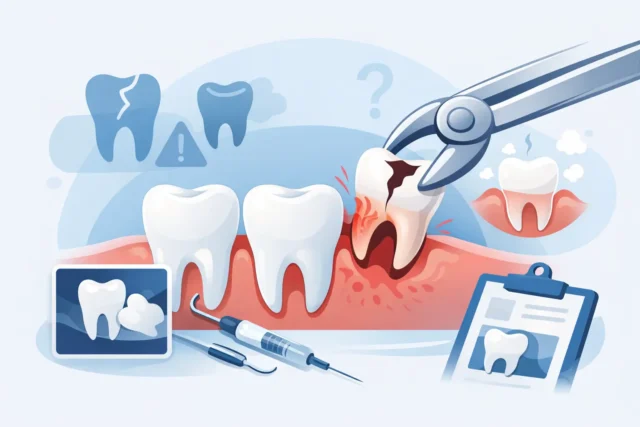
A tooth usually does not need to be removed on a whim. In most cases, your dentist will try to save it first. So when is a tooth extraction necessary? Usually when keeping the tooth would put your health, comfort, or neighboring teeth at greater risk than removing it.
That can sound intimidating, especially if you are already dealing with pain or swelling. The good news is that extractions are recommended for specific reasons, not as a shortcut. A careful exam, digital imaging, and a conversation about your options help determine whether removal is truly the best next step.
When is a tooth extraction necessary for adults and kids?
Tooth extractions can be necessary for both adults and children, but the reason often differs by age. In adults, the most common causes are severe decay, infection, gum disease, trauma, and crowding. In children, extractions may be recommended if a baby tooth is not falling out properly, if a tooth is badly damaged, or if orthodontic treatment needs more room.
In either case, the goal is the same: protect the rest of the mouth and support long-term oral health. A tooth that cannot be restored may lead to bigger problems if it stays in place, including pain, spreading infection, bite changes, or damage to nearby teeth.
The most common reasons a tooth may need to be removed
Sometimes a tooth is clearly beyond repair. Other times, the decision is less obvious and depends on how much healthy structure remains, whether the nerve is involved, and how predictable treatment would be.
Severe tooth decay
A cavity does not automatically mean extraction. Many decayed teeth can still be treated with a filling, crown, or root canal. But if decay has destroyed too much of the tooth, there may not be enough healthy structure left to support a lasting restoration.
This is one of the clearest examples of when a tooth extraction is necessary. If the damage extends deep below the gumline or the tooth is likely to break even after treatment, removal may offer the safest and most comfortable path forward.
Advanced infection or abscess
A tooth infection can become serious quickly. If bacteria reach the pulp inside the tooth, you may feel severe pain, sensitivity, swelling, or pressure. Often, a root canal can remove the infection and save the tooth.
But not every infected tooth can be saved. If the infection is extensive, the tooth is badly fractured, or there is not enough healthy structure to restore it afterward, extraction may be the better option. In some cases, removing the tooth is the best way to stop the infection from spreading.
Gum disease and loose teeth
Periodontal disease affects the gums, bone, and supporting structures that hold teeth in place. In its early stages, it can often be managed. In later stages, bone loss may become so significant that a tooth becomes loose.
When a tooth has lost too much support, keeping it may cause discomfort and interfere with chewing. Extraction may then be recommended to protect surrounding tissue and make room for future restorative options, such as a bridge, denture, or implant.
Broken or fractured teeth
Not every cracked tooth needs to come out. Small chips can often be repaired. Even some deeper fractures can be treated with a crown or root canal, depending on where the damage is located.
The concern is when the fracture extends below the gumline or into the root. Those breaks are often difficult or impossible to repair in a predictable way. If the tooth cannot function normally or is causing pain, extraction may be necessary.
Impacted wisdom teeth
Wisdom teeth are among the most common teeth removed, but not everyone needs them extracted. If wisdom teeth come in normally, stay clean, and do not harm neighboring teeth, they may simply be monitored.
Removal is usually recommended when they are impacted, partially erupted, infected, painful, or crowding nearby teeth. Impacted wisdom teeth can also create hard-to-clean spaces where bacteria and decay develop more easily.
Orthodontic crowding
In some orthodontic cases, there simply is not enough room in the mouth to align the teeth properly. Removing one or more teeth may create the space needed for a healthier, more functional bite.
This is not the first solution in every case. Modern orthodontic planning often looks for conservative approaches first. Still, if crowding is severe, extraction can support a more stable result.
Trauma and emergency damage
Accidents happen. A fall, sports injury, or sudden impact can crack, loosen, or dislodge a tooth. Sometimes a damaged tooth can be splinted, restored, or treated with root canal therapy.
If the injury is too severe, though, extraction may be the most realistic option. In emergency situations, timing matters. Prompt evaluation can make the difference between saving a tooth and needing to remove it.
Signs you should not ignore
Some symptoms point to a problem that needs attention, even if you are not sure whether an extraction will be involved. Ongoing tooth pain, swelling in the gums or jaw, a loose adult tooth, a bad taste in the mouth, facial pressure, or pain when biting down all deserve a dental exam.
Visible damage matters too. A large broken area, dark discoloration, bleeding around one tooth, or gum recession exposing the root can all signal deeper issues. The key point is this: pain alone does not always mean a tooth must be removed, and the absence of pain does not always mean a tooth is healthy.
Are there alternatives to extraction?
Often, yes. Dentists generally prefer to preserve natural teeth whenever possible. Depending on the problem, alternatives may include a filling, crown, root canal, gum treatment, or monitoring over time.
That said, there are trade-offs. Trying to save a tooth that has a poor long-term outlook can lead to repeated discomfort, additional cost, and more treatment later. On the other hand, removing a tooth without a plan to replace it can affect chewing, alignment, and bone levels in the jaw. The best choice depends on the condition of the tooth, your oral health overall, your budget, and your goals.
What happens if a necessary extraction is delayed?
Putting off treatment can make a manageable issue much harder. Infection can spread, pain can worsen, and neighboring teeth may be affected. A cracked tooth can break further. A loose tooth can become more uncomfortable. An impacted wisdom tooth can continue damaging the tooth next to it.
Delay may also reduce your treatment options. A tooth that might have been restored earlier may become non-restorable later. If removal is already the recommended treatment, waiting usually does not make the extraction easier.
What to expect during a tooth extraction
Most patients are relieved to learn that extractions are more straightforward than they expected. The first step is a full exam with X-rays to understand the tooth’s roots, surrounding bone, and any infection or impaction.
For a simple extraction, the area is numbed thoroughly so you should feel pressure, not sharp pain. If the tooth is impacted or broken below the gumline, a surgical extraction may be needed. Your dentist will explain what type of procedure is involved and how to prepare.
For families looking for dependable care close to home, practices like Trail Ridge Dental focus on making the experience feel calm, clear, and manageable from start to finish.
After the tooth is removed
Healing usually starts quickly, but aftercare matters. You will receive instructions to protect the blood clot, manage swelling, and keep the area clean. Soft foods, rest, and avoiding straws or smoking for the recommended period can help prevent complications such as dry socket.
You may also talk through replacement options if the extracted tooth should be restored. Not every missing tooth needs the same solution. Depending on the location of the tooth and your needs, replacement may involve an implant, bridge, or denture.
How dentists decide what is truly necessary
A good recommendation is based on more than one X-ray and a quick opinion. Dentists look at the amount of remaining healthy tooth structure, whether infection is present, the condition of the surrounding bone and gums, how the tooth affects your bite, and whether a restoration would be predictable over time.
That last part matters. A tooth may be technically treatable but still have a poor prognosis. In that situation, the conversation is not just about what can be done. It is about what makes sense for your long-term health and comfort.
If you are wondering whether a painful or damaged tooth can be saved, the most helpful next step is not to guess at home. Get it evaluated, ask questions, and make a decision with a team that explains your options clearly and treats you like part of the practice family.