
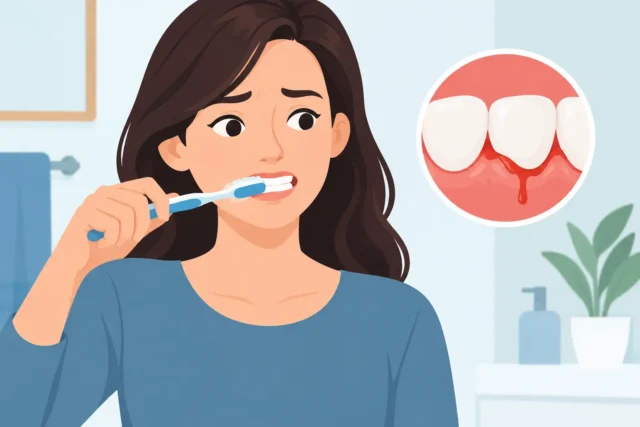
A pink toothbrush or a little blood in the sink can be unsettling, especially when you are doing the right thing by brushing. If you are wondering why gums bleed when brushing, the most common answer is gum inflammation. It is often treatable, but it should not be ignored or brushed off as normal.
Healthy gums generally do not bleed during routine brushing or flossing. Bleeding is your mouth’s way of signaling that something needs attention, whether that is a change in home care, a professional cleaning, or an evaluation for a less common health concern.
Why Do Gums Bleed When Brushing?
Plaque is the leading cause. This sticky film of bacteria forms on teeth throughout the day. When it remains along the gumline, it irritates the gums and can lead to gingivitis, the earliest stage of gum disease. Inflamed gums may look red or puffy, feel tender, and bleed more easily when you brush or floss.
Gingivitis is common, and it can often be reversed with consistent brushing, daily cleaning between the teeth, and professional dental cleanings. The challenge is that it may not hurt much. Bleeding may be the first noticeable sign, which is why it deserves attention even if your teeth otherwise feel fine.
Bleeding can also happen when someone starts flossing again after a long break. The gums may be inflamed because plaque has been collecting between the teeth. With gentle daily flossing or another recommended interdental cleaner, mild bleeding often improves within one to two weeks. Stopping altogether usually lets the inflammation continue.
Other Reasons Your Gums May Be Bleeding
Not every case comes down to plaque alone. Your brushing habits, medications, and overall health can affect how your gums respond.
Brushing too hard or using a worn brush
A hard-bristled toothbrush or aggressive scrubbing can irritate gum tissue. Many people assume a stronger brush means a cleaner mouth, but the opposite can be true. Firm pressure can wear down enamel near the gumline and contribute to gum recession over time.
Choose a soft-bristled brush and use small, gentle circles where the teeth meet the gums. If you use an electric toothbrush, let the bristles do the work rather than pressing down. Replace the brush head or manual toothbrush about every three months, or sooner when the bristles begin to fray.
Tartar buildup
When plaque hardens, it becomes tartar, also called calculus. Tartar cannot be removed by brushing at home, and it gives bacteria a rough surface where more plaque can collect. A professional cleaning is needed to remove it safely.
If it has been a while since your last cleaning, bleeding gums may improve significantly after your dental team removes tartar and helps you reset your home-care routine.
Hormonal changes
Pregnancy, puberty, menstruation, and menopause can make gums more sensitive to plaque. This does not mean bleeding should simply be accepted. It means careful daily care and regular dental visits may matter even more during these periods.
Pregnant patients should tell their dental team about their pregnancy and any changes they notice in their gums. Dental care is an important part of maintaining overall health during pregnancy.
Dry mouth, tobacco use, and mouth breathing
Saliva helps rinse away food particles and balance bacteria in the mouth. Certain medications, dehydration, medical conditions, and mouth breathing can reduce saliva flow, raising the risk of plaque buildup and gum irritation.
Smoking and other tobacco use can also worsen gum disease. Smoking may sometimes mask bleeding by reducing blood flow to gum tissue, so the absence of bleeding does not always mean gums are healthy. Quitting tobacco is one of the strongest steps a person can take for their gums and overall health.
Medications and medical conditions
Blood thinners and some other medications can make bleeding more noticeable. Never stop a prescribed medication because your gums bleed. Instead, let your dentist and physician know what you are taking so they can coordinate care when needed.
Less commonly, frequent gum bleeding can be related to conditions that affect blood clotting, immune function, or nutrition. Vitamin C deficiency is rare for most people with a balanced diet, but inadequate nutrition can affect oral tissue. Persistent or unexplained bleeding warrants a conversation with both your dentist and medical provider.
What to Do If Your Gums Bleed
The best first move is usually to improve your routine, not to avoid the area that is bleeding. Brush twice a day for two minutes with fluoride toothpaste and a soft toothbrush. Angle the bristles gently toward the gumline, then clean every side of every tooth without scrubbing harshly.
Clean between your teeth once a day. Traditional floss works well for many people, while floss picks, interdental brushes, or a water flosser may be easier for others. The best option is the one you can use correctly and consistently. If your gums bleed when you begin, be gentle but keep going unless a dental professional tells you otherwise.
A few practical adjustments can make a difference:
- Use a soft-bristled toothbrush and light pressure.
- Clean between teeth daily, including around the back molars.
- Drink water regularly, especially if your mouth feels dry.
- Keep scheduled cleanings so plaque and tartar do not have time to build up.
Avoid trying to solve ongoing bleeding with harsh whitening products, alcohol-heavy rinses, or vigorous brushing. An antiseptic mouth rinse may be recommended in specific situations, but it does not replace brushing, cleaning between teeth, or professional care.
When Bleeding Gums Need a Dental Visit
A little bleeding after restarting flossing may settle as inflammation improves. But if bleeding continues beyond about two weeks of gentle, consistent home care, schedule a dental visit. It is also wise to be seen sooner if you have persistent bad breath, gum swelling, pain, receding gums, loose teeth, pus near the gums, or changes in how your teeth fit together when you bite.
These symptoms can point to periodontitis, a more advanced form of gum disease. Unlike gingivitis, periodontitis can damage the bone and tissues that support the teeth. It is manageable, but it requires professional treatment and ongoing care. Early treatment is generally simpler, more comfortable, and better for protecting your natural teeth.
Children can have bleeding gums too, often because they are still learning to brush thoroughly or because plaque collects around erupting teeth and orthodontic appliances. Parents should supervise brushing until a child has the coordination to do a complete job, and bring up recurring bleeding at their regular dental visit.
If bleeding is heavy, starts suddenly without an obvious reason, occurs with easy bruising or nosebleeds, or does not stop, seek prompt medical guidance. This is particularly important for anyone taking blood-thinning medication or managing a bleeding disorder.
A Gentle Routine Can Change More Than Your Gums
Bleeding gums are not a reason to feel embarrassed. They are a common health concern, and a caring dental team can help identify what is causing them without judgment. At Trail Ridge Dental, families in Northern Colorado can receive preventive and periodontal care in a comfortable setting, with guidance that fits their needs rather than a one-size-fits-all lecture.
If you keep seeing blood in the sink, make an appointment instead of waiting for discomfort to become a bigger problem. A thorough exam and cleaning can provide clarity, and a few steady habits at home can help your gums feel healthier every day.