
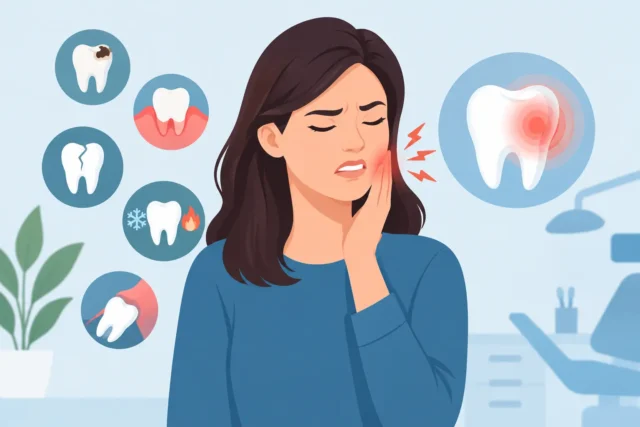
A tooth can feel perfectly normal at breakfast and become hard to ignore by bedtime. If you are asking, why do teeth hurt, the short answer is that a tooth or the tissues around it are reacting to irritation, pressure, infection, or injury. The more useful answer is that the pattern of pain often offers clues about what is going on and how soon you should be seen.
Tooth pain is not something you should have to simply tolerate. Some causes are minor and easy to address, while others can progress quickly without treatment. A dental exam is the best way to identify the source and protect your comfort, your tooth, and your overall oral health.
Why do teeth hurt? The most common causes
Teeth have a soft inner center called the pulp, where the nerves and blood vessels live. Enamel and dentin normally shield that area. When decay, a crack, gum disease, or another issue weakens those protective layers, hot, cold, sweet foods, biting pressure, and even air can trigger pain.
Cavities and tooth decay
A cavity is one of the most common reasons for a toothache. Bacteria in plaque create acids that slowly wear away enamel. Early decay may cause no symptoms at all. As it gets deeper, you may notice sensitivity to sweets or cold drinks, followed by a more persistent ache.
Decay does not heal on its own. A small cavity may need a filling, while deeper decay may call for a crown or root canal treatment to save the tooth. Treating it early is usually simpler and more comfortable.
Cracked, chipped, or worn teeth
A small crack can be surprisingly painful, especially when you release your bite after chewing. Cracks may result from biting something hard, grinding your teeth, old large fillings, or an injury. They are not always visible in a mirror, and the pain may come and go.
Teeth can also hurt when enamel has worn down over time. Acid reflux, frequent acidic drinks, aggressive brushing, and clenching can all contribute to wear. Once dentin is exposed, the tooth becomes much more sensitive.
Gum disease and gum irritation
Pain does not always begin inside the tooth. Inflamed gums can feel tender, swollen, or sore, especially during brushing and flossing. Gingivitis is an early stage of gum inflammation that can often be reversed with professional cleanings and consistent home care.
More advanced periodontal disease can affect the bone and tissues that hold teeth in place. You may notice bleeding gums, bad breath, gum recession, loose teeth, or changes in how your bite feels. Because gum disease can progress quietly, regular checkups matter even when pain is absent.
An infection or abscess
When bacteria reach the pulp, an infection may develop at the root of a tooth. This can cause a severe, throbbing toothache, sensitivity to heat, pain when biting, a pimple-like bump on the gums, facial swelling, or a bad taste in the mouth.
An abscess needs prompt professional care. Antibiotics may be appropriate in some situations, but they do not remove the source of infection by themselves. Treatment may involve draining the infection, root canal therapy, or extraction, depending on whether the tooth can be saved.
Teeth grinding and jaw tension
Many people clench or grind their teeth during sleep or stressful moments without realizing it. The result can be dull tooth pain, jaw soreness, headaches, worn or chipped teeth, and sensitivity that seems to affect several teeth at once.
A custom night guard can help protect teeth from nighttime grinding. If jaw pain, clicking, or limited movement is also present, an evaluation for TMJ-related concerns can help guide the right treatment.
Sinus pressure, eruption, and other causes
A sinus infection or seasonal congestion can create pressure in the upper back teeth because their roots sit close to the sinus cavity. This discomfort often affects several upper teeth and may worsen when you bend forward. It can be difficult to distinguish from dental pain without an exam.
For children and teens, erupting teeth can cause temporary tenderness. Wisdom teeth may also cause pain, swelling, or pressure when they do not have enough room to come in properly. Occasionally, pain that feels like a toothache can be referred from the jaw, ear, or nearby muscles.
What the type of tooth pain can tell you
Pain patterns are useful, but they are not a diagnosis. A quick, mild zing with cold food can point to sensitivity, recession, enamel wear, or early decay. Pain that lingers after hot or cold exposure may mean the nerve inside the tooth is inflamed.
Pain when chewing can suggest a crack, cavity, loose restoration, or infection around the root. A constant throbbing ache or swelling deserves prompt attention, particularly if it keeps you awake or makes it hard to function normally.
If a tooth suddenly feels taller than the others when you bite, or if you have tenderness in one area of the gums, call your dentist. These changes can occur with infection or inflammation and should not be ignored.
What you can do before your dental visit
Home care can ease symptoms, but it cannot fix decay, a crack, or an infection. Until you are seen, gently brush and floss around the painful area to remove trapped food and plaque. Rinse with warm salt water if your gums are irritated.
Choose soft foods and avoid chewing on the painful side. Very hot, cold, sugary, or acidic foods may aggravate sensitivity, so stick with foods and drinks that feel comfortable. An over-the-counter pain reliever may help when used exactly as directed on the label and only if it is safe for you based on your health history or medications.
Do not place aspirin directly on a tooth or gums. It can burn oral tissue. Avoid trying to pop a swelling, glue a broken tooth yourself, or wait for a suspected infection to disappear. If a filling, crown, or tooth breaks, save any pieces you can find and bring them to your appointment.
When tooth pain is an emergency
Call for a same-day dental evaluation if pain is severe, swelling is present, you have a fever, a tooth is loose after an injury, or a crown or filling has come off and the tooth is very painful. Fast care can often prevent a problem from becoming more complicated.
Seek emergency medical care right away if swelling spreads to your face, jaw, neck, or around your eye, or if you have difficulty breathing, swallowing, or opening your mouth. These symptoms can indicate a serious infection that needs immediate attention.
A knocked-out permanent tooth also needs urgent care. Handle it by the crown, not the root, gently rinse it if dirty, and try to place it back in the socket if you can do so safely. If not, keep it moist in milk or saliva and get to a dentist as quickly as possible.
Preventing the next toothache
The best prevention is consistent care before discomfort begins. Brush twice daily with fluoride toothpaste, clean between your teeth every day, and keep up with professional exams and cleanings. If you are prone to cavities, gum disease, grinding, dry mouth, or sensitivity, your dentist may recommend added protection tailored to your needs.
Do not let dental anxiety or uncertainty about cost keep pain from being checked. A welcoming practice family can explain what is happening, discuss options clearly, and help you choose care that fits your situation. At Trail Ridge Dental, patients of all ages can receive routine care and urgent dental treatment in a familiar, supportive setting.
Your teeth are built to last, but they do not usually hurt without a reason. If something feels different, especially if it is getting worse, schedule an evaluation while the problem is still small enough to treat comfortably.