
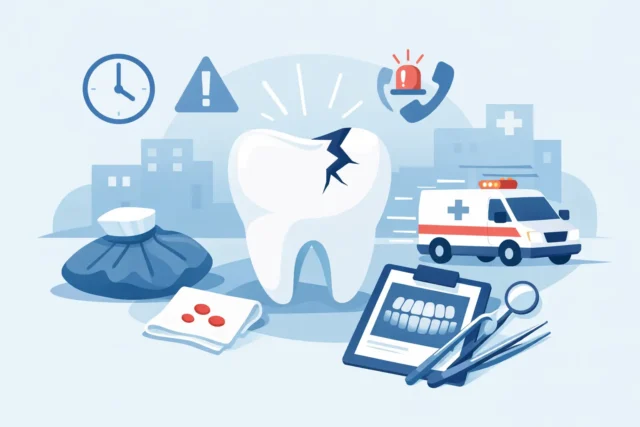
A cracked tooth during dinner, a child’s knocked-out tooth at practice, or a throbbing toothache that keeps you awake can make it hard to think clearly. This dental emergency guide offers calm, practical first steps while you arrange professional care. Acting quickly can reduce pain, protect the tooth, and prevent a small problem from becoming a more complex one.
First, decide whether you need emergency medical care
Most dental emergencies should be evaluated by a dentist as soon as possible, but some injuries require an emergency room or a call to 911 first. Seek immediate medical help for trouble breathing or swallowing, uncontrolled bleeding, a suspected broken jaw, a serious head injury, or swelling that spreads into the face, neck, or around the eye. These symptoms can signal a medical emergency beyond the tooth itself.
For severe dental pain, a broken or lost tooth, a loose restoration, or swelling around a tooth or gum, call a dental office promptly. Describe what happened, when it began, where the pain is located, and whether there is swelling, fever, bleeding, or sensitivity to temperature. This helps the team determine how quickly you need to be seen and what you can safely do in the meantime.
Dental emergency guide: what to do for common problems
A knocked-out permanent tooth
A knocked-out adult tooth is one of the most time-sensitive dental injuries. Find the tooth and pick it up only by the crown, which is the chewing surface you normally see. Do not touch or scrub the root. If it is dirty, gently rinse it with milk or clean water for a few seconds.
If possible, carefully place the tooth back into its socket and have the person bite gently on clean gauze or a folded cloth to hold it in place. If that is not possible, keep the tooth moist in milk or inside the person’s cheek if they are old enough not to swallow it. A tooth-preservation solution is also appropriate if available. Get dental care immediately, ideally within 30 to 60 minutes.
Do not try to reinsert a baby tooth. This could harm the developing permanent tooth underneath. Call the dentist for guidance instead.
A chipped, cracked, or broken tooth
Rinse the mouth gently with warm water and save any pieces of tooth you can find. A cold compress on the outside of the cheek can help limit swelling and discomfort. If a sharp edge is rubbing the tongue or cheek, cover it temporarily with dental wax or sugar-free gum.
A minor chip may be comfortable enough to schedule soon, but a larger fracture, sharp pain when biting, temperature sensitivity, or an exposed pink or red area inside the tooth needs prompt attention. Waiting can allow bacteria into the tooth, increasing the chance that treatment such as a root canal or crown will be needed.
Severe toothache or facial swelling
A persistent, worsening toothache is not something to simply wait out. Rinse with warm salt water and gently floss around the painful tooth to remove trapped food. Apply a cold compress to the outside of the face for 15 to 20 minutes at a time.
Over-the-counter pain medication may help when taken exactly as directed on the label and when it is safe for you based on your health history. Do not place aspirin, alcohol, or other pain relievers directly on the gums or tooth. They can burn soft tissue and will not treat the source of the pain.
Swelling, fever, a bad taste in the mouth, or a pimple-like bump on the gums may point to an infection. Call for an urgent appointment. Antibiotics alone do not fix the underlying tooth problem, so dental treatment is often still necessary.
A lost filling, crown, or bridge
Save the restoration if you can. Rinse it gently and bring it with you to the appointment. A lost filling or crown may leave the tooth sensitive to air, sweets, or pressure, so avoid chewing on that side and choose softer foods.
Temporary dental cement from a pharmacy can sometimes help protect a crown for a short time, but it is not a permanent repair. Do not use household glues. They can damage the restoration, irritate the gums, and make proper treatment more difficult. If the tooth is painful, fractured, or has a sharp edge, call sooner rather than later.
A loose or dislodged tooth
After a fall or impact, a tooth may be pushed inward, outward, or sideways without coming all the way out. Do not force it back into position. Avoid biting on it, eat soft foods, and use a cold compress if swelling is present. A dentist should assess it promptly, especially for children and teens, because the tooth and supporting bone may need stabilization.
Soft-tissue cuts and bleeding
For a bitten lip, tongue, or cheek, rinse gently with cool water and apply steady pressure using clean gauze or a damp cloth. A cold compress can reduce bleeding and swelling. If bleeding does not stop after 10 to 15 minutes of firm pressure, or if the cut is deep, seek urgent medical care.
Braces, wires, and dentures
A poking orthodontic wire can often be covered with orthodontic wax until you are seen. Do not cut a wire unless your dental professional specifically instructs you to do so. If a removable denture breaks, stop wearing it rather than trying to glue it back together. A repair made with household adhesive can change the fit and irritate oral tissues.
What not to do while you wait
In a stressful moment, a few well-meant shortcuts can cause more harm. Avoid using household glue on crowns, dentures, or broken teeth. Do not pull a tooth yourself, even if it feels loose. Do not place heat on facial swelling, since heat may worsen inflammation. Avoid hard, crunchy, sticky, very hot, or very cold foods around an injured or painful tooth.
It also helps to keep the affected area clean. Brush carefully with a soft toothbrush, rinse gently after eating, and avoid chewing on the injured side. If bleeding is present, use pressure instead of repeatedly checking the area, which can disrupt clotting.
Be ready before an urgent visit
When you call, have key details ready: the patient’s age, the nature of the injury, the time it occurred, medications, allergies, and any relevant health conditions. If you have a knocked-out tooth or a broken restoration, bring it in a clean container. For an injury caused by a fall, sports collision, or accident, mention any possible head impact as well.
For parents, a small home dental first-aid kit can provide welcome peace of mind. Keep clean gauze, a cold pack, dental wax, a small container with a lid, and your dental office’s phone number in an easy-to-find place. These supplies do not replace care, but they can make the first few minutes less overwhelming.
Prompt care protects more than comfort
Dental pain often has a cause that will not resolve on its own, whether it is decay, infection, a cracked tooth, or trauma to the tooth’s root. Early treatment may mean a simpler repair and a better chance of saving the natural tooth. The right timing depends on the problem: a knocked-out permanent tooth needs immediate action, while a small painless chip may be able to wait for a scheduled visit.
At Trail Ridge Dental, the goal of urgent care is not only to address the immediate problem, but also to help patients feel informed and at home during an unexpected situation. If you are unsure whether your symptoms qualify as an emergency, calling and asking is always a sensible first step.
A dental emergency can feel alarming, but you do not have to solve it alone. Protect the area, avoid quick fixes that may cause damage, and reach out promptly for guidance. A calm response now can make a meaningful difference for your smile later.