
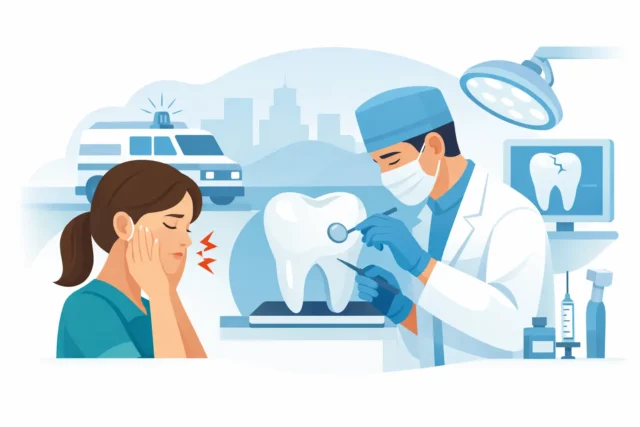
A toothache has a way of taking over everything. Eating becomes difficult, sleep gets interrupted, and even a normal conversation can feel exhausting when one tooth is throbbing. If you are wondering how emergency dentists treat tooth pain, the short answer is that they focus on two things right away – relieving discomfort and finding the actual cause so the problem does not keep getting worse.
That matters because tooth pain is not one single condition. It can come from a cavity, a cracked tooth, an abscess, gum infection, a failed filling, grinding, or even an erupting wisdom tooth. The treatment that helps most depends on what is happening under the surface, which is why an emergency visit is usually more than just getting something for pain.
How emergency dentists treat tooth pain in the first visit
Emergency dental care usually starts with a focused exam. The dentist asks when the pain started, whether it is sharp, throbbing, constant, or triggered by hot, cold, or pressure, and whether there is swelling, fever, or trouble chewing. Those details help narrow down whether the issue is likely decay, infection, trauma, or inflammation.
From there, the dentist looks closely at the painful area and often takes digital X-rays. This step is important because some of the most painful problems are not obvious from the outside. A tooth can look fairly normal but still have deep decay, an infection near the root, or a crack extending below the gumline.
Once the source is clearer, treatment is aimed at calming pain as quickly as possible. In many cases, that means numbing the area before doing anything else. Patients who are anxious often feel better knowing that emergency dentists are not expecting them to simply push through pain. The first goal is to help you feel more comfortable and stable.
Why the cause of tooth pain changes the treatment
Two people can both say, “My tooth hurts,” and need completely different care. One may need a simple filling. The other may need a root canal or extraction. That is why emergency dentists do not treat pain based on symptoms alone.
If the tooth is sensitive to cold and sweets but the nerve is still healthy enough to recover, a filling may be all that is needed. If the pain lingers, wakes you up, or feels severe and pulsing, the nerve inside the tooth may be inflamed or infected. In that case, a more involved treatment is often the right way to stop the pain for good.
There is also an “it depends” factor with timing. Sometimes a dentist can complete the full treatment the same day. Other times, especially if there is heavy swelling, significant infection, or a complicated fracture, the first visit is about getting the area under control and planning the next step safely.
Fillings for cavities and damaged restorations
When tooth pain is caused by decay, a worn-out filling, or a small area of damage, the dentist may remove the decayed portion and place a new filling. This is one of the more straightforward emergency treatments, and it can bring fast relief if the problem has not reached the inner nerve.
If an old filling has fallen out or a tooth has chipped, covering the exposed area can reduce sensitivity right away. The exact material and timing depend on how much healthy tooth structure remains, but the principle is simple: protect the tooth, seal out bacteria, and stop irritation.
Crowns when a tooth needs more support
Sometimes a tooth is too broken down for a basic filling to hold up well. If a large portion of the tooth has fractured or decay has weakened it significantly, a crown may be recommended. A crown covers the tooth more completely and helps restore strength as well as comfort.
This is especially common when a painful tooth has a large crack or an older restoration that has failed. In some situations, a temporary solution is placed first to reduce pain and protect the tooth until the final crown is ready. In others, same-day technology may allow treatment to move faster.
Root canals for inflamed or infected nerves
Many severe toothaches come from the pulp, the soft tissue inside the tooth that contains nerves and blood vessels. When that tissue becomes inflamed or infected, the pain can be intense. It may feel worse when you bite down, lie down, or drink something hot or cold.
A root canal treats this type of pain by removing the damaged tissue from inside the tooth, cleaning the canals, and sealing the space. Patients are often surprised that the procedure is designed to relieve pain, not create more of it. If the tooth can be saved, this is often the best option for keeping your natural smile intact while stopping the source of the problem.
Not every painful tooth needs a root canal, but when the nerve is involved, a filling alone will not solve it. That is one reason an accurate diagnosis matters so much.
How emergency dentists treat tooth pain caused by infection
An abscessed tooth or gum infection is one of the most urgent causes of dental pain. Along with severe discomfort, you may notice swelling in the face or gums, a bad taste in the mouth, drainage, or even fever. In these cases, treatment needs to address the infection itself, not just the pain.
Depending on the source, the dentist may drain the area, begin root canal treatment, or recommend extracting the tooth if it cannot be saved. Antibiotics may also be prescribed when there is spreading infection, facial swelling, or signs that the body needs extra help controlling bacteria.
Antibiotics can be very helpful, but they are not a stand-alone fix for most dental infections. If the infected tooth remains untreated, pain often returns. The most effective relief comes from removing the source of infection.
Extractions when saving the tooth is not the best option
Dentists generally try to save natural teeth when they can, but there are times when extraction is the healthiest choice. A tooth may be too broken, too decayed, severely loose from gum disease, or fractured in a way that cannot be predictably repaired.
When that happens, removing the tooth can bring immediate relief from pressure and infection. It can also prevent the problem from spreading to nearby teeth or tissue. The trade-off, of course, is that a missing tooth may eventually need to be replaced for function, appearance, or long-term bite health. Your dentist will usually talk through those next-step options after the urgent pain is handled.
Treatment for cracked teeth and dental injuries
A cracked or injured tooth can be tricky because the pain may come and go at first. Some cracks are minor and can be restored with bonding or a crown. Others extend into the pulp or below the gumline and require root canal treatment or extraction.
Emergency dentists also look at the surrounding tissues after trauma. A hit to the mouth can affect the tooth root, the bone, or the bite, even if the tooth itself does not look dramatically damaged. Prompt evaluation improves the chances of saving the tooth and limiting future complications.
What pain relief looks like during and after treatment
People often want to know whether an emergency dentist will do anything for pain right away, and the answer is yes. Local anesthetic is commonly used to numb the area before treatment. That alone can make a dramatic difference during the appointment.
After treatment, the dentist may recommend over-the-counter pain relievers, home care steps, and follow-up instructions based on what was done. If there is swelling, you may be told to use a cold compress. If the tooth was treated but not permanently restored that day, you may need to avoid chewing on that side until the next visit.
The timeline for relief depends on the cause. Some patients feel better almost immediately after pressure is released or decay is removed. Others, especially after a root canal, extraction, or infection, may still have tenderness for a few days as the tissues settle down.
When tooth pain should not wait
Some dental problems can hold until a routine visit, but others really should be seen as soon as possible. Significant swelling, fever, pus, a broken tooth with severe pain, bleeding that does not stop, or pain that is keeping you from sleeping or eating are all signs that you should call right away.
Even if the pain comes and goes, that does not mean the problem is minor. Tooth pain often gets quieter before it gets worse, especially if the nerve is starting to die or infection is spreading deeper. Getting examined early can mean simpler treatment, lower cost, and a better chance of saving the tooth.
For families in Northern Colorado, having a dental home matters in moments like this. A practice like Trail Ridge Dental can evaluate the problem, explain your options clearly, and help you move from pain and uncertainty to a treatment plan that feels manageable. When your tooth hurts, the best next step is not to guess – it is to get the source diagnosed and treated before a bad day turns into a bigger problem.