
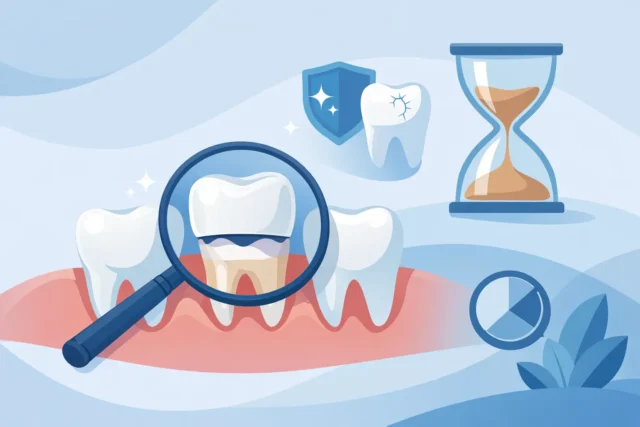
A crown often feels like the finish line after a damaged tooth, a root canal, or a large cavity. So it is completely normal to ask, how long do dental crowns last before they need repair or replacement? The short answer is that many crowns last between 10 and 15 years, but some last much longer with good care, while others need attention sooner.
That range can feel broad, and there is a reason for that. A crown is strong, but it is not indestructible. Its lifespan depends on the material, where it sits in your mouth, your bite, your daily habits, and how well the tooth underneath stays healthy over time.
How long do dental crowns last on average?
Most dental crowns last about 10 to 15 years. In many cases, they can stay in place for 20 years or more. Some patients keep a crown much longer, especially when it is placed well, cleaned consistently, and not exposed to heavy grinding or repeated stress.
At the same time, a crown is still a restoration, not a permanent tooth replacement. Even a beautifully made crown can wear down, loosen, crack, or need replacement if the underlying tooth develops decay or if the gumline changes.
This is why regular dental exams matter so much. A crown may look fine from the outside while early problems are starting at the margin where the crown meets the natural tooth.
What affects how long dental crowns last?
The biggest factor is not just the crown itself. It is the whole environment around it.
Crown material makes a difference
Different materials have different strengths and esthetic benefits. Porcelain and ceramic crowns are popular because they blend naturally with surrounding teeth. They are a great choice for visible areas of the smile, but depending on the design and location, they may be more prone to chipping than some metal-based options.
Porcelain-fused-to-metal crowns offer a balance of strength and appearance. Metal and gold alloy crowns are known for durability, especially on back teeth that handle more chewing pressure. They are often among the longest-lasting options, though they are less common in visible areas because of their appearance.
Same-day CEREC crowns can also be an excellent option when designed and placed properly. Their convenience is a real benefit for busy families and working adults, but like any crown, their longevity still depends on bite forces, fit, and home care.
Location in the mouth matters
A crown on a molar usually takes much more force than one on a front tooth. Back teeth do the heavy chewing, so crowns in those spots may experience more wear over time.
Front-tooth crowns face a different challenge. They may not handle the same grinding forces as molars, but they can chip if someone bites fingernails, chews ice, or uses their teeth to open packaging.
Grinding and clenching shorten lifespan
If you grind or clench your teeth, especially at night, your crown may wear out faster. Bruxism can create repeated pressure that causes cracks, chips, soreness, or damage to the crown and the tooth underneath.
For many patients, a custom night guard helps protect both natural teeth and dental work. This is one of those small preventive steps that can make a big difference over the years.
Oral hygiene still matters
A crown cannot get a cavity, but the natural tooth structure underneath it can. Decay often starts near the edge of the crown if plaque collects there regularly.
That means brushing, flossing, and professional cleanings are still essential. If the supporting tooth weakens, the crown may need to be removed and replaced, or the tooth may need more advanced treatment.
Bite alignment and fit affect durability
Even a high-quality crown may not last as long if your bite is uneven. If one crown is hitting harder than the surrounding teeth every time you chew, it is under extra stress all day long.
A well-fitted crown should feel natural and function comfortably. Small bite adjustments after placement are sometimes needed, and they are worth addressing early rather than living with pressure that slowly causes damage.
Signs a dental crown may need replacement
Crowns rarely fail without warning. More often, there are clues that something has changed.
Pain when biting, sensitivity to hot or cold, a loose feeling, swelling near the tooth, or food getting trapped around the crown can all point to a problem. In some cases, a crown may visibly crack or chip. In others, the issue is decay underneath the crown that only shows up on an exam or X-ray.
You may also notice that the crown no longer feels smooth against your bite, or the gum around it looks irritated. Sometimes the crown itself is still intact, but the cement holding it in place has weakened.
If a crown comes off, do not assume it can just be glued back permanently at home. It needs to be evaluated to see whether the crown can be re-cemented or whether the tooth and restoration need a different solution.
How to help your crown last longer
The good news is that patients have a lot of control here. Daily habits matter.
Brush twice a day with a soft-bristled toothbrush and fluoride toothpaste. Floss carefully around the crown every day to keep the gumline and crown margin clean. Try not to chew ice, bite pens, or use your teeth as tools. If you grind your teeth, wear a night guard if your dentist recommends one.
It also helps to keep up with routine checkups and cleanings. Crowns tend to last longer when small issues are caught early, before they turn into a larger repair. A tiny problem at the edge of a crown is much easier to manage than a broken tooth or deep decay.
For families, this is especially important because dental care is easier to stay on top of when everyone has a regular dental home. Consistency usually leads to fewer surprises.
Are some crowns replaced even if they are not broken?
Yes. Sometimes a crown is replaced not because it failed dramatically, but because it no longer seals the tooth well, the margin has opened up, the appearance has changed, or the underlying tooth needs treatment.
For example, gums can recede over time and expose part of the crown margin. A patient may also want to replace an older crown for cosmetic reasons if the color no longer matches surrounding teeth.
That does not mean the original crown was poor quality. It usually means your mouth has changed over time, and the restoration needs to keep up.
Is it normal for one crown to last longer than another?
Absolutely. Two crowns in the same mouth can age very differently.
A front crown on a patient with excellent hygiene and no grinding may last many years. A molar crown on someone who clenches, chews hard foods, and has gum recession may need replacement much sooner. This is why there is no one-size-fits-all answer, even though 10 to 15 years is a useful average.
Dental history matters too. If a tooth had a very large filling before the crown, a root canal, or limited remaining tooth structure, the long-term outlook may differ from a crown placed on a stronger tooth.
When to call your dentist
If your crown feels loose, hurts, cracks, or suddenly changes the way your bite comes together, it is a good idea to schedule a visit sooner rather than later. Waiting can allow a manageable issue to turn into a more complicated one.
The same goes for a crown that looks fine but has an odor around it, catches floss repeatedly, or causes tenderness at the gumline. Those subtle changes often mean something needs attention.
At Trail Ridge Dental, we often remind patients that the goal is not just getting a crown placed. It is helping that tooth stay comfortable, functional, and healthy for as long as possible.
If you are wondering how long do dental crowns last in your specific case, the most honest answer is this: it depends on the crown, the tooth, and your habits. With thoughtful placement, regular exams, and solid home care, a crown can serve you well for many years – and often much longer than patients expect.