
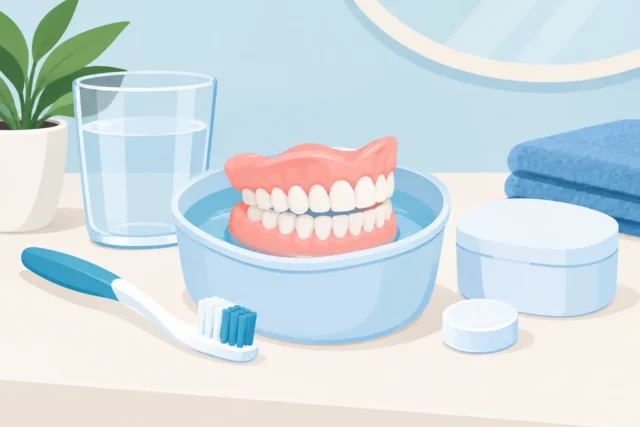
Dentures should feel like a dependable part of your day, not a source of worry. Knowing how to care for dentures protects your smile, helps prevent odor and irritation, and can extend the life of your appliance. A few careful habits at the sink and regular dental checkups can make a meaningful difference in how your dentures look, fit, and feel.
Clean Your Dentures Every Day
Dentures collect plaque, food particles, and bacteria just like natural teeth. Even if you wear a full denture and no longer have teeth in that arch, daily cleaning is still necessary for your oral health and comfort.
Remove your dentures after meals when you can and rinse them under cool or lukewarm running water. This clears away loose debris before it has a chance to dry onto the appliance. Handle them over a folded towel or a sink partly filled with water. Dentures can crack or chip if they fall onto a hard countertop.
At least once a day, brush your dentures with a soft denture brush or a soft-bristled toothbrush made for this purpose. Use a nonabrasive denture cleanser or mild hand soap. Regular toothpaste may seem like the obvious choice, but many toothpastes are too abrasive for denture materials. Over time, they can leave tiny scratches where stain and bacteria collect.
Pay attention to the entire appliance, including the surface that rests against your gums, the grooves around the teeth, and the areas where denture adhesive may build up. A gentle, thorough brushing works better than aggressive scrubbing.
Soak Them the Right Way
Most removable dentures need moisture to keep their shape. When you are not wearing them, place them in water or a denture-soaking solution recommended by your dentist. Do not use hot water. Heat can warp the acrylic base, changing the fit and making the denture uncomfortable or unstable.
Not every appliance follows the same storage rules. Some partial dentures contain metal components, and implant-supported dentures may have specific cleaning instructions. If your denture has clips, attachments, or a metal framework, ask your dental team which soaking products are appropriate. A product that is safe for one type of denture may not be the best choice for another.
Avoid household cleaners, bleach, and whitening products unless your dentist has specifically approved them. These products can damage the material, change its color, or irritate the tissues in your mouth.
Care for Your Mouth, Not Just Your Dentures
Taking dentures out does not mean your oral hygiene routine is over. Your gums, tongue, cheeks, palate, and any remaining natural teeth need daily attention.
After removing your dentures, use a soft toothbrush or damp washcloth to gently clean your gums, tongue, and the roof of your mouth. This removes bacteria and stimulates circulation in the tissues that support your denture. If you have partial dentures, brush and floss your natural teeth as directed by your dental professional. Healthy remaining teeth are essential to keeping a partial denture stable.
Many people benefit from removing dentures overnight so their gums can rest. However, there are exceptions, especially after oral surgery or when following a dentist’s short-term instructions. Wear them overnight only when your dentist recommends it. Leaving dentures in around the clock can increase the risk of redness, inflammation, and fungal infections such as denture stomatitis.
Use Denture Adhesive Carefully
Denture adhesive can help some people feel more secure while eating or speaking, particularly as the shape of the jaw changes over time. It should be used sparingly and on a clean, dry denture. Small dots or thin strips are usually enough. Adding more adhesive does not fix a loose denture and can make cleanup more difficult.
If you need adhesive every day to keep your dentures from moving, schedule an appointment rather than simply applying more. Dentures that once fit well can become loose as the bone and gum tissue beneath them change. A reline, adjustment, or replacement may restore a more comfortable fit.
Adhesive should also be completely removed from the denture and your gums each day. Persistent residue can trap bacteria and make your mouth feel sore.
Protect Dentures From Damage
Dentures are durable, but they are not indestructible. A few everyday precautions can prevent an inconvenient break:
- Keep them away from hot water, direct heat, and a hot car.
- Store them in a covered container when they are out of your mouth, safely away from children and pets.
- Do not bend clasps on a partial denture to make it fit differently.
- Never attempt to repair a crack, broken tooth, or loose piece with household glue.
A home repair can make professional repair more difficult and may expose your mouth to unsafe materials. If your dentures break, stop wearing the damaged appliance if it has sharp edges or causes pain, then contact your dentist. In some cases, a simple repair is possible. In others, the appliance may need more extensive work.
Eat and Speak With Confidence
New dentures require an adjustment period. Your facial muscles, tongue, and gums need time to learn how the appliance moves. Start with softer foods cut into small pieces, and chew slowly using both sides of your mouth at the same time. This helps prevent a lower denture from tipping.
As your confidence grows, add a wider range of foods. Firm, sticky, and crunchy foods can still require extra care. Caramel, chewing gum, tough steak, whole apples, and hard nuts may dislodge or stress dentures, depending on their fit and design. This does not mean you must avoid every favorite food forever, but it is wise to adjust how you eat it. Cutting food into smaller pieces and chewing deliberately can help.
Reading aloud at home is a practical way to get used to speaking with dentures. Some sounds may feel different at first, and a little extra saliva is common during the first days or weeks. These changes usually improve as your mouth adapts. If clicking, slipping, or sore spots continue, a dental adjustment can help.
Know When Your Dentures Need Attention
A good-fitting denture should not cause ongoing pain. Minor tenderness can happen when you are adjusting to a new appliance, but persistent discomfort is a reason to call your dental office.
Watch for sore spots, bleeding gums, cracks, a change in fit, frequent slipping, unpleasant odor that remains after cleaning, or difficulty chewing foods you previously managed comfortably. White or red patches in the mouth also deserve prompt attention. These symptoms may point to an ill-fitting denture, an infection, or another oral health concern that should not be ignored.
Dentures also need professional checkups, even if you no longer have natural teeth. Your dentist can examine the fit of the appliance, look for wear or damage, screen the tissues in your mouth, and discuss whether a reline or replacement is needed. Many dentures need adjustment over the years because your mouth naturally changes shape.
How to Care for Dentures Over the Long Term
The best long-term denture care is consistent rather than complicated: clean them daily, keep them moist when they are out, clean your mouth, and bring changes in comfort to your dentist early. A denture that fits well supports easier meals, clearer speech, and a more natural smile.
If your dentures no longer feel like they belong in your mouth, you do not have to simply live with the discomfort. The caring team at Trail Ridge Dental can help evaluate the fit, condition, and health of your smile so you can get back to feeling comfortable at the table, in conversation, and throughout your day.