
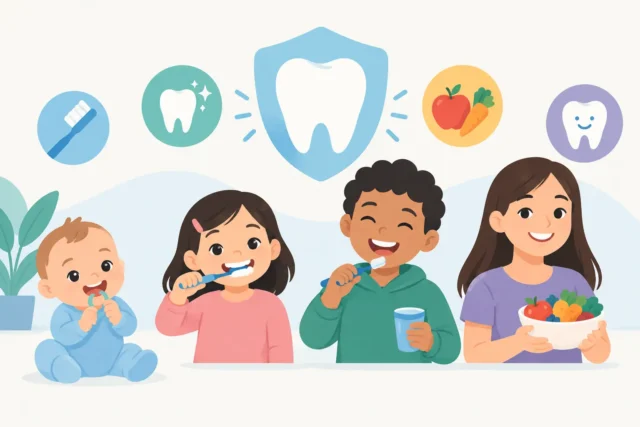
A cavity can start quietly, long before a child says a tooth hurts. That is why learning how to prevent childhood cavities is less about waiting for a problem and more about building small, dependable habits at home. With the right routine, most families can greatly reduce their child’s risk while keeping dental care calm, positive, and manageable.
How to Prevent Childhood Cavities Starts Early
Baby teeth matter. They help children chew comfortably, speak clearly, and hold space for permanent teeth to come in properly. When a baby tooth develops a cavity or is lost too early, it can affect eating, sleep, school days, and the development of the adult teeth beneath it.
Cavity prevention begins before a child has a full mouth of teeth. For infants, gently wipe the gums with a clean, soft cloth after feedings. Once the first tooth appears, use a small, soft-bristled toothbrush twice daily. A smear of fluoride toothpaste about the size of a grain of rice is appropriate for children younger than 3. From ages 3 to 6, use a pea-sized amount and help them spit out the excess rather than swallow it.
Parents should do the brushing, or at least closely supervise it, for longer than many people expect. Most children do not have the hand skills to brush thoroughly on their own until around age 6 to 8. Even then, a quick parent check is worthwhile, especially along the gumline and on the chewing surfaces of back teeth.
Make Brushing a Routine, Not a Negotiation
Twice-daily brushing is the foundation of cavity prevention, but consistency matters more than a perfect technique once in a while. Morning brushing clears away bacteria that build up overnight. Brushing before bed is especially important because saliva flow slows during sleep, allowing cavity-causing bacteria more time to act on leftover sugars and starches.
Choose a toothbrush with soft bristles and a head small enough to reach the back teeth. Angle the bristles gently toward the gums and move them in small circles. Encourage children to brush for two minutes, but make it feel achievable. A favorite song, a simple timer, or brushing together can turn the routine into a normal part of the day instead of a nightly struggle.
Flossing should begin when two teeth touch closely enough that a toothbrush cannot clean between them. This often happens in the back of the mouth first. A parent can use floss picks for convenience, although traditional floss works well too. The goal is not to make the routine complicated. It is to remove plaque from the places where cavities often begin unnoticed.
Watch the Frequency of Sugary Snacks and Drinks
Sugar does not cause cavities all by itself. The trouble happens when mouth bacteria feed on sugars and starches, then produce acids that weaken tooth enamel. How often a child snacks or sips can matter as much as the total amount of sugar they consume.
A child who drinks juice, sweet tea, sports drinks, soda, or flavored milk slowly over an afternoon exposes their teeth to repeated acid attacks. Even frequent sipping on a bottle or sippy cup can be harmful if it contains anything other than water. Juice may contain vitamins, but it is still a sugary, acidic drink that is best kept to mealtimes and served in reasonable portions.
Water is the best everyday drink between meals. In many Northern Colorado communities, tap water may contain fluoride, which provides an added benefit for developing teeth. If your household relies on bottled water, well water, or a filtration system, ask your dental team whether your child is getting enough fluoride.
You do not have to eliminate every birthday treat or school snack. A realistic approach is to offer sweets with a meal rather than grazing on them throughout the day. Pair snacks with tooth-friendly choices such as cheese, yogurt with no added sugar, vegetables, fruit, nuts for children old enough to safely eat them, or whole-grain options. Sticky candies, fruit snacks, crackers, and chips can cling to teeth, so timing and brushing afterward make a difference.
Avoid Bedtime Bottles and Hidden Sugar
One of the most preventable causes of early childhood cavities is putting a child to bed with a bottle or sippy cup containing milk, formula, juice, or another sweetened drink. During the night, those sugars stay on the teeth while saliva production decreases. Even milk and formula contain natural sugars that can contribute to decay when they repeatedly coat teeth overnight.
If a child needs a bedtime drink, water is the safer choice after brushing. For babies who still feed before sleep, gently clean their gums or teeth afterward when possible. This adjustment may take time, particularly if a bottle is part of a comforting bedtime routine. A gradual change is often easier for both parent and child than trying to change everything at once.
Sugar also appears in places families may not expect, including flavored yogurt, granola bars, fruit pouches, cough drops, and some medications. Reading labels can help, but there is no need to make food stressful. Focus on the overall pattern: regular meals, fewer all-day snacks, water between meals, and reliable brushing before bed.
Use Fluoride Wisely
Fluoride strengthens enamel and can help reverse very early signs of tooth decay before a cavity forms. It is one of the most effective tools available for protecting children’s teeth, particularly when used in the right amount for their age.
Fluoride toothpaste is recommended as soon as the first tooth erupts. The small amount matters because young children may swallow toothpaste instead of spitting it out. Keep toothpaste out of reach, supervise brushing, and avoid treating it like candy.
At routine visits, a dental professional may recommend a fluoride varnish based on your child’s cavity risk. Children who have had cavities before, snack frequently, have deep grooves in their molars, wear braces, or have trouble brushing may benefit from additional preventive support. Recommendations should be personalized. What works for one child may not be necessary for another.
Keep Regular Dental Visits Positive
A child’s first dental visit should happen by their first birthday or within six months of the first tooth coming in. That may sound early, but these initial appointments are often simple and reassuring. They give parents a chance to ask questions about brushing, thumb-sucking, teething, diet, fluoride, and development before small concerns become larger ones.
Regular visits allow the dental team to spot weak areas, early decay, crowding, and changes in bite. Professional cleanings remove plaque in hard-to-reach places, while preventive treatments such as sealants can protect the deep grooves of permanent molars. Sealants are thin protective coatings that help keep food and bacteria out of areas a toothbrush may miss.
If your child is anxious, tell the dental team before the appointment. A family-centered practice can explain each step in kid-friendly language, move at a comfortable pace, and help children build trust over time. Positive early visits can shape how a child feels about dental care well into adulthood.
Know When Your Child May Need Extra Help
Some children have a higher risk of cavities even with a solid home routine. Dry mouth, certain medications, frequent reflux, special health care needs, enamel defects, orthodontic appliances, and a history of cavities can all change the prevention plan. Children who resist brushing or have sensory sensitivities may also need more tailored strategies.
Call the dentist if you notice white, chalky spots near the gumline, brown marks, tooth sensitivity, pain while chewing, bad breath that does not improve with brushing, or a chipped tooth. Early evaluation can sometimes mean simpler treatment and less discomfort.
At Trail Ridge Dental, families can receive preventive care alongside the broader dental support they may need as their children grow. The most effective plan is one your household can realistically follow, with guidance that feels supportive rather than overwhelming.
A healthy smile is built in ordinary moments: the cup of water after soccer practice, the parent who checks the back molars at bedtime, and the routine visit that catches a small concern early. Those moments add up to strong teeth and more confident smiles.