
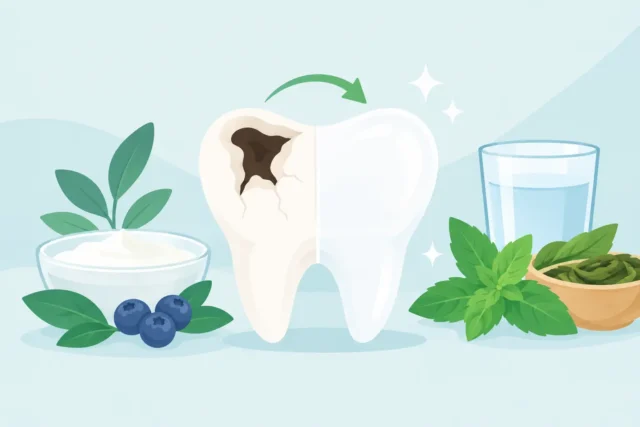
A faint white spot on a tooth can feel easy to ignore, especially when there is no pain. That is also where the question, can cavities heal naturally, has a more hopeful answer than many people expect. Very early tooth decay can sometimes be stopped and strengthened through remineralization. But a true hole in a tooth cannot grow back on its own.
Knowing the difference helps you protect your smile without waiting too long for care. For families, it can also turn daily brushing and snack choices into practical tools for preventing more involved treatment later.
Can cavities heal naturally in the early stages?
A cavity begins when bacteria in plaque feed on sugars and starches left on the teeth. Those bacteria create acids that pull minerals from enamel, the hard outer layer of each tooth. This first stage is called demineralization.
When the mineral loss is still limited to enamel, the surface may remain intact. You might notice a chalky white area, often near the gumline or around orthodontic brackets, though many early spots are not visible without a dental exam. At this stage, saliva, fluoride, calcium, and phosphate can help replace lost minerals. That repair process is called remineralization.
So, early enamel damage may improve or become inactive. It may not disappear completely or return to the exact appearance it had before, but the goal is to make the tooth stronger and stop the decay from progressing.
Once decay creates a soft spot, a pit, or a visible hole, it has broken through the enamel. The tooth cannot rebuild that missing structure naturally. A filling is usually needed to remove weakened tooth material and restore the area before the decay reaches deeper layers.
Why a cavity can seem to disappear
Cavities do not always hurt. In fact, early decay often has no symptoms at all. A tooth can feel normal while decay slowly spreads beneath the surface or between teeth, where a toothbrush cannot reach well.
Pain is not a reliable test for whether a cavity needs treatment. A tooth may only become sensitive to cold, sweets, or biting pressure once decay is close to the inner nerve tissue. By then, a filling may be larger, and some teeth need a crown or root canal to be saved.
Regular exams and dental X-rays help identify the stage of decay. Your dentist can tell whether an area is an early, non-cavitated lesion that can be monitored and remineralized or a cavity that needs restorative care.
The location and depth make a difference
A smooth-surface early lesion may respond well to improved home care and fluoride. Decay in deep grooves, between teeth, around old fillings, or below the gumline can be harder to control. Dry mouth, frequent snacking, reflux, certain medications, and a history of cavities can also raise a person’s risk.
That is why two people with what looks like a similar spot may need different recommendations. Dental care is most effective when it is based on the individual tooth and the person behind the smile.
What helps early decay remineralize
Remineralization is not a quick home remedy. It is the result of consistent habits that lower acid exposure and give enamel the minerals it needs to recover.
Brush twice a day with fluoride toothpaste, using a soft-bristled toothbrush. For most adults and older children, spit after brushing rather than rinsing immediately with water so fluoride stays on the teeth longer. Young children should use only the small amount of toothpaste recommended for their age and should be supervised to avoid swallowing it.
Cleaning between teeth once a day matters just as much. Floss, interdental brushes, or another dentist-recommended option can remove plaque where toothbrush bristles do not reach. This is especially helpful for decay that begins between neighboring teeth.
Food and drink timing also matters. Every sugary snack, sweetened coffee, sports drink, soda, or frequent sip of juice gives plaque bacteria another chance to make acid. Reducing how often teeth are exposed to sugar can be more protective than simply focusing on the total amount consumed. Water between meals is a tooth-friendly choice, and drinking fluoridated tap water can offer an additional benefit for many families.
For patients at higher risk of cavities, a dentist may recommend prescription-strength fluoride toothpaste, fluoride varnish, or other preventive treatment. These options are tailored to factors such as dry mouth, past decay, orthodontic treatment, gum recession, and diet.
Natural approaches that do not fix a hole
It is understandable to look for a gentle alternative to dental treatment, particularly if a tooth is not hurting or dental visits feel stressful. Still, no oil, supplement, rinse, or home technique can fill in lost tooth structure once a cavity has formed.
Oil pulling may leave the mouth feeling fresh, but it does not replace brushing with fluoride toothpaste or professional treatment. Similarly, avoiding sugar can lower the risk of new decay, but it cannot seal an existing hole. Calcium-rich foods support overall health, yet they are not a substitute for treatment of a cavitated tooth.
Be cautious with acidic or abrasive DIY methods. Lemon juice, vinegar, charcoal powders, and aggressive brushing can wear away enamel or irritate gums. Enamel is valuable, and protecting what remains is always preferable to trying an unproven fix.
When to schedule a dental visit
An appointment is a good idea whenever you notice a new dark spot, white spot, rough area, sensitivity, food catching in one place, or a chipped tooth. Early evaluation often gives you more conservative options and helps prevent a small concern from becoming an urgent one.
Call promptly if you have swelling, facial pain, a fever, a bad taste that will not go away, severe toothache, or pain when biting. These can be signs that decay or infection has progressed beyond the enamel. Waiting for pain to settle can allow the problem to worsen.
At Trail Ridge Dental, our team takes the time to explain what we see, what can be watched, and what should be treated now. Whether your child has an early white spot or you have a tooth that has become sensitive, a clear plan can make dental care feel far less intimidating.
If you need a filling, earlier is usually easier
A filling is not a failure. It is a practical way to remove decay, seal the tooth, and preserve as much healthy structure as possible. Modern restorative dentistry is designed to be comfortable and conservative, especially when a cavity is treated before it becomes deep.
Delaying a needed filling can let bacteria move into dentin, the softer layer under enamel. Decay often spreads faster there. What might have been a small filling can eventually require a larger restoration, crown, root canal, or extraction. The trade-off is simple: monitoring is appropriate for some early areas, but waiting is not the same as healing.
A healthier next step for your smile
If you are wondering whether a spot can remineralize or whether it has become a cavity, you do not have to guess. Keep up the daily habits that protect enamel, and let a dental exam provide the answer. A timely visit can offer reassurance when the tooth is stable and straightforward care when it is not – both are good outcomes for your long-term oral health.