
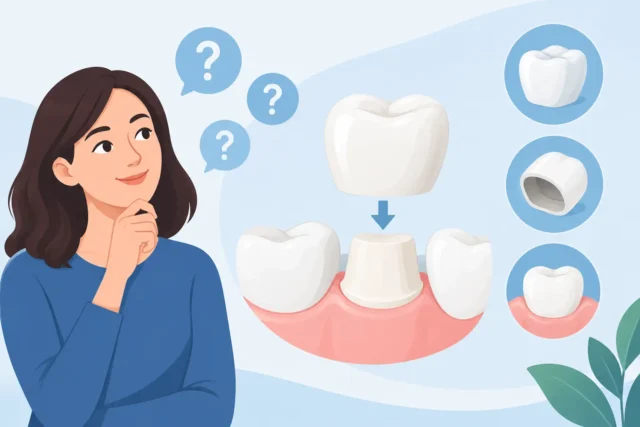
A cracked tooth rarely waits for a convenient week. Maybe you feel a sharp edge when you run your tongue over a back tooth, notice pain when chewing, or learn that a large old filling is no longer protecting the tooth. Questions about dental crowns often come up at exactly this point, when you want a clear answer without feeling pressured or overwhelmed.
A crown is one of dentistry’s most reliable ways to protect a damaged tooth while restoring its shape, strength, and appearance. The right choice depends on what is happening inside and around the tooth, not just what is visible in the mirror.
What is a dental crown?
A dental crown is a custom-made covering that fits over the entire visible portion of a tooth above the gumline. Think of it as a protective cap designed to take on the everyday work of biting and chewing. It can be made from several materials, including porcelain, ceramic, zirconia, metal alloys, or a combination of materials.
Modern tooth-colored crowns are a popular choice because they can be matched closely to surrounding teeth. For back teeth, strength may be the top priority. For a front tooth, shade, shape, and translucency may matter more. Your dentist will help balance those needs so the restoration looks natural and functions comfortably.
When does a tooth need a crown instead of a filling?
A filling repairs a smaller area of damage. A crown becomes a better option when too much of the tooth has been weakened to support a filling safely. This can happen after a large cavity, a fracture, repeated replacement of old fillings, or a root canal.
Crowns are also used to support a tooth with significant wear from grinding or clenching. In some cases, a tooth may not hurt at all but still be at risk of breaking because its remaining structure is thin. Treating it before it fractures more deeply can help avoid a more complicated repair or extraction.
That said, a crown is not automatically the answer for every damaged tooth. If decay is small and the tooth remains strong, a filling or another conservative restoration may be appropriate. A thorough exam and X-rays help reveal how much healthy tooth structure remains.
Common questions about dental crowns
Does getting a crown hurt?
The tooth is numbed before it is prepared, so you should not feel pain during the procedure. You may notice pressure, vibration, or the sensation of water, but the team can pause if you need a break.
Mild sensitivity or tenderness for a few days afterward is common, especially if the tooth was already inflamed or had extensive treatment. Sensitivity should gradually improve. Call your dental office if pain is severe, worsens, wakes you at night, or persists longer than expected. A bite adjustment or further evaluation may be needed.
How long does a crown take?
Some crowns are completed in two visits. At the first appointment, the tooth is prepared, impressions or digital scans are taken, and a temporary crown is placed while a dental lab creates the final restoration. At a later visit, the permanent crown is checked and cemented.
Same-day CEREC crowns can be a convenient option for many patients. With digital scanning and in-office milling, the crown may be designed, made, and placed in one visit. This can mean no temporary crown and fewer trips to the dentist. However, same-day treatment is not necessarily right for every tooth. Complex cases, certain cosmetic goals, or specific material needs may be better served by a lab-made crown.
Will the dentist have to remove a lot of my tooth?
A crown requires some reshaping so there is room for the restorative material. The amount removed depends on the tooth’s position, the crown material, and the existing damage. Your dentist’s goal is to preserve as much healthy tooth structure as possible while creating a crown that is strong enough and fits correctly.
If a tooth has lost a great deal of structure, a filling material may be used to rebuild the foundation before the crown is placed. Occasionally, a post is used inside a root canal-treated tooth for added retention. A post does not strengthen the root itself, so it is only used when clinically appropriate.
How much does a dental crown cost?
Crown costs vary based on the material selected, the tooth being treated, whether additional care is needed, and your insurance benefits. A crown on a front tooth may have different cosmetic requirements than one on a molar. A tooth that needs a root canal, buildup, or treatment for gum disease will also involve separate care.
Before treatment begins, ask for an estimate that explains the planned procedures and expected insurance coverage. For patients without insurance, an in-house membership option may make routine care and certain treatments more manageable. Clear financial information helps you make decisions based on your health, timeline, and budget.
How long do crowns last?
Many crowns last 10 to 15 years or longer, but no restoration lasts forever. Daily habits, bite forces, oral hygiene, and the health of the underlying tooth all affect longevity. Grinding ice, chewing hard candies, using teeth to open packaging, and untreated clenching can shorten a crown’s lifespan.
The crown itself cannot decay, but the natural tooth at its edge can. Brushing twice daily with fluoride toothpaste, cleaning between teeth every day, and attending regular checkups are the best ways to protect that margin. If you grind or clench, a custom nightguard may help protect both your crowns and natural teeth.
Can a crowned tooth still get a cavity or need a root canal?
Yes. Decay can form where the crown meets the tooth, particularly if plaque builds up along the gumline. A tooth can also develop nerve inflammation or infection after a crown, although this is not common. Sometimes the tooth was already deeply compromised before the crown was placed, and symptoms appear later.
Lingering sensitivity, swelling, a pimple-like bump on the gum, pain when biting, or a loose crown deserve prompt attention. Early care often gives the tooth the best chance of being preserved.
What should you expect after receiving a crown?
Once the numbness wears off, eat carefully until you know how the tooth feels. Avoid chewing on the numb side of your mouth while you are still numb so you do not accidentally bite your cheek or tongue. With a temporary crown, avoid sticky foods such as caramel or chewing gum and use floss carefully by sliding it out through the side rather than lifting it straight up.
A new permanent crown should feel like part of your natural bite. It may feel slightly different to your tongue for a day or two, but it should not feel high or make you avoid chewing on that side. If it does, schedule an adjustment. A small bite correction can prevent soreness, jaw strain, and unnecessary wear.
Choosing a crown that fits your life
The best crown is not simply the strongest or the most cosmetic option. It is the one that fits the tooth’s needs, your bite, your smile goals, and your budget. A good conversation should cover the condition of the tooth, material choices, whether same-day treatment is appropriate, expected costs, and how to protect the result for years to come.
At Trail Ridge Dental, the goal is to make restorative care feel understandable and comfortable, whether you need a crown after a broken tooth or are planning ahead for a recommended repair. If something about a tooth does not feel right, scheduling an exam now can give you answers before a small concern becomes a larger interruption to your day.