
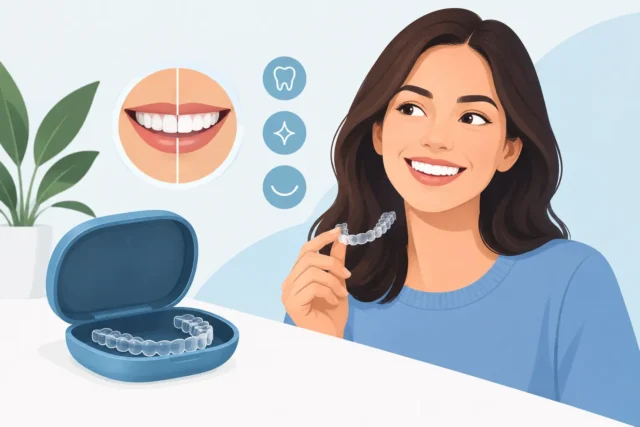
A SureSmile clear aligners review should be about more than whether the trays are hard to see in photos. The real question is whether this treatment fits your smile, your routine, and the level of dental support you want while your teeth move. For many adults and teens who want a straighter smile without traditional braces, SureSmile can be a comfortable, discreet option. Like any orthodontic treatment, though, the best results depend on careful planning and consistent wear.
SureSmile Clear Aligners Review: What They Are
SureSmile clear aligners are custom-made, removable trays designed to gradually move teeth into healthier, more balanced positions. Your dentist takes digital images or scans of your teeth, develops a treatment plan, and provides a series of aligners. Each set applies gentle pressure to specific teeth, with aligners changed according to your dentist’s instructions.
The aligners are made from transparent plastic and fit closely over the teeth. From a conversational distance, they are often much less noticeable than metal brackets and wires. They can be removed for meals, brushing, flossing, and special occasions, although they need to be worn for most of the day to work as intended.
SureSmile is not a one-size-fits-all product. Your dental team uses the system to plan tooth movement around your bite, gum health, existing dental work, and cosmetic goals. That professional oversight is a meaningful part of the experience. Straightening teeth is not only about appearance. A properly planned result should also consider how your upper and lower teeth come together.
What Patients Often Like About SureSmile
The biggest advantage is discretion. Adults who avoided braces earlier in life may feel more comfortable choosing clear aligners because the treatment is less visible at work, school events, or social gatherings. Teens who are responsible enough to keep up with wear time may also appreciate the lower-profile option.
Comfort is another common benefit. Clear aligners do not have brackets or wires that can rub against the cheeks and lips. It is still normal to feel pressure, especially for the first day or two with a new set of trays. That pressure is a sign that the aligners are actively guiding teeth into position. Most patients describe it as manageable, but sensitivity can vary from person to person.
The ability to remove aligners is practical as well. You can continue enjoying foods that are difficult with braces, and you can brush and floss without working around hardware. This makes daily hygiene easier for many patients. It does not mean aligners are maintenance-free, however. You will need to clean the trays and brush after eating before putting them back in.
For patients who value a familiar care team, in-office clear aligner treatment can feel reassuring. At Trail Ridge Dental, the conversation begins with your overall oral health and your goals for your smile, not just a quick scan and a box of trays. If questions come up during treatment, you have a local dental team who knows your case.
The Trade-Off: Results Require Consistency
Clear aligners give patients flexibility, but that flexibility comes with responsibility. Most treatment plans require wearing aligners about 20 to 22 hours per day. Removing them for a long lunch, coffee throughout the morning, or a busy evening can add up quickly. If aligners are not worn as directed, teeth may not track as planned, and treatment can take longer.
This is the central trade-off in nearly every SureSmile clear aligners review. Traditional braces stay on your teeth and keep working around the clock. Clear aligners work only when they are in your mouth. Patients who want maximum freedom but know they may misplace trays or forget to put them back in should talk honestly with their dentist about whether braces could be the better choice.
Aligners may also affect speech briefly. Some people notice a slight lisp during the first few days as their tongue adjusts to the trays. Reading aloud or simply wearing the aligners consistently usually helps the adjustment happen faster.
Who May Be a Good Candidate?
SureSmile aligners can address many common orthodontic concerns, including mild to moderate crowding, spacing, certain bite concerns, teeth that have shifted after earlier orthodontic treatment, and cosmetic alignment issues. They are often appealing to adults whose lower front teeth have become crowded over time.
A consultation is necessary because complexity matters. Significant bite discrepancies, severely rotated teeth, impacted teeth, active gum disease, or extensive untreated decay may need other treatment first or may be better managed with braces, specialty orthodontic care, or a combination approach. Clear aligners can treat more than minor cosmetic concerns in the right case, but no ethical dentist should promise that every smile is an aligner case.
Existing crowns, bridges, implants, veneers, and fillings also deserve careful review. These restorations do not automatically rule out aligner treatment, but they can affect how teeth move and how the final smile is planned. If you are considering cosmetic work, it is often helpful to discuss aligners before replacing visible restorations so the final design can be coordinated thoughtfully.
What Treatment Usually Feels Like
The first appointment typically includes a dental exam, digital scans, photographs, and a conversation about your priorities. Some patients want a few front teeth straightened; others want to improve their bite and create a more balanced smile. Your dentist will review whether your teeth and gums are ready for movement before moving forward.
Once your aligners are ready, you will receive instructions on how to wear, clean, and store them. You may have small tooth-colored attachments placed on certain teeth. These attachments give the aligners better grip for planned movements. They are subtle, but they are not completely invisible up close.
Follow-up visits allow your dental team to check progress and make sure each aligner is fitting properly. Depending on the plan, some cases need refinement aligners near the end to fine-tune the result. This is not necessarily a sign that treatment failed. Teeth are biologic structures, and they do not always move exactly according to a digital prediction.
After active treatment, retainers are essential. Teeth naturally tend to shift over time, even after braces or aligners. Wearing retainers as instructed protects the time, effort, and cost invested in your new smile.
Cost Factors to Discuss Before Starting
The cost of SureSmile treatment varies because every case has different needs. A short cosmetic plan with limited movement is not priced the same way as comprehensive treatment involving multiple bite changes, attachments, refinements, and longer monitoring. Your location, insurance benefits, and whether other dental care is needed first can also affect the total investment.
Rather than choosing based on the lowest advertised price, ask what is included in your proposed treatment. A clear estimate should explain whether it covers records, aligners, follow-up visits, refinements, retainers, and replacement fees if trays are lost. If you do not have dental insurance, ask about payment options and whether an in-house membership program may help with your broader dental care needs.
Questions to Ask at Your Consultation
A good consultation should leave you with practical answers, not pressure. Ask how long your specific case is expected to take, how many hours per day you will need to wear aligners, and what happens if a tray does not fit as expected. It is also wise to ask whether you will need attachments, how often you will be seen, and what retention will look like when treatment ends.
You can also ask to see what improvement is realistic for your bite and smile. Digital previews can be helpful, but they are treatment simulations rather than guarantees. Your dentist should explain both the expected changes and the limitations of your individual case.
For families in Northern Colorado, convenience can matter just as much as aesthetics. Choose a dental office where you feel comfortable asking questions, where follow-up care is accessible, and where your overall dental health remains part of the plan. A straighter smile should support a healthier, more confident future, and the right team will help you decide whether SureSmile aligners are the right path to get there.