
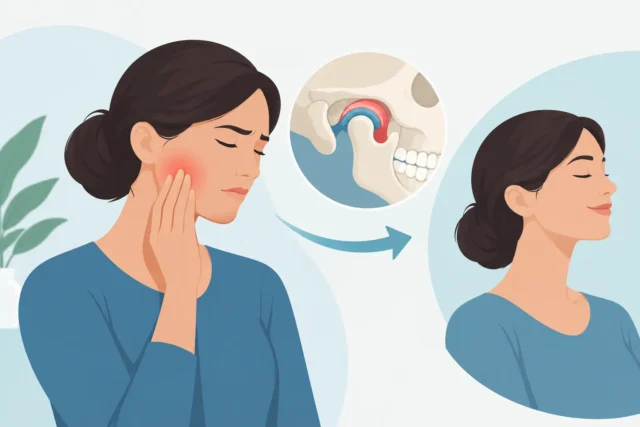
A jaw that clicks at breakfast, aches after a long workday, or feels tired from ordinary conversation can make small moments surprisingly difficult. TMJ treatment for jaw pain begins with identifying what is putting stress on your jaw joints and muscles, then creating a plan that fits your symptoms, bite, and daily habits.
The temporomandibular joints, often called TMJs, connect your lower jaw to your skull. They work every time you chew, speak, yawn, and swallow. Because these joints rely on muscles, ligaments, teeth, and bite alignment working together, jaw pain can have more than one cause. The right answer is rarely a one-size-fits-all appliance or a quick fix found online.
What TMJ Pain Can Feel Like
TMJ disorders are a group of conditions affecting the jaw joints and the muscles around them. Pain may be dull and persistent, or it may appear only with chewing, opening wide, or waking in the morning. Some people notice popping or clicking, while others have no sound at all.
Common symptoms include tenderness near the ears or along the jawline, facial aching, headaches, neck tension, difficulty opening the mouth fully, and a jaw that feels as though it catches or locks. Teeth can also become sensitive or worn when clenching and grinding are part of the problem.
Clicking by itself is not always a reason for concern. Many people have a painless jaw sound without a disorder that needs treatment. But clicking accompanied by pain, limited movement, locking, or changes in how your teeth fit together deserves a professional evaluation.
Why Jaw Pain Happens
Jaw discomfort is often connected to muscle overload. Nighttime teeth grinding, daytime clenching, gum chewing, nail biting, and holding the phone between your shoulder and ear can all strain the jaw muscles. Stress can play a role too, particularly when it leads to unconscious clenching.
Your bite and dental health may also matter. A damaged tooth, missing teeth, an uneven bite, or teeth that do not meet comfortably can change how force is distributed when you chew. Arthritis, prior facial injuries, and joint inflammation can contribute as well.
That is why a careful exam matters. Treating every sore jaw as simple grinding can overlook a tooth infection, sinus concern, nerve-related pain, or another condition that needs different care. A dentist can assess the teeth, gums, jaw movement, bite, and muscles before recommending a next step.
TMJ Treatment for Jaw Pain Starts Conservatively
For many patients, the first phase of care focuses on reducing irritation and giving the joint and muscles an opportunity to settle. Conservative treatment is often effective, especially when symptoms are addressed early.
Your dentist may recommend temporarily choosing softer foods and avoiding very wide bites, chewy candy, ice, gum, or foods that require aggressive chewing. This does not mean a lifelong restrictive diet. It is a short-term way to reduce stress while your jaw is painful. Gentle heat can relax tight muscles, while a cold pack may be more comfortable after a flare-up or when swelling is present.
Awareness is another useful tool. During the day, your teeth should not normally be touching unless you are chewing or swallowing. Resting with your lips together, teeth apart, and tongue relaxed can reduce habitual clenching. Improving posture, taking breaks from screen work, and managing stress can also help, although these changes are usually most effective as part of a broader plan.
Over-the-counter anti-inflammatory medication may provide temporary relief for some adults, but it is not right for everyone. Follow the label and speak with a medical professional or dentist if you have health conditions, take other medications, are pregnant, or need pain medication regularly.
Night Guards and Oral Appliances
If grinding or clenching is contributing to wear and muscle pain, a custom oral appliance may be recommended. These appliances are made to fit your teeth and can help protect tooth surfaces while reducing the effects of clenching for some patients.
A store-bought guard may seem like an easy alternative, but fit matters. A poorly fitting appliance can be uncomfortable, fall out, or affect how the bite feels. A custom option lets your dental team monitor fit, comfort, and changes in your symptoms over time.
An appliance is not automatically the answer for every type of jaw pain. Joint locking, significant bite changes, arthritis, or pain caused by a dental infection may call for a different approach. That is one reason an exam should come before selecting a treatment.
Restoring a Comfortable Bite
When a cracked tooth, missing tooth, worn restoration, or bite imbalance is contributing to the strain, restorative treatment may be part of long-term care. Depending on the situation, that could include repairing a damaged tooth, replacing missing teeth, or adjusting a restoration that no longer fits correctly.
Orthodontic treatment may be appropriate in select cases, but it is not a universal cure for TMJ symptoms. The goal is not simply to make teeth look straighter. It is to understand whether tooth position or bite function is actually affecting your comfort and make recommendations based on your individual needs.
What to Expect at a TMJ Evaluation
A visit for jaw pain should feel straightforward and respectful, not intimidating. Your dentist will ask about when the discomfort began, what makes it worse, whether you wake with soreness, and whether you have headaches, jaw sounds, or episodes of locking.
The exam may include checking your range of motion, feeling the jaw muscles and joints for tenderness, listening for joint sounds, and evaluating how your teeth come together. X-rays or other imaging may be recommended when there is concern about the joint, bone, tooth roots, or another dental cause of pain.
From there, your care team can explain what they see in plain language. You may start with home care and monitoring, receive a custom appliance, or need treatment for a related dental issue. Complex cases may require coordination with a physician, physical therapist, oral surgeon, or other specialist. The best plan is the least invasive option that appropriately addresses the cause of your symptoms.
When Jaw Pain Needs Prompt Attention
Not every sore jaw is an emergency, but some symptoms should not wait. Seek prompt dental or medical care if you have facial swelling, fever, severe tooth pain, trouble swallowing or breathing, a jaw that is locked open or closed, numbness, or pain following a significant injury.
Chest pressure, shortness of breath, nausea, sweating, or pain that spreads to the arm, back, neck, or jaw can be signs of a medical emergency. Call 911 rather than assuming the pain is related to your TMJ.
Everyday Habits That Support Recovery
Once symptoms improve, small habits can help prevent frequent flare-ups. Try to avoid resting your chin in your hand, chewing on pens, or opening packages with your teeth. If you notice yourself clenching during driving, work, or exercise, pause and let the jaw relax.
Sleep, hydration, movement, and stress support can make a meaningful difference when muscle tension is a major trigger. If headaches or neck pain are persistent, tell your dentist and primary care provider. Jaw pain often overlaps with other sources of tension, and treating the whole pattern can be more helpful than focusing on one sore spot.
At Trail Ridge Dental, patients can discuss jaw discomfort in the same welcoming setting where they receive routine and restorative care. A clear evaluation can replace guesswork with a practical path forward, whether that means a custom appliance, dental treatment, simple home strategies, or referral when needed.
You do not have to accept daily jaw soreness as normal. If chewing, speaking, sleeping, or smiling has become uncomfortable, scheduling an evaluation is a thoughtful next step toward feeling more at ease.