
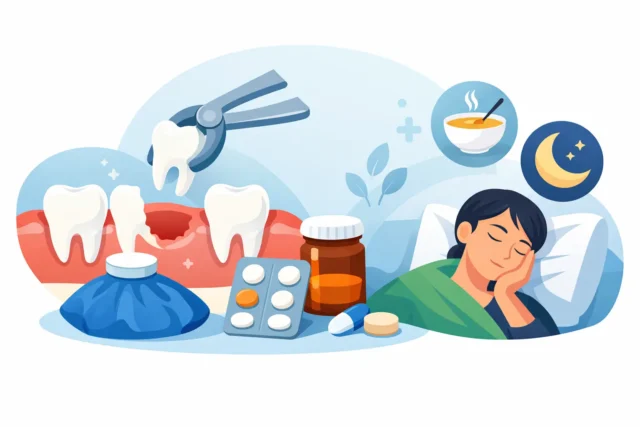
A tooth extraction is often a relief – especially when it ends ongoing pain, infection, or a damaged tooth that cannot be saved. The first few days still require a little extra care. These tooth extraction recovery tips can help protect the extraction site, keep discomfort manageable, and give your mouth the best conditions to heal.
Your dentist’s personal instructions should always come first. Recovery can look different after a simple extraction, wisdom tooth removal, surgical extraction, or a procedure involving bone grafting. If something about your instructions is unclear, call the dental office rather than guessing.
The first 24 hours: protect the blood clot
The blood clot that forms in the empty tooth socket is the foundation of early healing. It covers the bone and nerves beneath it while your gum tissue begins to repair itself. Most post-extraction rules are designed to keep that clot in place.
Bite on the gauze placed by your dental team with steady, gentle pressure. In many cases, it can be changed after 30 to 60 minutes if there is still active bleeding. Light oozing or pink saliva is normal on the first day. Heavy bleeding that fills gauze quickly, however, is a reason to contact your dentist.
For the first 24 hours, do not rinse forcefully, spit, drink through a straw, smoke, vape, or use tobacco. The suction and pressure from these habits can dislodge the clot. Avoid alcohol as well, particularly if you are taking prescription pain medicine or antibiotics.
Rest with your head elevated on extra pillows when you lie down. Plan for a quieter day, and skip strenuous workouts, heavy lifting, and bending over repeatedly. Activity can increase blood flow and make bleeding or throbbing worse.
Manage swelling and discomfort without disrupting healing
Numbness can last several hours after an extraction. Until it wears off, be careful not to bite your cheek, lip, or tongue, and avoid hot foods or drinks that could burn you without your noticing.
Swelling commonly reaches its peak about 48 to 72 hours after treatment. Apply an ice pack wrapped in a thin cloth to the outside of your face for 15 to 20 minutes at a time, with breaks between applications, during the first day. After the first 24 to 48 hours, your dentist may recommend gentle warmth if soreness and jaw stiffness persist.
Take pain medication exactly as directed. For many adults, an over-the-counter option may be enough, while others may need a prescription for a short time. Do not combine medications or exceed the labeled dose. If you have liver or kidney disease, ulcers, take blood thinners, are pregnant, or have other medical considerations, ask your dentist or physician which options are safe for you.
Some soreness is expected. Pain that becomes distinctly worse on day three or four rather than gradually improving deserves a call. That pattern can be associated with dry socket, a condition in which the blood clot is lost too early.
Tooth extraction recovery tips for eating and drinking
Food should be easy to chew, mild in temperature, and unlikely to leave sharp pieces in the socket. On the day of your procedure, choose cool or room-temperature options such as yogurt, applesauce, mashed potatoes, smoothies eaten with a spoon, pudding, scrambled eggs, or broth that has cooled down.
Stay hydrated by sipping water regularly. Avoid carbonated drinks at first if they feel irritating, and do not use a straw. If you have diabetes, keep your usual meal and medication plan in mind. Soft foods are helpful, but your body still needs enough protein and calories to heal well.
As tenderness improves, add foods that require more chewing slowly. Cooked pasta, soft fish, oatmeal, cottage cheese, rice, and tender vegetables are often comfortable next steps. Chew on the other side of your mouth when possible.
For several days, avoid crunchy chips, popcorn, nuts, seeds, crusty bread, and sticky candy. Small fragments can lodge near the surgical area, while hard foods can be painful to chew. Spicy or acidic foods may also sting. The exact timeline depends on the extraction, so follow the guidance given by your dental team rather than rushing back to your usual diet.
Keep your mouth clean, gently
A clean mouth supports healing, but the extraction site needs a gentle approach. Brush your other teeth as usual on the day of treatment, taking care to stay away from the socket. Do not scrub the area or aim an electric toothbrush directly at it.
Starting the day after your extraction, many patients can gently rinse with warm salt water after meals and before bed. A common mixture is about half a teaspoon of salt in a cup of warm water. Let the water roll around your mouth lightly, then lean forward and allow it to fall out rather than spitting hard. Your dentist may give you a different rinse or a prescription mouthwash, especially after a surgical procedure.
If food seems trapped in the site, do not probe it with a toothpick, fingernail, or other object. Your dental office can tell you whether gentle rinsing is enough or whether a syringe should be used later in recovery. Syringes are not appropriate immediately after every extraction, since early forceful irrigation can disturb healing.
Know the difference between normal healing and a concern
It is normal to have mild bleeding, swelling, bruising, a sore jaw, and tenderness that gradually eases over several days. You may also see a white or yellowish film over the socket. This is often healing tissue, not necessarily an infection.
Contact your dentist promptly if you experience any of the following:
- Bleeding that remains heavy despite firm gauze pressure
- Severe or worsening pain after the first few days
- Fever, chills, increasing facial swelling, or pus-like drainage
- A foul taste or odor paired with significant pain
- Trouble swallowing, breathing, or opening your mouth normally
- Numbness that continues longer than your dentist said to expect
Trouble breathing or swallowing, rapidly spreading swelling, or signs of a serious allergic reaction require urgent emergency care. Do not wait for a routine callback in those situations.
Smoking, vaping, and dry socket risk
Smoking and vaping are among the biggest obstacles to an uncomplicated recovery. Beyond the suction involved, nicotine can restrict blood flow and slow the tissue’s ability to repair. Tobacco use increases the risk of dry socket and infection.
Your dentist may advise avoiding nicotine for at least several days, and longer is better for healing. If stopping feels difficult, be honest with your dental team. They can discuss practical options and help you understand the specific risks for your procedure.
Dry socket most often causes deep, throbbing pain that may travel toward the ear, temple, or jaw. It can occur a few days after an extraction and may come with an unpleasant taste or odor. It is treatable, but it needs professional care. Home remedies, alcohol rinses, or placing medication directly in the socket can make the problem worse.
Give yourself time before returning to normal
Many people feel ready for normal routines within a few days after a simple extraction. Surgical extractions and wisdom tooth removal can require more time, particularly when swelling, stitches, or jaw stiffness are involved. A little patience early on can prevent a setback that extends recovery.
Keep any scheduled follow-up appointment, especially if stitches need to be removed or your dentist is monitoring healing before discussing a bridge, denture, or dental implant. Replacing a missing tooth is not always an immediate decision, but having a plan can protect your bite and surrounding teeth over time.
If you are recovering after an extraction in Northern Colorado, Trail Ridge Dental is here to answer questions that arise between appointments. A quick call for reassurance is always better than trying to push through pain or uncertainty alone.