
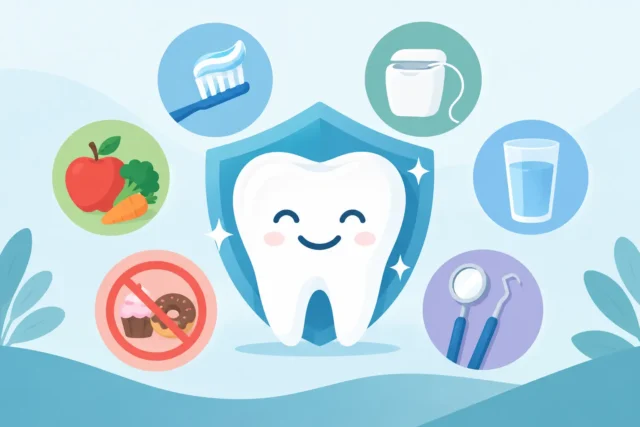
A cavity can begin quietly. Before there is pain, a visible hole, or a reason to call for an urgent appointment, bacteria in plaque may already be using sugars from food and drinks to weaken tooth enamel. The good news is that effective cavity prevention methods are usually practical, affordable habits that work best when they become part of everyday family life.
For children, adults, and grandparents alike, preventing decay is less about having a perfect routine and more about making consistent choices that protect teeth between dental visits. Here are the habits that make the biggest difference.
1. Brush twice a day with fluoride toothpaste
Brushing removes plaque, the sticky bacterial film that builds up on teeth and near the gumline. Brush for two full minutes in the morning and before bed, using a soft-bristled toothbrush and fluoride toothpaste. Angle the bristles gently toward the gumline, then clean the outside, inside, and chewing surfaces of every tooth.
Fluoride deserves special attention because it strengthens enamel and can help early weak spots recover before they become cavities. For adults and older children, a pea-sized amount of toothpaste is appropriate. For children younger than 3, use a smear about the size of a grain of rice. Young children should be supervised so they use the right amount and learn to spit rather than swallow toothpaste.
A powered toothbrush can be helpful for people who rush, have braces, limited hand mobility, or simply prefer the built-in timer. It is not required, though. A manual toothbrush used carefully and consistently can clean very well. Replace either type of brush head about every three months, or sooner if the bristles are frayed.
2. Clean between teeth every day
A toothbrush cannot fully reach the tight spaces where neighboring teeth touch. That is why flossing or another form of between-teeth cleaning matters. Plaque left in these areas can lead to cavities between teeth, along with gum irritation and bad breath.
Traditional floss is an excellent choice when it is used correctly. Slide it gently between teeth, curve it into a C shape around one tooth, and move it up and down before repeating on the tooth beside it. Floss picks, water flossers, and small interdental brushes can also help, especially for people with braces, bridges, implants, or dexterity challenges.
The best option is the one you will actually use every day. If flossing feels difficult or you are not sure which tool fits your smile, ask your dental team for a personalized recommendation.
3. Pay attention to how often sugar reaches teeth
Sugar does not have to be completely off limits to prevent cavities. Frequency is often more damaging than the occasional treat. Each time sugary food or drink is consumed, mouth bacteria produce acids that attack enamel. Repeated sipping or grazing can keep teeth in that acidic cycle for hours.
Instead of nursing a sweet coffee, soda, sports drink, sweet tea, or juice throughout the day, enjoy it with a meal when possible and follow with water. Save candy and other sweets for an occasional mealtime dessert rather than frequent snacks. Sticky foods such as gummy vitamins, fruit snacks, caramel, and dried fruit can cling to teeth longer, so they deserve extra care.
Water is the most tooth-friendly everyday drink. In many communities, tap water also contains fluoride, which offers another layer of protection. If bottled water is your household default, ask your dental professional whether your child is getting enough fluoride from other sources.
4. Choose snacks that support a healthier mouth
A balanced diet supports more than overall health. It affects the environment in your mouth, including saliva production and the nutrients available to teeth and gums. Cheese, plain yogurt, nuts, crunchy vegetables, eggs, and fresh fruit are often easier on teeth than processed snacks that are high in added sugar or refined carbohydrates.
This does not mean every snack needs to be “perfect.” Busy school mornings, sports practices, and road trips call for realistic choices. The goal is to make tooth-friendly foods the routine and sugary, sticky snacks the exception. Packing water and a satisfying snack can also reduce the urge to grab something sweet between activities.
5. Protect enamel from acidic drinks and habits
Sugar is not the only concern. Acidic drinks can soften enamel even when they are sugar-free. Sparkling water with citrus flavoring, diet soda, energy drinks, kombucha, and lemon water may be less sugary than regular soda, but frequent exposure can still contribute to enamel erosion.
You do not necessarily have to give up every acidic drink. Limit how often you have them, avoid swishing them around your mouth, and drink plain water afterward. If you have just had something acidic, wait about 30 minutes before brushing. Brushing immediately can scrub softened enamel more aggressively.
Chewing sugar-free gum after meals can be useful for many adults and older children because it stimulates saliva, the mouth’s natural defense against acids. Look for gum containing xylitol if it works for your household, but remember that gum is a supplement to brushing and flossing, not a replacement. Keep all gum safely away from pets, since xylitol is highly toxic to dogs.
6. Do not ignore dry mouth
Saliva washes away food particles, buffers acids, and helps protect enamel. When the mouth is dry, cavity risk can rise quickly. Dry mouth may be related to certain medications, mouth breathing, dehydration, tobacco use, medical conditions, or treatments such as radiation therapy.
Frequent water intake can help, but persistent dryness deserves a conversation with your dentist and physician. You may benefit from a fluoride rinse, prescription-strength fluoride, saliva-supporting products, or changes to your home routine. This is one of those situations where standard cavity prevention methods may need to be adjusted to your individual risk.
7. Ask about sealants and fluoride treatments for children
Children’s newly erupted permanent molars often have deep grooves that can trap plaque even when brushing is good. Dental sealants are thin protective coatings placed on the chewing surfaces of these back teeth. They are quick to apply and can significantly reduce the chance of decay in vulnerable grooves.
Professional fluoride treatments may also be recommended for children, teens with braces, adults with a history of cavities, and patients with dry mouth or exposed root surfaces. Recommendations depend on cavity risk, not age alone. A child with healthy teeth may need a different prevention plan than a sibling who has had several cavities.
8. Keep regular preventive visits on the calendar
Home care does most of the day-to-day work, but regular exams and cleanings catch concerns that are hard to see or feel at home. Early decay can often be monitored or treated more conservatively than a cavity that has progressed into deeper tooth structure. Dental X-rays, when clinically appropriate, can reveal cavities between teeth before they become painful.
Your recommended visit schedule depends on your oral health history. Some patients do well with twice-yearly care, while others benefit from more frequent cleanings or additional fluoride support. Delaying care because a tooth does not hurt can be costly, since tooth decay often stays painless until it becomes more advanced.
Cavity prevention methods work best as a family routine
Children learn what they see. When parents brush alongside them, keep water readily available, and make dental visits a normal part of health care, oral hygiene becomes less of a daily argument. For teens and adults, a visible reminder, a travel toothbrush, or floss placed near the sink can make consistency easier during busy weeks.
At Trail Ridge Dental, we believe preventive care should feel comfortable, clear, and manageable for every member of the practice family. A few steady habits today can help protect your smile from the discomfort, expense, and disruption of a cavity tomorrow. If it has been a while since your last checkup, scheduling a preventive visit is a kind next step for your future self.